Unusual Toronto & Hidden secrets
Toronto presents two distinct faces to visitors: the polished tourist corridor of CN Tower selfies and waterfront strolls, and the textured, lived-in city where locals actually spend their time. While official tourism campaigns highlight the former, the latter reveals the city’s authentic character through vintage warehouses tucked behind industrial facades, laneway murals that change with the seasons, and cafés with no signage that rely entirely on word-of-mouth patronage.
Understanding Toronto’s hidden layers requires shifting from consumption-focused tourism to curiosity-driven exploration. This means learning which neighborhoods reward aimless wandering, recognizing the legal frameworks that shape street art culture, and knowing when sample sales transform local designer studios into accessible shopping destinations. The city’s most memorable experiences rarely appear in conventional travel itineraries—they emerge from understanding the rhythms, regulations, and residential dynamics that shape daily life in Canada’s largest metropolis.
This resource maps the alternative geography of Toronto, connecting vintage shopping ecosystems with architectural anomalies, folklore-rich sites with independent retail districts, and hidden gathering spaces with the practical knowledge needed to access them responsibly. Whether you’re documenting industrial heritage through photography or seeking handmade goods from local artisans, navigating Toronto’s unconventional landscape demands specific expertise that typical visitor information simply doesn’t provide.
Vintage Treasures and Second-Hand Shopping Culture
Toronto’s second-hand shopping scene operates on fundamentally different economics than mainstream retail. Understanding curated vintage pricing requires recognizing that dealers invest significant labor in sourcing, cleaning, authenticating, and merchandising each piece—costs reflected in price tags that can surprise shoppers accustomed to thrift store bargains.
Authenticating Quality Pieces
The proliferation of fast fashion reproductions masquerading as vintage makes authentication skills essential. Genuine retro garments reveal themselves through specific indicators: construction techniques like French seams and hand-finished buttonholes that disappeared from mass production in the late twentieth century, fabric content tags with outdated company names and addresses, and union labels indicating production periods. Metal zippers from specific manufacturers can date pieces within decade-long windows, while pattern matching at seams demonstrates quality standards rarely found in contemporary budget clothing.
Sellers with established reputations typically provide provenance details and accept returns if authenticity questions arise. However, cash-only vintage warehouses and pop-up sales may offer no recourse, making pre-purchase examination critical in these contexts.
Navigating Shopping Districts by Specialty
Toronto’s vintage geography concentrates around distinct neighborhoods, each developing specializations based on demographics, rent costs, and historical accident. Queen Street West historically attracted mid-century modern furniture and 1970s-80s fashion, while Kensington Market’s dense, low-overhead storefronts enabled experimental pricing models and emerging dealers. The Distillery District’s higher rents pushed vendors toward higher-value items—designer pieces, rare collectibles, and investment-grade vintage.
Shoppers seeking specific eras or styles benefit from matching their goals to district specializations rather than attempting comprehensive surveys. Someone furnishing a space with industrial decor will find concentrated inventory near former manufacturing zones, while those seeking 1990s streetwear should focus on neighborhoods with younger dealer demographics.
Timing Visits for Optimal Inventory
Inventory turnover patterns significantly impact selection quality. Most dealers replenish stock after weekends, making Tuesday and Wednesday visits ideal for seeing new arrivals before weekend crowds. Seasonal transitions in late August and early March trigger wardrobe purges that flood the market with consignment pieces. However, this abundance means dealers become more selective, often holding premium items for favorable selling periods.
Estate sales, which feed dealer inventory, concentrate in late spring and early fall when families address inherited properties. The lag between acquisition and retail availability means peak vintage selection often appears 4-6 weeks after estate sale season begins.
Independent Retail and Local Artisan Communities
Toronto’s independent retail landscape exists in constant tension with rising commercial rents and shifting consumer behavior. Small businesses that survived the transition to e-commerce face different challenges than chains: they can’t distribute fixed costs across multiple locations, lack leverage in lease negotiations, and depend heavily on repeat local patronage rather than tourist traffic.
This economic reality shapes practical shopping considerations. Return policies at independent retailers often cannot match chain store flexibility—accepting a return might eliminate the profit margin on that entire day’s sales. Many small businesses implement final-sale policies on discounted items or charge restocking fees that reflect genuine costs rather than punitive measures.
The value proposition lies elsewhere: customization services that chains cannot offer, direct relationships with makers who can explain material sourcing and construction, and curated selections that reflect specific aesthetic visions rather than algorithm-driven inventory management. Local artisans working with leather, ceramics, textiles, and metalwork often maintain studio-retail spaces where commissioning bespoke pieces means discussing projects directly with the person who will create them.
Supporting this ecosystem requires adjusting expectations formed by big-box retail. Non-standard sizing in handmade clothing reflects pattern-making for specific body types rather than mass-market averages, meaning fit consultations prevent costly mistakes. Sample sales, typically held when designers transition seasonal collections, offer access to local design economy at reduced prices—but timing these sales requires following makers on social platforms or joining mailing lists since most avoid paid advertising.
Hidden Neighborhoods Worth Exploring
Toronto’s most distinctive neighborhoods rarely appear on official tourism maps because their appeal lies in residential character rather than concentrated attractions. Understanding what makes these areas worth visiting—and how to explore them respectfully—separates genuine urban discovery from intrusive tourism.
Bohemian Enclaves and Car-Free Initiatives
Kensington Market’s official designation as a pedestrian zone on Sundays reflects decades of community advocacy for car-free urban spaces. The neighborhood’s narrow streets, inherited from nineteenth-century working-class housing patterns, never accommodated automobile traffic well. Contemporary car-free initiatives build on this geography, creating spaces where street vendors, buskers, and spontaneous gatherings reshape public space temporarily.
The market’s aging commercial tenants—Portuguese fishmongers, Caribbean produce vendors, Central American bakeries—represent legacy businesses increasingly rare in gentrifying Toronto. Supporting these establishments over recently arrived chains helps preserve the economic diversity that creates neighborhood character, though this becomes complicated when “authentic” businesses charge premium prices justified by heritage appeal.
Architectural Photography and Heritage Documentation
Toronto’s industrial heritage creates photographic opportunities distinct from the glass-and-steel downtown core. Former manufacturing districts retain nineteenth-century brick warehouses with loading docks, external fire escapes, and signage from defunct companies—architectural elements that document economic history. The Don Valley Brick Works, now a heritage site, shows industrial archaeology in formal preservation, while active neighborhoods like Liberty Village demonstrate adaptive reuse.
Planning photography routes requires considering lighting conditions, seasonal foliage that obscures or frames structures, and resident privacy. Residential streets with significant architecture attract photographers whose behavior—blocking sidewalks with tripods, photographing homes in ways that capture interior details, creating noise in early morning or evening light—generates legitimate complaints from people living in these spaces.
Respectful Urban Exploration
The tension between photographing neighborhood character and respecting resident privacy intensifies in Toronto’s most visually distinctive areas. Streets of Victorian homes attract documentation, but these are private residences where people reasonably expect not to have strangers photographing their front windows. Responsible exploration means shooting from public rights-of-way without telephoto invasion of private space, avoiding peak residential hours, and recognizing when areas become over-photographed to the point of resident frustration.
Street Art and Urban Canvas
Toronto’s street art exists in complex legal territory where some murals receive official sanction while others remain technically illegal but tolerated. The city’s StreetARToronto program commissions large-scale works on public and private buildings, creating permanent installations distinct from unsanctioned graffiti. Understanding this distinction matters for both creators and documentarians since legal status affects longevity and accessibility.
Commissioned murals in Graffiti Alley (Rush Lane) receive property owner consent and often stay visible for years, while unauthorized pieces face removal if property owners complain. This creates a constantly shifting landscape where spectacular works may disappear within weeks. Photographers documenting street art should verify whether capturing images requires property access beyond public sidewalks—some of the most impressive murals occupy private courtyards or laneways where trespassing charges become possible if signage is ignored.
The most active street art zones concentrate in neighborhoods with older commercial buildings whose owners welcome murals as informal security against tagging, plus industrial areas where large blank walls provide canvases. Timing visits for new installation discovery means following artist social media, attending festival periods when concentrated painting happens, or simply visiting frequently since turnover is constant.
Safety considerations in secluded street art locations are legitimate—many impressive pieces occupy areas with minimal foot traffic, poor lighting after dark, or active industrial use where pedestrians shouldn’t wander. Visiting during daylight hours and staying aware of surroundings addresses most risks.
Secret Cafés and Unmarked Sanctuaries
Toronto’s hidden café culture reflects both design philosophy and practical economics. Establishments without exterior signage save on permitting costs, create exclusivity that justifies premium pricing, and cultivate clientele who value discovery over convenience. Locating these spaces requires word-of-mouth intelligence, neighborhood knowledge, or deliberate exploration of areas where residential density supports businesses that don’t depend on street visibility.
The premium pricing at such venues reflects several factors: prime locations with high rents but no advertising budget, specialty sourcing that emphasizes quality over volume, and atmospheres curated for extended stays rather than rapid turnover. A café charging seemingly expensive prices for coffee may be compensating for customers who occupy tables for hours—a business model requiring either premium pricing or large volumes.
Practical considerations for using hidden cafés as work or meeting spaces include verifying Wi-Fi reliability before committing to long sessions, understanding seat availability patterns (weekday mornings versus weekend afternoons show dramatically different crowding), and respecting house cultures around laptop use, conversation volume, and purchase expectations for extended stays. Some establishments explicitly cultivate productive atmospheres with abundant power outlets and large tables, while others actively discourage work setups to preserve conversational character.
Dark Tourism and Urban Folklore
Toronto’s folklore landscape combines verified historical tragedies with accumulated urban legends that blend fact and embellishment. Dark tourism—visiting sites associated with death, disaster, or the macabre—raises ethical questions about respectful engagement versus sensationalist consumption of others’ suffering.
Sites like the former Don Jail offer structured heritage interpretation through guided tours that contextualize harsh historical conditions within evolving penal philosophy. These official programs provide access while managing visitor behavior to prevent disrespectful treatment of spaces where genuine suffering occurred. Self-guided visits to folklore-rich locations without formal interpretation require research to distinguish historical fact from creative elaboration.
Accessing some dark tourism sites after dark—when atmospheric conditions match folklore narratives—creates trespassing risks if locations occupy private property or close at specified hours. The legal distinction between public sidewalks and property boundaries becomes critical when “haunted” sites are private residences or commercial buildings where after-hours presence constitutes trespassing regardless of photographic or folkloric intent.
Comparing various spooky locations reveals that atmospheric appeal often correlates with maintenance neglect and isolation—precisely the conditions that create safety risks. Visiting such places requires balancing curiosity with practical judgment about personal security and legal boundaries.
Architectural Curiosities and Design Anomalies
Toronto’s built environment contains numerous structures whose unusual designs reflect specific legal requirements, historical accidents, or economic constraints. The Gooderham “Flatiron” Building demonstrates architectural problem-solving for an acute-angle lot, while various residential buildings show creative responses to zoning regulations that shaped form through height restrictions, setback requirements, and density limits.
Understanding the legal and economic causes behind architectural oddities transforms them from mere curiosities into legible documents of regulatory history. A building with an inexplicable setback likely responds to since-revised zoning codes, while unusual materials might reflect historical availability or fire safety requirements from specific construction periods.
Photographing these structures respectfully means considering how documentation might be received by current occupants—capturing a building’s unusual features without framing it as defective or ridiculous. Timing visits for optimal lighting often means early morning or late afternoon when angular sun emphasizes architectural details, though this must be balanced against creating disturbances in residential areas.
Comparing architectural quirks across neighborhoods reveals patterns in development history, wealth distribution, and regulatory evolution. The concentration of certain building types in specific areas reflects historical zoning, immigration patterns that shaped commercial districts, and economic cycles that determined which neighborhoods developed during which architectural periods.
Discovering Toronto beyond conventional tourism requires specific knowledge about shopping ecosystems, neighborhood histories, legal frameworks, and respectful exploration practices. These alternative layers of the city reward curiosity with experiences that reveal how Toronto actually functions rather than how it presents itself to casual visitors. The distinction between authentic discovery and intrusive tourism lies in understanding the systems, regulations, and communities that shape these hidden aspects—approaching them with genuine interest rather than consumptive extraction.
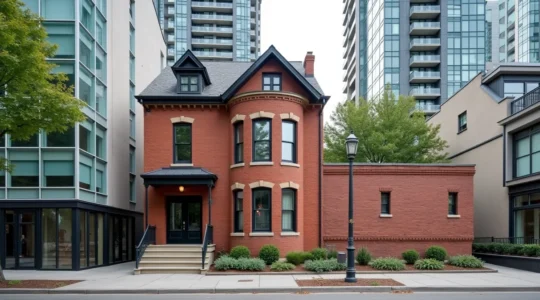
An Architectural Historian’s Guide to Toronto’s Famous Half House
The Toronto Half House is more than a stubborn family’s victory; it’s an accidental monument to the absurdities of urban property law. Its “weirdness” comes from a legal and structural stalemate, not intentional design. Photographing it successfully means capturing the…
Read more
Your Mission Briefing: How to Investigate Toronto’s Haunted Lighthouse at Night
The key to a successful encounter at Toronto’s most haunted site isn’t luck; it’s treating the visit like a paranormal investigation with a solid, pre-planned mission. Logistics are your primary challenge, as the Toronto Islands ferry schedule is unforgiving and…
Read more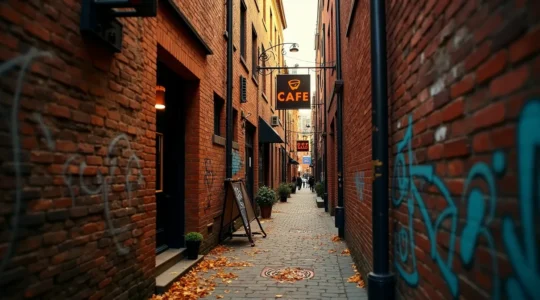
How to Find Solitude in Toronto’s Hidden Laneway Cafés?
The key to finding a productive sanctuary in Toronto isn’t about stumbling upon a “hidden gem,” but about intentionally curating your solitude in a laneway café. High prices are not a bug but a feature, reflecting the “economics of quiet”…
Read more
How to Respectfully Explore Toronto’s Graffiti Culture: A Visitor’s Guide
The key to exploring Toronto’s street art is understanding it as a living gallery with its own codes, not just a photo backdrop. Legal status is complex; Toronto’s Graffiti Management Plan protects specific areas like Graffiti Alley while penalizing unauthorized…
Read more
A Toronto Maker’s Guide: How to Distinguish Authentic Toronto Design from Mass-Produced Imports
The real value of authentic Toronto design isn’t just in the object itself, but in the traceable materials, the maker’s skill, and a story you can’t get from a flat-pack box. Authenticity is revealed through “material honesty”—the use of identifiable,…
Read more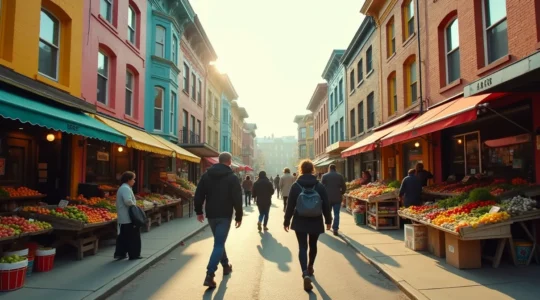
How to Explore Kensington Market Like a Local, Not a Tourist
To truly experience Kensington Market, you must shift from being a consumer to a participant in its fragile ecosystem. The real value isn’t in what you buy, but in understanding the “why” behind each cash-only transaction and handmade sign. Your…
Read more
How to Explore Toronto’s Hidden Laneways Without Trespassing?
Exploring Toronto’s laneways isn’t about finding a list of ‘secret spots’; it’s about learning to read the city’s hidden history written in cobblestone, brick, and bylaw. This guide provides a framework for urban explorers and photographers to discover the authentic…
Read more
How to Shop Local in Toronto Without Blowing Your Monthly Budget?
Supporting Toronto’s local shops on a budget is possible, but it requires a shift from simple bargain hunting to strategic value investing in our community. High prices often reflect soaring commercial rents and the true cost of skilled, local labour—not…
Read more
How to Build a Vintage Wardrobe in Toronto Without Overspending?
Contrary to popular belief, building a quality vintage wardrobe isn’t about finding the cheapest items; it’s about understanding the hidden economy that dictates value. The price of a vintage piece reflects curation, cleaning, and authentication costs—not just its age. Where…
Read more