
The move from a downtown condo to a West End house is a strategic trade-off, not a simple upgrade.
- The “dream” of a backyard comes with the realities of bidding wars, aging infrastructure, and intense competition for school spots.
- True suitability depends on a hyper-local analysis, as lifestyle and costs vary dramatically between neighbourhoods like High Park and The Junction.
Recommendation: Approach your search by first defining your non-negotiable lifestyle needs and budget for “infrastructural debt,” not just the mortgage.
That downtown Toronto condo, once the perfect launchpad for your careers, is starting to feel tight. The dream of a backyard for the kids, tree-lined streets, and a true neighbourhood feel is calling. The West End, with its charming Victorian homes and vibrant communities like Roncesvalles and High Park, seems like the obvious answer. Many guides will sell you on the idyllic lifestyle, the great parks, and the trendy cafes. They’ll show you pictures of families picnicking and artisan markets in full swing.
But as real estate specialists rooted in this community, we believe in an honest conversation. The romantic vision often glosses over the harsh realities: fierce bidding wars, the hidden costs of century-old homes, and the logistical challenges of daily life, from parking to school admissions. The question isn’t just “is the West End great?”—it is. The real question is, “what are the calculated trade-offs you’re willing to make to live here?” This isn’t about discouraging your dream, but about equipping you with the unvarnished truth to make it a successful reality.
This guide moves beyond the platitudes. We’ll break down the financial pressures driving the market, the practical steps for navigating local bureaucracy, the critical differences between popular neighbourhoods, and the hidden risks that can turn a dream home into a financial burden. We’ll equip you to test the “paper promises” against “pavement realities” and make a choice that truly fits your family’s future.
To help you navigate this complex decision, this article breaks down the key factors you need to consider. From the financial realities of the market to the practicalities of daily life, here’s what you need to know before making your move.
Summary: Evaluating Your Family’s Future in West Toronto
- Why Are West End Rentals Costing 20% More Than 5 Years Ago?
- How to Secure a Street Parking Permit in a Zone With No Driveways?
- High Park vs. The Junction: Which Neighborhood Suits Creative Freelancers?
- The Victorian Plumbing Risk That Costs Homeowners $10,000 CAD
- How to Get Your Child into a Top-Rated West End Public School?
- Etobicoke vs. Scarborough: Which Suburb Has Better Subway Access?
- How to Visit the High Park Zoo for Free (and Where to Donate)?
- How to Choose the Right Toronto Neighborhood for Your Lifestyle?
Why Are West End Rentals Costing 20% More Than 5 Years Ago?
If you’re feeling the sticker shock, you’re not alone. The simple answer is overwhelming demand, but the story is more nuanced. It’s not just that people want to live here; it’s that the very fabric of the neighbourhoods is rapidly changing. The West End is experiencing a perfect storm of desirability, where its long-standing appeal is being amplified by targeted, modern development. This combination has caused the demand for homes here to skyrocket in recent years, pushing prices up for buyers and renters alike.
Consider a neighbourhood like Parkdale. Historically known for its affordability and eclectic character, it’s now a prime example of this “cool factor” inflation. Fresh developments along Queen Street West are bringing in a wave of high-end shops, sought-after restaurants, and vibrant nightlife. This isn’t just organic growth; it’s a strategic transformation that attracts a new demographic willing to pay a premium for an “uber-cool vibe.” This gentrification effect ripples outwards, increasing the perceived value and, consequently, the cost of housing in adjacent areas.
For a young family, this means you’re not just competing with other families for a home with a backyard. You’re also competing with dual-income professionals and investors drawn to the trendiness and lifestyle cachet. This is the hyper-local reality of the West End market: the price is dictated as much by its cultural currency as by its square footage. Understanding this dynamic is the first step to setting a realistic budget and managing expectations in a market where a 20% increase over five years might just be the beginning.
This intense demand creates a highly competitive environment, so being prepared financially is only half the battle; you also need a strategy for the practicalities of West End living.
How to Secure a Street Parking Permit in a Zone With No Driveways?
Welcome to one of the most significant calculated trade-offs of West End living: the driveway. Many of the beautiful Victorian and Edwardian homes you’re dreaming of were built before cars dominated city planning. The result? A neighbourhood culture built around street parking, which comes with its own set of rules and frustrations. Securing a street parking permit isn’t just an option; it’s a necessity for your daily sanity, and it requires proactive steps.
The process is managed by the City of Toronto and is zone-specific. Availability is not guaranteed, and in high-density areas, you may face a waitlist. The key is to act ప్రజన. As soon as you have a signed lease or agreement of purchase and sale, you can begin the process. Your eligibility is tied to your residency, so the first official step involves updating your address on your provincial documents. This is a non-negotiable prerequisite that validates your claim to a spot in the neighbourhood.
Once you’ve established residency, you can research your specific zone’s permit availability on the City of Toronto’s official parking website. The application can typically be done online, requiring proof of both vehicle registration and your new address. Don’t underestimate the demand; in popular zones, permits can be fully allocated, forcing new residents onto a waitlist. It’s a first-come, first-served system that rewards preparation. Forgetting this crucial step can lead to months of parking tickets and logistical headaches, especially during winter when snow-clearing bylaws add another layer of complexity.
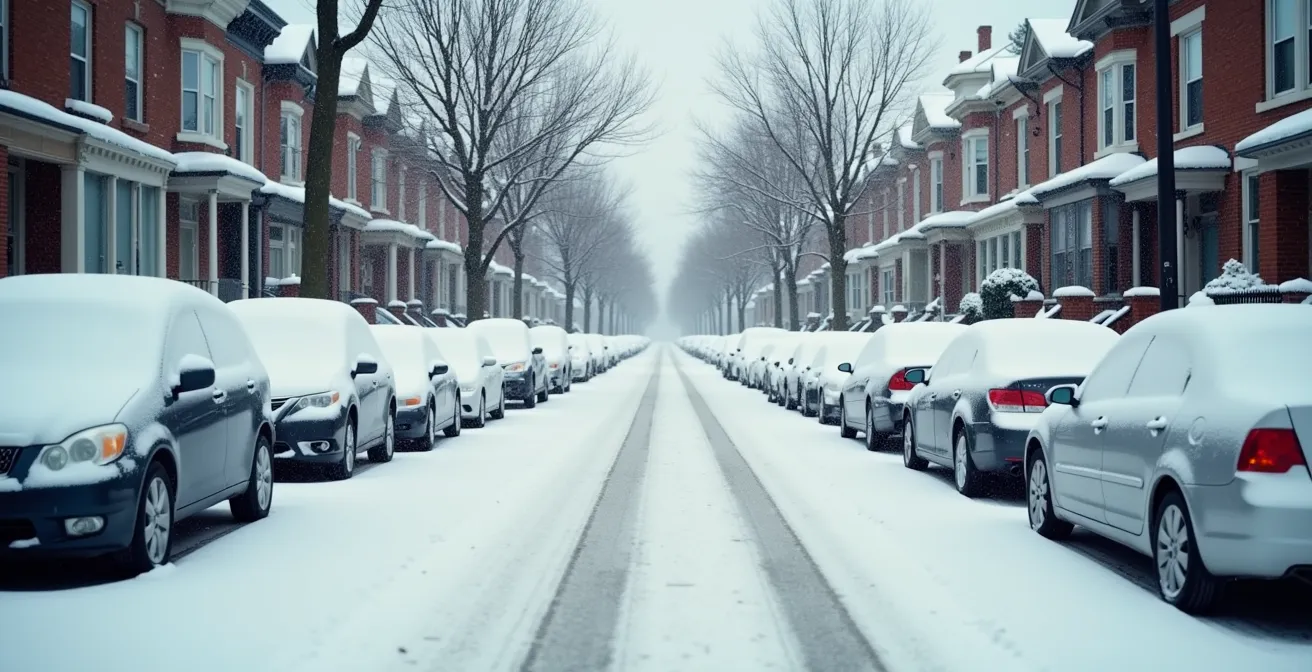
The reality of West End parking, especially in winter, is a core part of the lifestyle. It’s a daily puzzle of finding a spot and adhering to local bylaws. Being prepared for this logistical challenge is as important as negotiating your purchase price. To get started, follow these essential steps:
- Go to a Service Ontario location to officially change the address on your Driver’s Licence, which is your primary proof of residency.
- Visit the City of Toronto’s parking portal to research your specific street’s permit zone and check for current availability.
- Prepare your documents: you’ll need proof of vehicle registration and proof of residency (like your updated licence or a utility bill).
- Apply online or in-person as soon as your documents are in order. If your zone is full, get on the waitlist immediately.
This practical hurdle is a small-scale version of the larger decisions you’ll face, such as choosing the specific micro-neighbourhood that best aligns with your work and family life.
High Park vs. The Junction: Which Neighborhood Suits Creative Freelancers?
For creative freelancers, the line between home and work is often blurred. Your neighbourhood isn’t just where you live; it’s your office, your network, and your source of inspiration. In the West End, two neighbourhoods stand out, but they offer vastly different environments: High Park and The Junction. Choosing between them is a classic lifestyle shift decision. Do you prioritize tranquil, nature-inspired focus or a vibrant, energizing community hub?
p>
High Park offers an almost suburban-like peace right in the city. The lifestyle is defined by Toronto’s largest park, with its sprawling trails, gardens, and the famous cherry blossoms. For a freelancer who needs quiet concentration, a home steps away from this natural oasis is invaluable. The housing stock, dominated by historic Victorian, Edwardian, and Tudor styles, adds to the serene, established feel. It’s an environment that allows for deep work, balanced by easy access to nature for creative breaks. It’s also known for its excellent schools, making it a top choice for families planning for the long term.
The Junction, by contrast, thrives on its “laid-back, effortlessly cool” energy. Once an industrial railway hub, it’s now one of Toronto’s trendiest spots, with a vibrant strip of independent shops, cafes, and restaurants along Dundas West. For a freelancer who feeds off community energy and networking opportunities, The Junction is a magnet. The atmosphere is more dynamic, and the housing is a diverse mix of Victorian and Edwardian homes in various sizes, often with a more bohemian feel. It’s a place where you’re more likely to bump into a future collaborator at a local coffee shop. While also family-friendly, its appeal is rooted in its budding, entrepreneurial spirit.
The following table breaks down the core differences to help you make a more informed choice based on your professional and personal needs.
| Feature | High Park | The Junction |
|---|---|---|
| Community Vibe | Toronto’s largest park lifestyle – steps from trails, gardens, cherry blossoms | Once industrial railway hub, now one of Toronto’s trendiest neighborhoods |
| Housing Style | Victorian, Edwardian, Tudor styles with historic feel and character | Diverse mix of Victorian and Edwardian homes in variety of shapes and sizes |
| Work Environment | Perfect mix of quiet suburban vibes with easy downtown access | Laid-back, effortlessly cool atmosphere with vibrant shops along Dundas West |
| Family-Friendliness | Families flock here for excellent schools and community sense | Welcoming young families and budding businesses with open arms |
Ultimately, the choice depends on your work style. Do you create best in quiet solitude, or are you energized by a bustling streetscape? Answering this question is key to finding your place in the West End.
The Victorian Plumbing Risk That Costs Homeowners $10,000 CAD
The charm of a century-old West End home is undeniable, with its high ceilings, intricate woodwork, and unique character. However, this appeal comes with a significant hidden risk: infrastructural debt. Behind the beautiful plaster walls often lies aging plumbing and electrical systems that can fail without warning, leading to costly emergency repairs. Among the most common and expensive issues are those related to the plumbing, particularly in homes that haven’t been fully updated. The average cost投资者of a major plumbing failure, such as a burst galvanized pipe, can easily exceed $10,000 CAD, a figure that can blindside unprepared new homeowners.
Many of these historic homes, with Victorian, Edwardian, and Tudor styles dominating the tree-lined streets, were built with materials that are now obsolete and prone to failure. Galvanized steel pipes, common in the early 20th century, corrode from the inside out. They may look fine externally, but their internal diameter can be severely restricted, leading to low water pressure and, eventually, leaks or bursts. Another major concern is knob-and-tube wiring, which, while not a plumbing issue, is often found alongside old pipes and can make it difficult or impossible to get home insurance without a costly full replacement.
Forgetting to budget for these potential “surprises” is one of the biggest mistakes buyers make. A standard home inspection might not catch the full extent of the problem. That’s why a specialized plumbing inspection, including a camera scope of the main drain line, is a critical investment during your due diligence period. Asking the seller for any existing plumbing inspection reports is also a wise move. Being proactive can mean the difference between a planned upgrade and a catastrophic emergency that drains your savings. It’s the ultimate “pavement test” for a heritage home.
Your Pre-Purchase Heritage Home Checklist: Mitigating Hidden Risks
- Verify the wiring: Specifically check for the presence of knob-and-tube wiring, as its existence can severely impact your ability to get home insurance.
- Inspect the pipes: Look for original galvanized steel pipes, which are prone to corrosion and failure, and budget for their eventual replacement.
- Request documentation: Ask the seller to provide any existing plumbing inspection reports, especially for the main drain line to the city sewer.
- Conduct a specialized inspection: Hire a plumber to perform a camera scope of the sewer line to check for cracks, blockages, or tree root intrusion.
- Prepare for the unexpected: Have an app like Jiffy or a list of trusted local plumbers ready for any immediate issues that may arise after closing, like a running toilet or a minor leak.
While these risks are manageable with foresight and a proper budget, they underscore the importance of thorough due diligence, which extends to another top priority for families: education.
How to Get Your Child into a Top-Rated West End Public School?
For families, the quality of local schools is often a non-negotiable factor in choosing a neighbourhood. The West End is home to some of Toronto’s most highly-regarded public schools, but gaining access to them is not as simple as just moving nearby. The Toronto District School Board (TDSB) operates on a strict catchment area system, meaning your eligibility for a specific school is determined by your primary address. This makes your house hunt and the school admission process deeply intertwined.
Neighbourhoods with top-tier schools, like Swansea, become real estate hotspots. The reputation of Swansea Junior and Senior Public School, for instance, is a major draw, cementing the area’s status as an exceptionally family-friendly neighbourhood. This high demand creates a competitive micro-market where homes within the school’s catchment zone command a premium. Therefore, the first step in your school strategy is to use the TDSB’s online tools to determine the “home school” for any property you are seriously considering. Never rely on a real estate listing’s claim alone; verify it yourself.
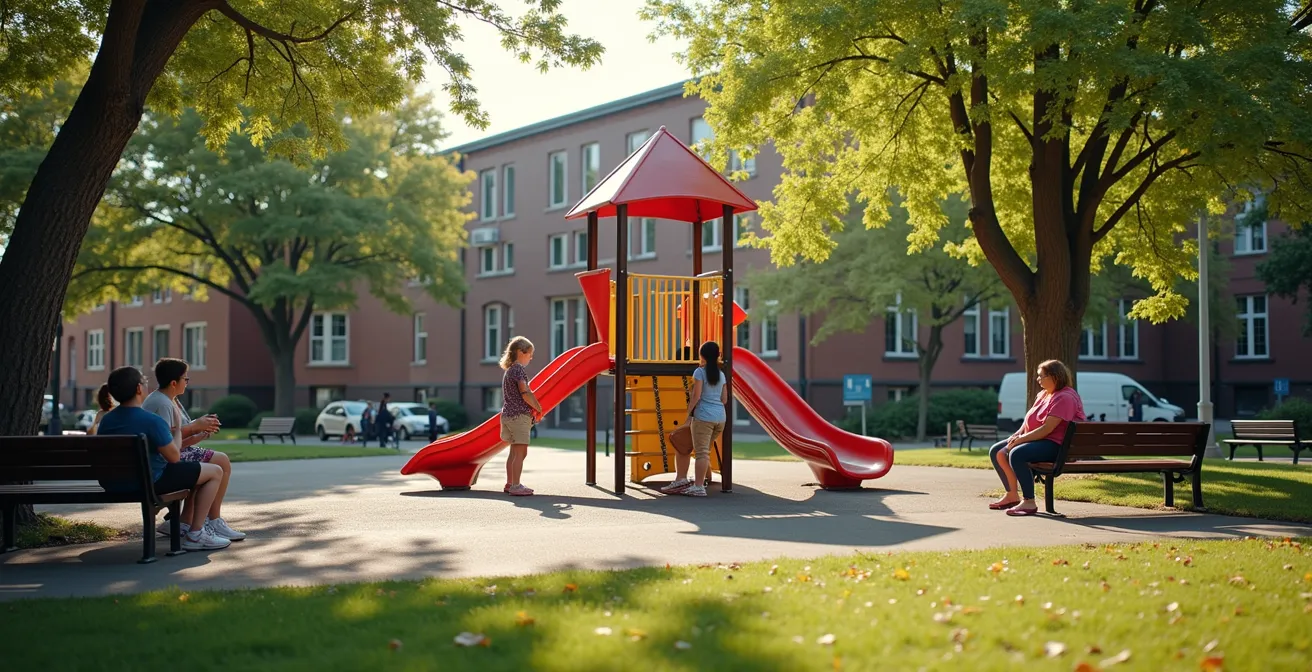
Once you’ve confirmed a home is in your desired school district, the process becomes about timing and paperwork. Registration for the new school year typically opens in January. It’s crucial to contact the school’s principal to book a tour and get a feel for the community. This “paper vs. pavement” test is vital; a school that looks great based on test scores might not be the right cultural fit for your child. When it’s time to register, you will need to provide concrete proof of address (such as a utility bill or purchase agreement) and proof of your child’s age. For younger children, be aware that Toronto’s daycares are notorious for long waiting lists, so it’s wise to sign up for those even before you’ve finalized your move.
- Step 1: Determine Your Home School: Use the official TDSB “Find Your School” tool online for any address you are considering.
- Step 2: Connect with the School: Phone the principal of your designated school to ask questions and, if possible, book a tour to experience the environment firsthand.
- Step 3: Mind the Deadlines: Apply during the designated registration period, which is typically in January for a September start.
- Step 4: Prepare Your Documents: Gather your proof of address (purchase agreement, lease, or utility bills) and your child’s proof of age (birth certificate, passport).
Of course, the intense competition and high prices of the core West End might lead you to consider options further afield, prompting a different kind of neighbourhood comparison.
Etobicoke vs. Scarborough: Which Suburb Has Better Subway Access?
As families weigh their options, the search radius often expands. While the prompt asks about Etobicoke versus Scarborough, it’s important to frame this question within the context of a West End move. For a family already looking west, the more logical “next step out” comparison is often between Etobicoke and other western suburbs like Mississauga or Milton, rather than Scarborough, which is in the far east of the city and represents a completely different commute and lifestyle.
Etobicoke, as part of Toronto’s west side, offers more of a suburban feel with better access to larger lots and more modern housing. Its subway access is concentrated along the Bloor-Danforth line (Line 2), terminating at Kipling Station. This provides a direct, one-seat ride downtown, but you will likely need to drive or take a bus to get to the station, shifting you from a “walk to the subway” lifestyle to a “drive to the subway” reality. This is a significant lifestyle shift from the hyper-walkable core of Roncesvalles or The Junction.
When you look further west to suburbs like Mississauga, the transit calculation changes again. While it lacks direct TTC subway access, it has a robust GO Train network and, as a major advantage, Mississauga provides direct access to all five major highways, making it arguably the most commuter-friendly suburb for those who drive. The trade-off is commute time, but what you lose in transit time, you often gain in affordability and space. This table compares the commute from key western locations, putting the “drive to transit” reality into perspective.
| Location | Transit Option | Commute Time | Key Features |
|---|---|---|---|
| Mississauga | GO Train | About 40 minutes to Toronto | Ultimate suburban hybrid with job opportunities and multicultural city |
| Milton | GO Train | 45-60 minutes | Fast-growing town, magnet for young families and first-time buyers |
| West End Toronto | Subway/Streetcar | 20-30 minutes downtown | Walk to subway lifestyle vs drive to subway reality |
Ultimately, this decision forces you to quantify the value of time versus space. But after weighing all these heavy factors, it’s important to remember the ultimate payoff: the lifestyle itself.
How to Visit the High Park Zoo for Free (and Where to Donate)?
After navigating the financial and logistical hurdles of moving, it’s the simple, joyful moments that make it all worthwhile. One of the crown jewels of the West End lifestyle is the easy access to incredible community resources, and none is more beloved by families than High Park. Spanning 400 acres, High Park is the most popular park in the West End, and at its heart is a charming zoo that you can visit entirely for free.
The High Park Zoo has been a Toronto institution for over 120 years, housing a collection of animals including bison, llamas, deer, and the famous capybaras. It operates year-round and is open from dawn to dusk, making it a perfect spontaneous outing for families. There is no admission fee, which is a rare and wonderful thing in a city like Toronto. The zoo runs on donations from the public, which are managed by the Friends of High Park Zoo. You’ll find donation boxes at the zoo entrances, and you can also donate online. Contributing is a great way to give back and ensure this wonderful resource remains available for generations to come.
A visit to the zoo can be the centerpiece of a perfect family day in the park. This isn’t just a patch of grass; it’s a destination. You can build an entire day’s itinerary without ever leaving its borders. The mix of nature, recreation, and amenities makes it a true extension of your backyard. It’s this kind of accessible, high-quality lifestyle that represents the real “return on investment” for choosing to live in the West End. It’s the payoff for all the calculated trade-offs you have to make.
To make the most of your visit, here’s a simple itinerary for a perfect family day:
- Start your day at the High Park Zoo and enjoy the animal exhibits.
- After the zoo, head to the Grenadier Cafe, conveniently located inside the park, for a coffee or lunch.
- Let the kids burn off energy at the famous Jamie Bell Adventure Playground, affectionately known as the “Castle Park.”
- Take a walk through the lush green space of this historic park, which has been open to the public since 1876.
- End your day with a relaxing picnic, perhaps with treats picked up from one of the many fantastic local shops in a nearby neighbourhood like Roncesvalles or Bloor West Village.
This access to a vibrant community and lifestyle is what brings all the other factors—cost, housing, schools—into a final, cohesive decision.
Key Takeaways
- The West End’s charm comes with a high price tag, driven by gentrification and intense demand, requiring a budget that accounts for bidding wars.
- Century-old homes carry “infrastructural debt,” meaning buyers must budget for potential six-figure costs like plumbing and wiring replacements.
- Choosing a neighbourhood is a hyper-local decision; your daily life will be dictated by your specific street’s school catchment area and parking situation.
How to Choose the Right Toronto Neighborhood for Your Lifestyle?
Choosing the right neighbourhood is the final and most personal piece of the puzzle. It’s where all the data points—prices, school rankings, commute times—must align with the intangible feel of a place. The “best” neighbourhood is the one that minimizes your daily friction and maximizes your family’s joy. The key is to move beyond online research and conduct your own “paper vs. pavement” test. Spend a weekend in the neighbourhoods you’re considering. Go to the cafes, walk the streets on a weekday morning, visit the parks, and observe the community’s rhythm.
Roncesvalles Village, for example, offers a specific lifestyle that is a magnet for young families. It masterfully combines a family-friendly atmosphere with a trendy, vibrant spirit. The sidewalks are a parade of baby strollers and labradoodles, the aroma of coffee wafts from chic cafes on every corner, and all your daily essentials are located along the main strip. This is the “15-minute city” conceptin practice: a place where you can live, work, and play with minimal reliance on a car. It’s the perfect illustration of what a successful lifestyle trade-off looks like. You might sacrifice a large private driveway, but you gain a walkable, community-centric life.
Ultimately, your choice is a reflection of your priorities. Are you a freelancer who needs the creative energy of The Junction? A family prioritizing the academic reputation of Swansea? Or do you crave the European-style walkability of Roncesvalles? Be honest about what you’re giving up and what you’re gaining. This isn’t just a financial transaction; it’s an investment in your family’s daily happiness. Choosing the right West End neighbourhood is about finding the place where your family’s unique lifestyle calculus finds its perfect balance.
To ensure you’re making the most informed decision, the next logical step is to get a personalized analysis of how these trade-offs apply to your specific financial situation and lifestyle goals.
Frequently Asked Questions About Moving to the West End
What are the best ways to get a feel for a neighbourhood’s community culture?
The best way is to immerse yourself. Engage with local events, visit the cafes and parks on both weekdays and weekends, and don’t be afraid to talk to residents. This direct engagement will give you a much better sense of the community dynamics and culture than any online article.
How can I evaluate schools in West End neighborhoods?
Beyond looking at Fraser Institute rankings and EQAO scores, understanding the quality and reputation of local schools is crucial. Attending a school event or a parent council meeting, if possible, can provide an invaluable sense of the school’s community and parental involvement.
What tools can help explore neighborhoods remotely?
If you can’t visit in person immediately, Google Street View is an excellent tool. It allows you to virtually walk the neighbourhood streets, check the condition of homes, and see the proximity to parks and commercial strips, giving you a preliminary feel for the area.