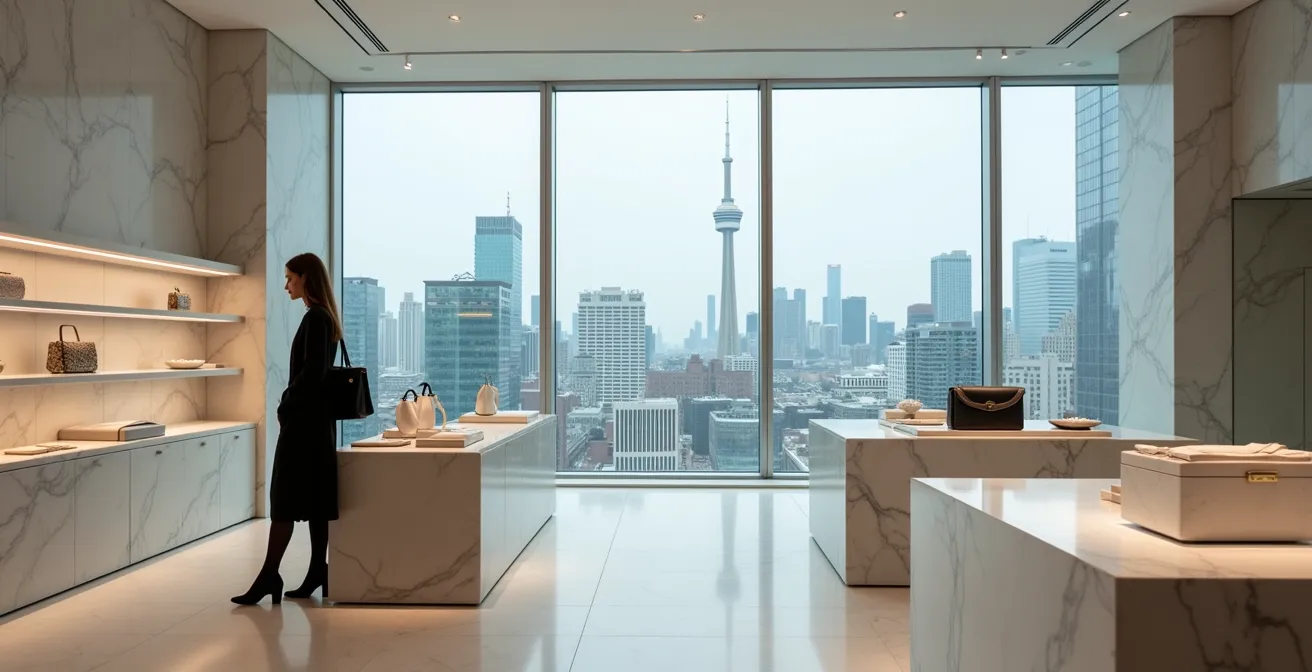
In summary:
- Treating Toronto luxury purchases as strategic assets, not just expenses, is the key to maximizing value.
- Understanding cross-border pricing, authentication, and local maintenance is non-negotiable for the discerning buyer.
- Leverage personal shopping relationships and seasonal sale calendars for planned acquisitions at flagship stores.
- Protecting leather goods from Toronto’s harsh winter is crucial for preserving resale value.
- Use the city’s consignment scene as a “research lab” to determine fit and value before you buy.
For the discerning fashion enthusiast in Toronto, the allure of a new piece from Chanel or Max Mara is often met with a frustrating reality: luxury goods simply cost more here. The immediate temptation is to look south of the border or scour online marketplaces, but this approach often overlooks the nuanced landscape of the city’s own luxury ecosystem. It’s a world where import duties, seasonal sales, and even the brutal winter weather play a significant role in the true cost of an item.
The common advice to simply “shop consignment” or “wait for sales” is a starting point, but it barely scratches the surface. A truly savvy approach requires a shift in mindset. Instead of viewing a designer handbag or a pair of leather boots as a simple purchase, consider it a strategic asset. This perspective transforms the act of shopping from a mere transaction into a calculated process of acquisition, value preservation, and eventual resale within a sophisticated local market.
This guide moves beyond the basics to offer an insider’s framework for navigating Toronto’s luxury scene. We will dissect the real costs of cross-border shopping, reveal the secrets to authenticating pre-owned treasures, and create a playbook for protecting your investments. The objective isn’t just to save money—it’s to master the entire lifecycle of a luxury good, turning your passion for fashion into a collection of lasting value.
To help you master this strategic approach, this guide breaks down the essential components of Toronto’s luxury ecosystem. From understanding pricing structures to maintaining your pieces, each section provides the intelligence needed to shop with confidence and discernment.
Summary: A Discerning Shopper’s Guide to Toronto Luxury
- Why Do Luxury Goods Cost More in Toronto Than in New York?
- How to Authenticate a Second-Hand Designer Bag in Toronto?
- Holt Renfrew vs. Saks Fifth Avenue: Which Offers Better Personal Shopping?
- The Winter Salt Damage That Ruins $1,000 Leather Boots
- When Do Bloor Street Flagships Mark Down Their Collections?
- Why Are Yorkville Condos the Most Expensive Per Square Foot?
- The Sizing Mistake That Makes “One Size Fits All” a Lie
- How to Experience Yorkville Luxury Without a Millionaire’s Budget?
Why Do Luxury Goods Cost More in Toronto Than in New York?
The price difference on a luxury item between a boutique on Bloor Street and one on Madison Avenue is not just a matter of currency conversion. It’s a complex formula of import duties, federal and provincial taxes, and operational costs. While the base price set by a brand like Gucci or Prada is globally consistent, the final price tag in Toronto is inflated by tariffs that can range from 8% to 18% on imported apparel and accessories. On top of that, Ontario’s 13% Harmonized Sales Tax (HST) is significantly higher than the sales tax in many US states, including New York’s 8.875%.
This leads to the perennial question for Toronto shoppers: is it worth making a trip to Buffalo or New York City to buy a designer piece? The answer requires a careful calculation. While a lower sticker price and sales tax are appealing, you must factor in travel costs (gas or flights), potential US accommodation, and, most critically, the duties and taxes you are legally required to pay upon returning to Canada. For trips under 48 hours, personal exemptions are limited, meaning you’ll likely pay Canadian taxes on the full value of the item, negating much of the savings. A longer trip increases your exemption but also your travel expenses.
To truly understand the financial breakdown, it’s essential to compare the total landed cost. The following analysis illustrates the final price of a handbag, factoring in all associated expenses for different purchasing scenarios, and is based on a recent cross-border cost analysis.
| Purchase Location | Item Price | Taxes | Travel Costs | Total Cost (CAD) |
|---|---|---|---|---|
| Toronto | $3,000 | 13% HST ($390) | $0 | $3,390 |
| Buffalo (24h trip) | $2,400 USD | 8% NY Tax ($192) | Gas: $80 | $3,280* |
| NYC (48h trip) | $2,400 USD | 8.875% Tax ($213) | Flight: $400 | $3,600* |
As the numbers show, a quick trip to Buffalo might offer marginal savings, but a flight to NYC could end up costing you more. Ultimately, the ‘deal’ south of the border is often an illusion once all factors are considered, making a savvy local strategy all the more critical.
How to Authenticate a Second-Hand Designer Bag in Toronto?
Navigating Toronto’s thriving luxury resale market is an excellent strategy for acquiring pieces below retail, but it comes with a significant risk: the proliferation of highly sophisticated counterfeits. Authenticating a second-hand designer bag is not a skill you can master by watching a few online videos. It’s a forensic science that requires a deep understanding of brand-specific construction, materials, and hardware. For the discerning buyer, trusting your own judgment is a gamble; relying on professional third-party authentication is an essential step in protecting your investment.
The key to authentication lies in the micro-details: the specific grain of the leather, the weight and finish of the hardware, the precision of the stitching, and the font used on the heat stamp. These are elements that counterfeiters often get wrong, but only a trained eye or specialized technology can reliably detect.
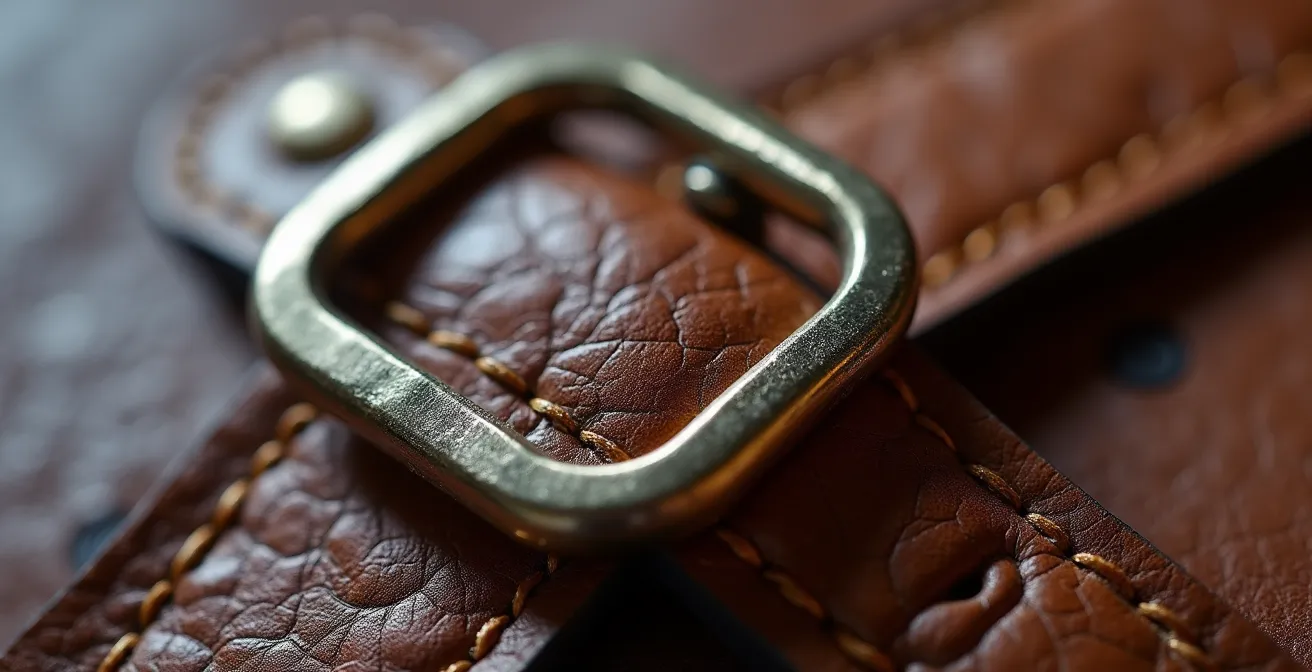
Fortunately, Toronto has a robust ecosystem of trusted consignors and authenticators who offer peace of mind. Many top-tier consignment stores now use technologies like Entrupy, which uses an AI-powered microscopic scanner to analyze physical details and certify an item’s authenticity. For premier brands like Hermès, there are even hyper-specialized experts who focus solely on the intricate details of Birkin and Kelly bags. When buying from private sellers on platforms like Kijiji or Facebook Marketplace, the rule is simple: if the seller is unwilling to meet at a professional authenticator, walk away.
Your Authentication Checklist for Toronto
- Visit established services like Fashionably Yours (707 Queen St W) or Designer Exchange, who use Entrupy technology to verify items.
- For Hermès, seek out specialists such as LeidiDonna Luxe, who collaborate with world-renowned Bababebi authentication.
- Request an Entrupy certificate ($50-$150) for any high-value purchase from stores like Becca’s Bags or Love that Bag etc.
- For mail-in services, contact Toronto-based Lux Second Chance, which offers a 48-hour turnaround time for authentication.
- Be wary of red flags from private sellers: meetings at subway stations, photocopied receipts, or prices that are more than 70% below retail are major warnings.
Holt Renfrew vs. Saks Fifth Avenue: Which Offers Better Personal Shopping?
When purchasing new, the value proposition extends beyond the item itself. The quality of the personal shopping experience can provide immense long-term benefits, from early access to sales to sourcing hard-to-find pieces. In Toronto, the two primary players in this arena are the Canadian institution, Holt Renfrew, and the American powerhouse, Saks Fifth Avenue. While both offer luxury goods and personal styling services, their approach and the underlying value for the client differ.
Holt Renfrew, with its deep Canadian roots, often fosters a more intimate and long-term client relationship. A good relationship with a Holt’s Sales Associate (SA) can feel like having a true insider on your side. They are known for providing clients with advance notice of seasonal markdowns, holding items before a sale goes public, and leveraging their national network of stores to track down a specific size or colorway. This is a prime example of building relationship equity, where loyalty is rewarded with tangible financial benefits and access.
Saks Fifth Avenue, integrated with Hudson’s Bay, brings a different kind of value through its powerful loyalty program. The Hudson’s Bay Rewards program allows clients to earn points on luxury purchases, a benefit not typically offered at this tier of retail. As noted in a recent analysis, this can translate to a 2% return on purchases, which can be substantial over time. While the personal touch may vary by SA, the structured reward system provides a predictable and consistent form of value.
Case Study: The Power of Local SA Relationships
Yorkville’s Pink Tartan boutique serves as a masterclass in leveraging SA relationships. Regular clients are not only given exclusive pre-sale access to collections that are typically marked down by 40-60%, but they also receive advance notice of annual price increases, such as Chanel’s average 9% hike in 2023. This allows them to make strategic purchases before the price goes up. Furthermore, a dedicated SA can source limited-edition items from sister stores across Canada, a service invaluable for collectors.
The “better” service depends on your goals. For priority access and the art of relationship-building, Holt Renfrew often has the edge. For those who prefer a structured, points-based rewards system, Saks Fifth Avenue presents a compelling alternative.
The Winter Salt Damage That Ruins $1,000 Leather Boots
In Toronto, the single greatest threat to a luxury leather investment is not wear and tear, but winter. The corrosive salt and brine used to de-ice city sidewalks can cause irreversible damage to high-quality leather boots in a single season. Salt stains, discoloration, and drying or cracking of the leather can devastate a pair of $1,000 boots, destroying both their appearance and their resale value. Value preservation is not an afterthought; it’s a proactive strategy that begins the moment you purchase the boots.
Many new owners of designer footwear make the critical mistake of wearing their boots straight out of the box. The delicate leather soles on brands like Christian Louboutin or Saint Laurent are not designed for Toronto’s slush-covered streets. Professional cobblers across the city stress the importance of preventative measures. The first step for any discerning owner should be a visit to a trusted cobbler to have a thin, durable rubber sole (like a Vibram or Topy sole) applied. This not only protects the original sole but also provides much-needed traction on icy surfaces.
Regular maintenance throughout the winter is also non-negotiable. This includes applying a high-quality water and stain repellent spray monthly and addressing salt stains immediately. According to local experts, to preserve the longevity of your investment, it’s wise to consider that professional cobblers recommend investing $300-400 minimum for quality boots that can even begin to withstand the climate. Below this threshold, materials and construction often fail within one or two seasons.
Toronto Cobbler’s Winter-Proofing Protocol
- Before First Wear: Visit a specialist like Nick’s Custom Boots (169 Dupont St) to have a protective rubber Vibram or Topy sole installed. This typically costs between $80 and $120.
- Monthly Protection: Apply a professional-grade protector spray like Saphir Super Invulner, available at shops like ShoeMedic, and reapply every 4-6 weeks.
- Emergency Stain Removal: For fresh salt stains, create a mixture of one part white vinegar to one part water. Gently dab the stain with a soft cloth—do not rub.
- Professional Cleaning: For severe staining or end-of-season care, use a pickup service like Love Your Shoes, which offers specialized cleaning with a typical 14-day turnaround.
- Proper Storage: Always store boots with cedar shoe trees to absorb moisture and maintain shape. Avoid wearing the same pair two days in a row to allow the leather to fully dry.
When Do Bloor Street Flagships Mark Down Their Collections?
For the strategic shopper, timing is everything. While core luxury brands like Chanel, Louis Vuitton, and Hermès famously never go on sale, the majority of designer labels on Bloor Street’s “Mink Mile” and in Yorkville follow a predictable markdown calendar. Understanding this schedule allows you to plan major acquisitions and avoid paying full price for seasonal items.
The luxury retail calendar is generally divided into two main sale seasons. The Fall/Winter sale season is the most significant. It typically begins with a “pre-sale” period in mid-to-late November. This is an invitation-only event for established clients, where you can purchase items at a discount (usually 20-30%) before they are made available to the public. The public sale then kicks off just before or during Black Friday, with a first round of markdowns. A second, deeper round of discounts (often reaching 50% or more) usually occurs after Christmas, clearing out remaining seasonal stock.
The Spring/Summer sale season follows a similar pattern, with pre-sales often beginning in May and public sales rolling out in June. Being aware of this rhythm is key. However, the most coveted items and common sizes are almost always gone during the pre-sale phase, reinforcing the importance of building relationship equity with a Sales Associate.
The Toronto Premium Outlets in Halton Hills feature a Gucci outlet, Saks Off 5th, and Aritzia outlet with savings of 30-70% off retail. The International Centre hosts quarterly warehouse sales tracked by StyleDemocracy newsletters and specific Instagram accounts like @toronto_sample_sales.
For those willing to venture beyond Bloor Street, outlet malls and warehouse sales offer another avenue for savings. However, be aware that outlet stock is often made specifically for the outlet and may not be from the mainline collection. Warehouse sales, on the other hand, can be a goldmine for past-season mainline stock, but require diligence to track and the patience to sift through racks.
Why Are Yorkville Condos the Most Expensive Per Square Foot?
The concentration of high-end boutiques like Chanel, Hermès, and Christian Louboutin in Yorkville is not an accident. It’s directly linked to the area’s status as the most expensive residential real estate market in Toronto. The neighbourhood is a magnet for high-net-worth individuals, creating a captive audience with significant disposable income. This symbiotic relationship between ultra-luxury real estate and high-end retail is a defining feature of the area.
This phenomenon is driven by what retail experts call the ‘wealth effect.’ As Doug Stephens, founder of the Retail Prophet consultancy, noted in a report on Canadian luxury retail for CBC News, “The last decade has seen unprecedented growth in values, which creates a ‘wealth effect’ psychologically.” When residents see the value of their properties skyrocket, it fosters a sense of financial confidence that translates directly into increased discretionary spending on luxury goods and services. Retailers are not just selling to tourists; they are catering to a resident base that views a $5,000 handbag as a casual purchase.
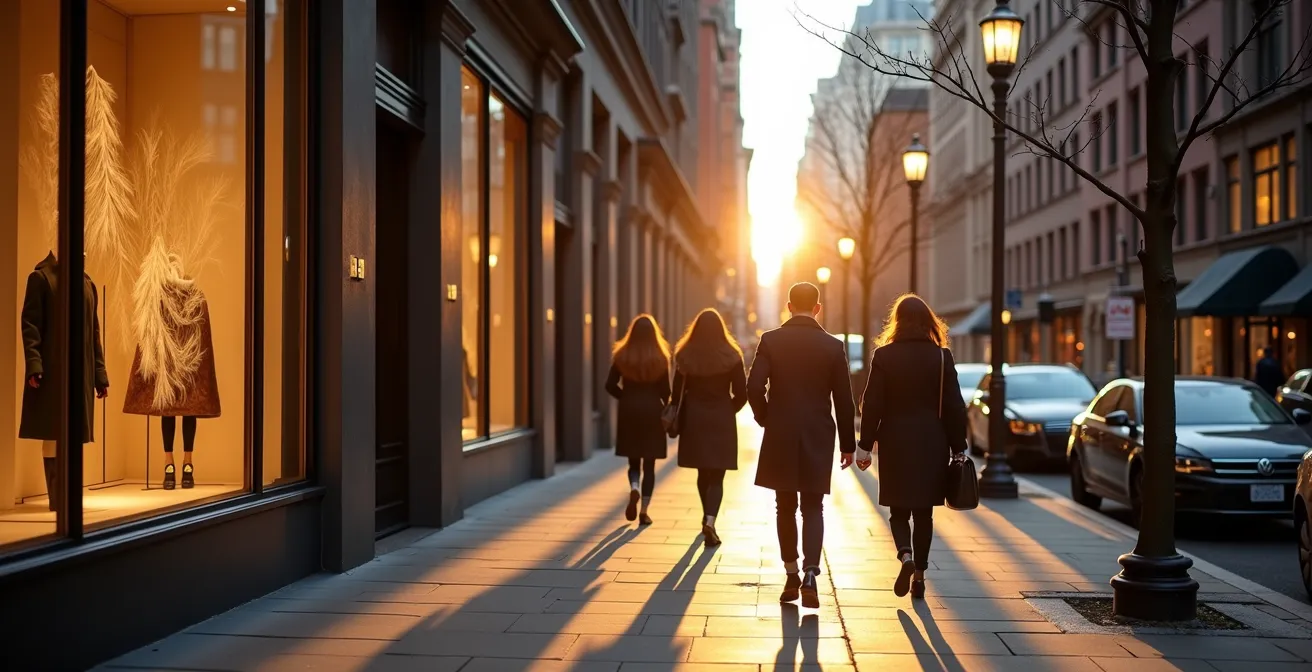
Furthermore, the high cost of commercial rent in Yorkville acts as a barrier to entry, ensuring that only the most capitalized and prestigious brands can afford a presence. This creates a curated, exclusive atmosphere that reinforces the area’s luxury positioning. For international brands, opening a flagship store in Yorkville is a strategic decision, as it’s a more accessible entry point into the Canadian market than other major North American hubs.
It’s just so much more affordable to come to Toronto then open a secondary location in Manhattan or Beverly Hills.
– Jordan Karp, Executive VP Savills Canada
This confluence of resident wealth, retail exclusivity, and strategic brand positioning is what makes Yorkville the epicentre of luxury in Toronto. It’s an ecosystem where the value of the real estate and the value of the goods in the windows are inextricably linked.
The Sizing Mistake That Makes “One Size Fits All” a Lie
One of the most common and costly mistakes in designer fashion is assuming your size is consistent across brands. The concept of “one size fits all” is a fallacy, and the discrepancies are even more pronounced when dealing with European designers. A French size 40 is not the same as an Italian 40 or an American 8. This sizing inconsistency can lead to poor fit, which undermines the entire aesthetic of a garment, and expensive alterations, which can add hundreds of dollars to the “true cost” of an item.
European brands, in particular, often run smaller and are designed for a different body type than North American brands. A label like Sandro or Maje (French) is notorious for its petite sizing, often requiring customers to size up one or even two sizes. In contrast, an American brand known for oversized silhouettes, like The Row, may require you to size down. This is critical intelligence for shopping online or during a hectic sale. Knowing a brand’s typical fit before you buy saves time, money, and the frustration of returns.
The solution is twofold: research and budgeting for a tailor. Before investing in a piece, a quick search for sizing reviews for that specific brand is essential. Secondly, you must factor in the cost of alterations as part of the total investment. A great tailor is as important as a great SA. Hemming designer trousers or taking in the waist of a blazer is a standard part of the process for achieving a perfect fit. According to a guide for Toronto shoppers, understanding these nuances is key.
| Brand | Origin | Typical Fit | Size Adjustment | Toronto Retailers |
|---|---|---|---|---|
| Sandro | French | Runs small | Size up 1-2 | Holt Renfrew, Saks |
| Max Mara | Italian | Classic European | Size up 1 | Holt Renfrew |
| Zadig & Voltaire | French | Relaxed fit | True to size | Yorkville boutique |
| The Row | American | Oversized silhouette | Size down 1 | WDLT117 |
Building a relationship with a skilled tailor in Toronto is a wise investment. They can transform a good sale find into a perfectly fitted bespoke piece. Budgeting for this service from the outset is a hallmark of a truly strategic shopper. Expect to spend $60-100 for hemming pants and upwards of $150-300 for complex jacket alterations at a reputable Yorkville-area tailor.
Key Takeaways
- Mastering Toronto’s luxury market requires shifting from a consumer mindset to an investor mindset, focusing on the entire asset lifecycle.
- Local knowledge is your greatest advantage: understand HST vs. US taxes, know the city’s top cobblers and authenticators, and learn the seasonal markdown calendar.
- True value comes from building “relationship equity” with Sales Associates and tailors, and from the disciplined preservation of your pieces against the local climate.
How to Experience Yorkville Luxury Without a Millionaire’s Budget?
The ultimate strategy for the discerning shopper is to gather market intelligence before deploying capital. Yorkville can be your personal “research lab” for luxury goods, even if you have no immediate intention to buy. Experiencing the neighbourhood is not just about spending; it’s about training your eye, understanding fit and quality, and building a mental catalogue of what you truly want. This “try-before-you-hunt” approach is invaluable when you later find a piece on sale or in a consignment store.
Case Study: VSP Consignment as a Research Lab
The success of VSP Consignment on Dundas West, as highlighted by local style publication BlogTO, exemplifies this strategy. The spacious, 4,000 sq ft boutique creates a pristine, pressure-free luxury environment. Discerning customers regularly visit to try on pieces from Céline, Balmain, and Prada, which are often marked down by up to 80%. They use the opportunity to determine their perfect size and ideal fit in these high-end brands. This intelligence is then used to confidently hunt for specific items during online sales or at warehouse events, knowing exactly what they are looking for.
An afternoon in Yorkville can be a highly productive, cost-free exercise in fashion education. The key is to have a plan. Start by absorbing the atmosphere and observing street style on the “Mink Mile,” then move into the stores with a clear objective. The beauty halls of Holt Renfrew or Saks are perfect for sampling luxury fragrances. Avant-garde boutiques like 119 Corbò or WDLT117 are curated like art galleries and encourage browsing. This allows you to handle the fabrics, see the construction, and feel the quality of items you might be tracking online.
The Affordable Yorkville Afternoon Itinerary
- 2:00 PM: Coffee and Curation. Start slightly west of Yorkville for a coffee at a hybrid boutique/café like Lost & Found on Ossington to get into a creative mindset.
- 2:30 PM: Window Shopping & Street Style. Walk the “Mink Mile” along Bloor Street. Pay attention to window displays and the outfits of stylish locals for inspiration.
- 3:15 PM: Sensory Browsing. Visit the Holt Renfrew beauty hall. This is the perfect environment to try high-end fragrances and skincare, often leaving with free samples.
- 4:00 PM: Artful Browsing. Explore a curated concept store like 119 Corbò or TNT, where fashion is presented as art and browsing without pressure is part of the experience.
- 4:45 PM: Gallery Hopping. End the afternoon by visiting some of the free commercial art galleries on Hazelton Avenue, soaking in the creative culture that defines the neighbourhood.
This approach demystifies luxury and empowers you to make smarter, more confident purchasing decisions when the time is right. It transforms passive desire into active research.
Frequently Asked Questions on Toronto Luxury Shopping
When do first markdowns typically begin on Bloor Street?
First markdowns typically start the third week of November, with luxury retailers offering 20-30% off select items before Black Friday.
Which brands never go on sale in Toronto flagships?
Louis Vuitton, Chanel, and Hermès maintain fixed pricing year-round, while multibrand boutiques like Intermix, Andrews, and TNT have predictable seasonal sales.
How can I access Toronto pre-sales?
Pre-sale access requires an established SA relationship or loyalty program status. Contact your Sales Associate directly 2-3 weeks before public sales begin to inquire about being added to their list.