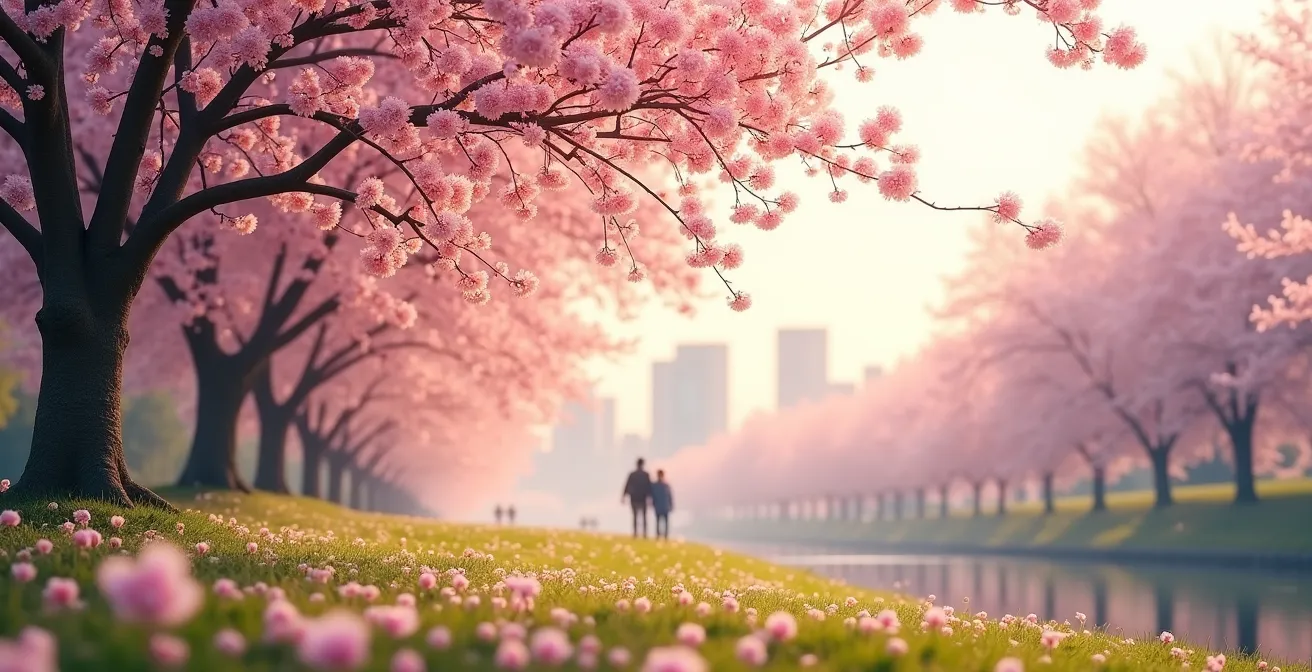
To truly honour Toronto’s cherry blossoms, we must shift our perspective from being a mere spectator to an active steward of their fragile health.
- The intense crowds and common behaviours like climbing or shaking branches cause severe, often irreversible, stress to the sakura trees.
- Responsible enjoyment involves understanding the trees’ biology, choosing less crowded locations, and adopting ethical photography techniques.
Recommendation: Plan your visit with a stewardship mindset. This means staying on paths, never touching the trees, and considering alternative viewing spots to reduce pressure on High Park’s delicate ecosystem.
There’s an electricity that runs through Toronto each spring. It’s a collective holding of breath as we await the first blush of pink on the branches of the sakura trees. When they finally bloom, the city exhales in a flurry of excitement, and thousands flock to the parks, cameras in hand. The common advice is simple and well-intentioned: look, but don’t touch. We see the signs, we hear the warnings, but the desire for that perfect photo, that immersive experience, often leads to unintentional harm.
As an arborist, I see what others don’t. I see the subtle fractures in the bark where a hand has gripped too tightly. I see the soil compacted by thousands of feet straying from the path, slowly starving the roots. I see the long-term stress these magnificent but delicate trees endure for their one week of glory. The conventional wisdom of “don’t climb the trees” is a start, but it fails to address the core of the issue. It treats the symptom, not the cause, which is a fundamental misunderstanding of our role in this natural spectacle.
What if the key wasn’t just passive avoidance, but active, conscious stewardship? What if appreciating the cherry blossoms meant understanding their profound fragility? This is not a transaction where we take a photo and leave. It is an ephemeral exchange, a brief moment where we are granted access to profound beauty, and in return, we owe it our protection. This is not another guide on where to find the blossoms; it is a lesson in how to be a worthy guest in their presence.
Together, we will explore the delicate life cycle that makes these blooms so fleeting, identify viewing alternatives that offer a more contemplative experience, and redefine what it means to capture their beauty without causing harm. We will learn to see the entire ecosystem, not just the single bloom, and in doing so, become the guardians this cherished Toronto tradition desperately needs.
Summary: A Guide to Respectful Sakura Viewing
- Why Do Cherry Blossoms Fall Off After Only One Week?
- How to Find Cherry Blossoms at Robarts Library to Avoid Crowds?
- High Park vs. Kariya Park: Which Sakura Experience Is More Authentic?
- The “Climbing for a Photo” Mistake That Kills Sakura Trees
- When Will the Sakura Bloom This Year Based on Winter Temperatures?
- The Tick Risk You Face When Walking Off-Trail in High Park
- How to Map a Laneway Photo Walk for Golden Hour Lighting?
- How to Enjoy High Park While Respecting Its Fragile Ecosystem?
Why Do Cherry Blossoms Fall Off After Only One Week?
The fleeting nature of the sakura is not a flaw; it is a profound expression of their existence at the very edge of their climatic tolerance. A cherry blossom’s lifespan is a delicate balance of energy, genetics, and weather, lasting anywhere from a few days to just over a week. From an arborist’s perspective, this is a high-stakes biological event. The tree pours an immense amount of stored energy into producing this massive, simultaneous bloom, a process that leaves it vulnerable. Each blossom is an intricate, short-lived structure designed for a single purpose: pollination.
In Toronto, this fragility is amplified. Our city is near the northernmost limit for these specific cultivars of sakura. They are not as hardy as our native maples or oaks. A late spring frost, which is common in our region, can destroy open blossoms overnight. Strong winds whipping off Lake Ontario can strip a tree of its petals in hours, prematurely ending the display. Even a sudden heatwave can accelerate the life cycle, causing the blossoms to fade and fall faster than expected. This is the ephemeral exchange in action: the tree gives us this incredible burst of beauty, but its persistence is entirely at the mercy of our unpredictable weather.
Understanding this puts our role as observers into sharp focus. Any additional stress we introduce—shaking branches for a “petal shower,” compacting the soil around their roots, or causing physical damage—directly impacts the tree’s ability to recover and store energy for the following year. A stressed tree may produce fewer blossoms next season, or in severe cases, succumb to disease. Their short life is a sign of their sensitivity, a sensitivity we must honour.
How to Find Cherry Blossoms at Robarts Library to Avoid Crowds?
Part of responsible stewardship is reducing our collective impact on High Park. The answer isn’t to stop enjoying the blossoms, but to disperse and discover the other quiet pockets of beauty scattered across Toronto. One of the most striking and underappreciated locations is on the University of Toronto campus, specifically around the iconic Robarts Library. Here, the experience is transformed from a battle with crowds to a moment of quiet contemplation.
The primary cluster of trees is located along Harbord Street and on the west side of the library. Unlike the naturalistic setting of a park, these sakura trees create a stunning visual paradox. Their soft, organic pink petals stand in stark contrast to the library’s imposing Brutalist architecture. This juxtaposition offers a completely different photographic and aesthetic experience—one that celebrates the harmony of nature and urban design. For those seeking an even quieter moment, the University of Toronto Scarborough campus offers another excellent alternative, with about 50 trees located near the Humanities Wing, providing a peaceful campus atmosphere far from the downtown rush.
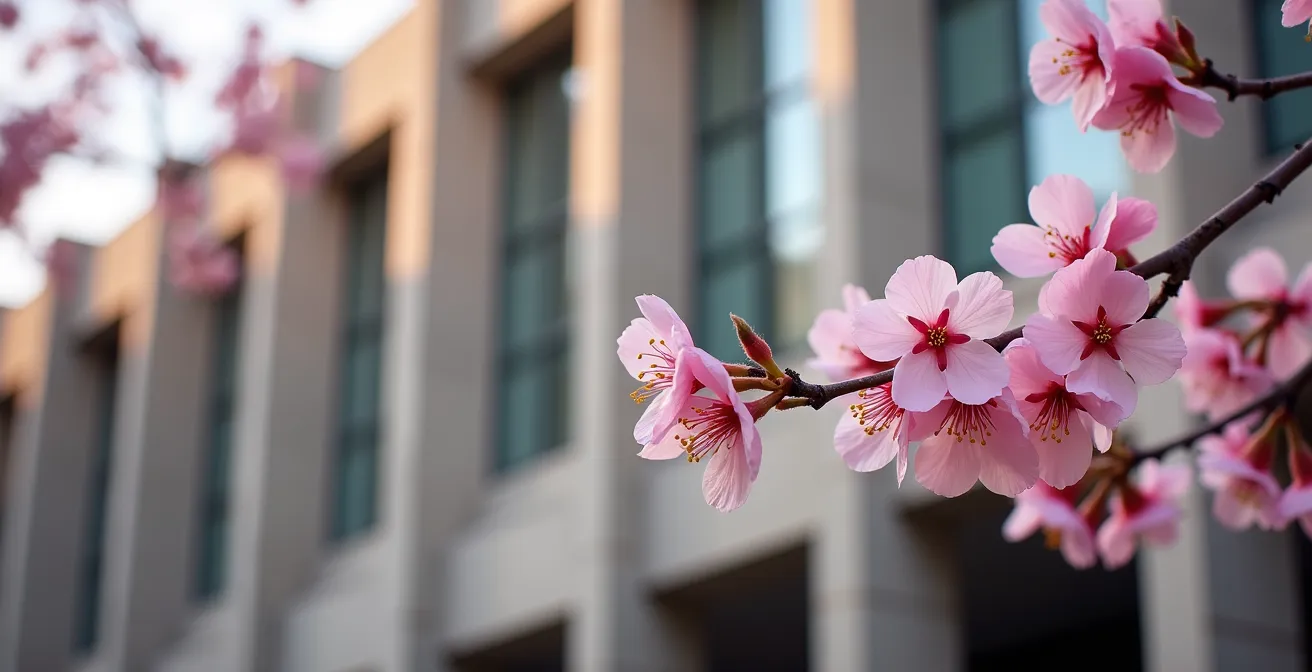
Choosing these alternative locations is a powerful act of conscious observation. It allows for an unhurried appreciation of the blossoms without the pressure and environmental strain of a massive event. You can take your time, appreciate the unique setting, and participate in the sakura season without contributing to the degradation of our most popular green spaces. It’s a choice that benefits both you and the ecosystem.
High Park vs. Kariya Park: Which Sakura Experience Is More Authentic?
The term “authentic” is subjective, but when it comes to the hanami (flower viewing) experience, it often implies a sense of peace and contemplation. In the Greater Toronto Area, two major parks offer distinct sakura experiences: Toronto’s High Park and Mississauga’s Kariya Park. While High Park received the original gift of trees, Kariya Park was specifically designed to foster a traditional Japanese garden atmosphere, making the choice between them a matter of intention.
As the City of Toronto’s official page notes, the first trees in High Park were a 1959 gift symbolizing life and friendship, with later additions from the Sakura Project. This history is significant, but the modern experience is often defined by overwhelming crowds that can make quiet reflection nearly impossible. Kariya Park in Mississauga, on the other hand, was created as a symbol of the city’s twinning with Kariya, Japan. Its design, complete with a pavilion, meandering paths, and a focused collection of over 300 cherry trees, is purpose-built for a tranquil and immersive experience. The information in the following comparison, based on data provided by municipal sources like the City of Toronto, highlights this fundamental difference.
| Feature | High Park Toronto | Kariya Park Mississauga |
|---|---|---|
| History | 1959 gift from Tokyo citizens | Symbol of Mississauga-Kariya twinning |
| Number of Trees | Over 100 sakura trees | Over 300 cherry trees |
| Atmosphere | Natural parkland, massive crowds | Japanese garden design, tranquil |
| Peak Season Crowds | Hundreds of thousands | Significantly fewer visitors |
| Hanami Experience | Challenging due to crowds | More contemplative atmosphere |
From a stewardship perspective, choosing Kariya Park or another smaller location is an inherently more respectful act. It alleviates the immense pressure on High Park’s fragile ecosystem and allows for an experience that is closer to the contemplative spirit of hanami. Authenticity, in this context, is found not just in the trees’ origin, but in our ability to appreciate them without causing harm.
The “Climbing for a Photo” Mistake That Kills Sakura Trees
This is the point where my appreciation for beauty must be balanced by a stern warning. The single most destructive act I witness every year is visitors climbing, pulling down, or shaking sakura trees for a photograph. It may seem harmless, but this behaviour is catastrophic for the tree’s health. Sakura trees have thin bark and a more delicate structure than native Canadian trees. When you climb them, your weight can crack branches and tear the bark, creating large wounds.
These wounds are open invitations for pests and fungal diseases, which can weaken and eventually kill the tree. Shaking branches for a “petal shower” not only prematurely ends the bloom for everyone else but can also damage the delicate budding structures that will become next year’s flowers. This is not a robust oak; it is a sensitive organism. The penalties for such actions reflect this severity, with by-law fines of $500 to $100,000 for damaging a single protected tree in a Toronto park. But the real cost is the loss of future beauty for generations to come.
True appreciation is shown through respect, not physical interaction. There are countless ways to capture stunning photos without ever laying a hand on the tree. This is what I call ethical photography—an approach that prioritizes the health of the subject over the final image.
Your Action Plan: Ethical Sakura Photography Techniques
- Use telephoto lenses (e.g., 85-200mm) to create beautiful compressed close-ups of blossoms from the designated pathways.
- Experiment with forced perspective by getting low to the ground and positioning your subject with branches appearing in the foreground.
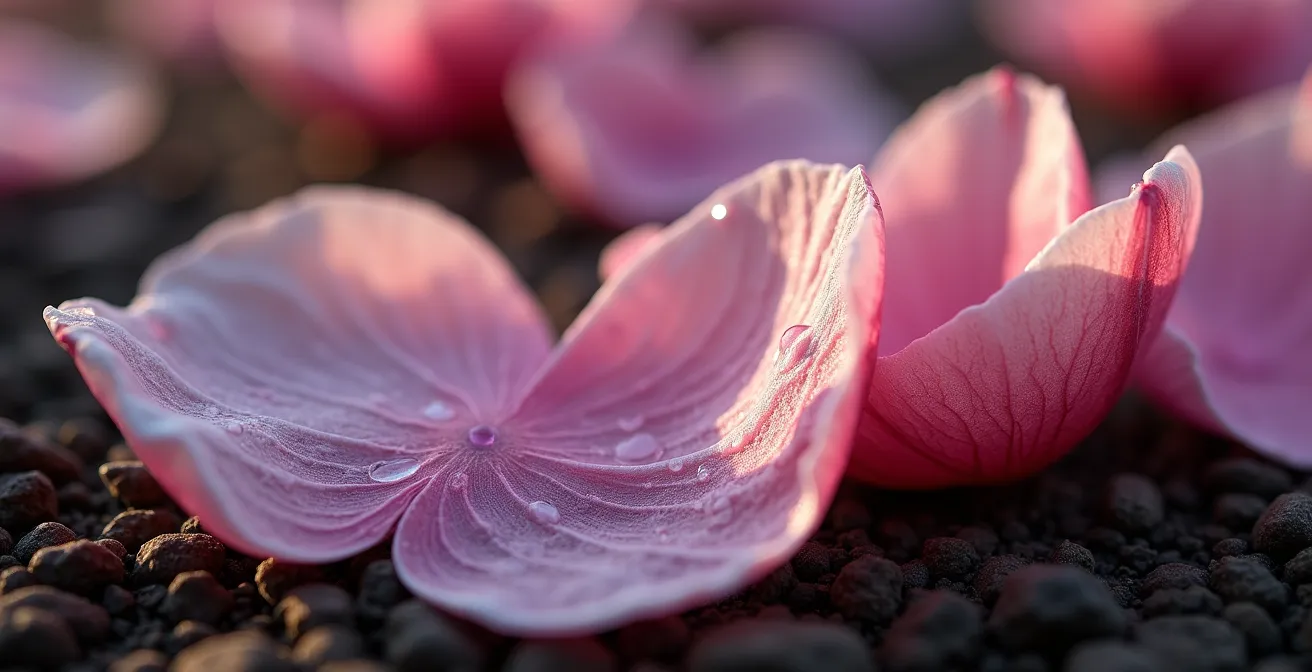
- Focus your lens on the carpet of fallen petals on the ground; their texture and colour are just as beautiful as the blossoms on the tree.
- Shoot during the “golden hour” (early morning or late afternoon) for dramatic, soft lighting that enhances the blooms without needing to get close.
- Stay on the trail and frame your shots by shooting through the branches of a nearby tree to create natural depth and context.
When Will the Sakura Bloom This Year Based on Winter Temperatures?
Predicting the precise moment of peak sakura bloom is an annual obsession in Toronto, and it’s more of a science than a guess. As an arborist, I rely on environmental cues and data, not just a calendar date. The timing is primarily dictated by the preceding winter’s temperatures and the arrival of sustained warmth in spring. A colder, longer winter will typically delay the bloom, while a mild winter can lead to an earlier, but sometimes more vulnerable, flowering period if it’s followed by a late frost.
The most reliable local predictions come from organizations like the High Park Nature Centre. Their method involves closely monitoring the bud development stages throughout March and April. According to their tracking, “peak bloom” officially begins when about 70% of the blossoms have opened. Once this peak is reached, the floral display can last anywhere from 4 to 10 days. The longevity of the bloom is then entirely dependent on the weather; as their experts state, cool, calm conditions can extend the viewing period, while warm and unsettled weather shortens it significantly.
While there are variations due to microclimates across the city, the general window for this event is fairly consistent. Data and historical observation show that Toronto’s sakura trees typically reach their full splendour during the peak bloom window in late April and early May. Watching for a sustained period of spring-like temperatures is the best indicator that the show is about to begin. This understanding allows for better planning and reduces the frantic, last-minute rush that contributes to overcrowding.
The Tick Risk You Face When Walking Off-Trail in High Park
My plea to stay on designated paths is not just about protecting the trees and the park’s rare Black Oak Savannah ecosystem. It is also a critical public health warning. High Park, like many of Toronto’s beautiful wooded areas, is a known habitat for blacklegged ticks, the primary carriers of Lyme disease. The desire to get a unique photo or find a quiet spot by stepping into the tall grass or leaf litter is a significant and often underestimated risk.
Ticks do not jump or fly; they wait on the tips of grasses and shrubs in a behaviour called “questing.” When you brush past, they latch on. According to Toronto Public Health, the city has established tick-monitoring programs, and their findings are sobering. In certain areas identified as higher risk, the tick infection rate for Lyme disease exceeds 20%. This means that straying from the path is a gamble with your health. The most effective way to prevent a tick bite is to avoid their habitat entirely by remaining on paved or cleared trails.
If you do spend time in the park, even on the trails, a post-visit check is essential for your safety. Adhering to a strict safety protocol is part of responsible park use. The following steps are recommended by public health officials:
- Wear light-coloured clothing with long pants and sleeves to make spotting ticks easier.
- Use an insect repellent approved by Health Canada, such as one containing DEET or Icaridin, on exposed skin and clothing before you go.
- Perform a full-body check on yourself, your children, and your pets within two hours of returning home, paying special attention to areas like the scalp, armpits, and groin.
- If you find an attached tick, remove it carefully with fine-tipped tweezers as soon as possible. Transmission of Lyme disease is unlikely if the tick is removed within 24 hours.
How to Map a Laneway Photo Walk for Golden Hour Lighting?
Embracing the spirit of stewardship means looking for beauty beyond the obvious. While the sakura are the stars of the season, Toronto’s spring magic is not confined to its parks. A fantastic way to practice responsible photography and discover a different side of the city is to explore its vibrant laneways, especially during the “golden hour”—the hour after sunrise and before sunset.
Instead of mapping a route to the most crowded cherry trees, plan a photo walk through an area like Queen West’s famous Graffiti Alley and the surrounding laneways of Alexandra Park. Here, the subject is the interaction between urban grit and resilient nature. You will find spring’s tenacity on full display: bright green moss growing in the cracks of pavement, determined flowers blooming in window boxes, and unexpected blossoms in hidden community gardens, all bathed in the warm, dramatic light of golden hour. This is a celebration of Toronto’s unique urban spring, a story just as compelling as the cherry blossoms.

Mapping such a walk is simple. Use an online map to trace a path through the network of laneways between major streets like Queen and Dundas. A sun-tracking app can tell you the exact time of golden hour and the direction of the light, allowing you to plan which way to walk to capture long, dramatic shadows and glowing subjects. This approach offers endless creative possibilities and ensures you are part of a solution, spreading the creative energy of the season across the city instead of concentrating it in one fragile location.
Key Takeaways
- Sakura trees are extremely sensitive to their environment and human interaction; their short bloom is a sign of fragility, not just beauty.
- To protect High Park’s ecosystem, seek out alternative viewing locations like Robarts Library, Kariya Park, or Toronto’s urban laneways.
- Ethical photography is possible. Use telephoto lenses and creative angles from a distance to capture stunning images without touching or damaging the trees.
- Going off-trail is dangerous for both the park’s rare flora and your own health due to the significant risk of blacklegged ticks carrying Lyme disease.
How to Enjoy High Park While Respecting Its Fragile Ecosystem?
We’ve explored the why, the where, and the how of responsible sakura viewing. Now, we bring it all together into a simple philosophy: enjoy High Park as a guardian, not just a visitor. This final section is a pledge of stewardship. The park is more than a backdrop for our photos; it is a complex and fragile ecosystem, home to a rare Black Oak Savannah that exists almost nowhere else on earth. The sakura trees are cherished guests within this ecosystem, and our behaviour dictates their survival.
Experts who monitor the trees year-round offer a stark reminder of their vulnerability. As documented by the Sakura in High Park blog, these trees are not as resistant as native species. When damaged by climbers or shaking, “the tree is now severely damaged and more vulnerable to disease and will have a much more difficult time to survive.” This is the reality we must confront. Every careless action has a direct and lasting consequence on the tree’s vigor and ability to thrive.
True enjoyment comes from a place of respect. It means checking the City of Toronto’s website for car-free days to reduce congestion. It means practicing a strict “Leave No Trace” policy, packing out everything you bring in. It means staying on the trails to protect not just the tree roots but the hundreds of delicate native species growing on the forest floor. It means expanding your visit to see the wetlands around Grenadier Pond, dispersing your presence and impact. It means embracing your role as a temporary steward of this incredible public space.
Your role as a steward begins now. Plan your visit using these principles of conscious observation and share this knowledge with others. The future of Toronto’s cherished cherry blossoms depends not on park staff alone, but on the mindful, respectful choices we all make together. Be the reason these trees continue to thrive for generations to come.