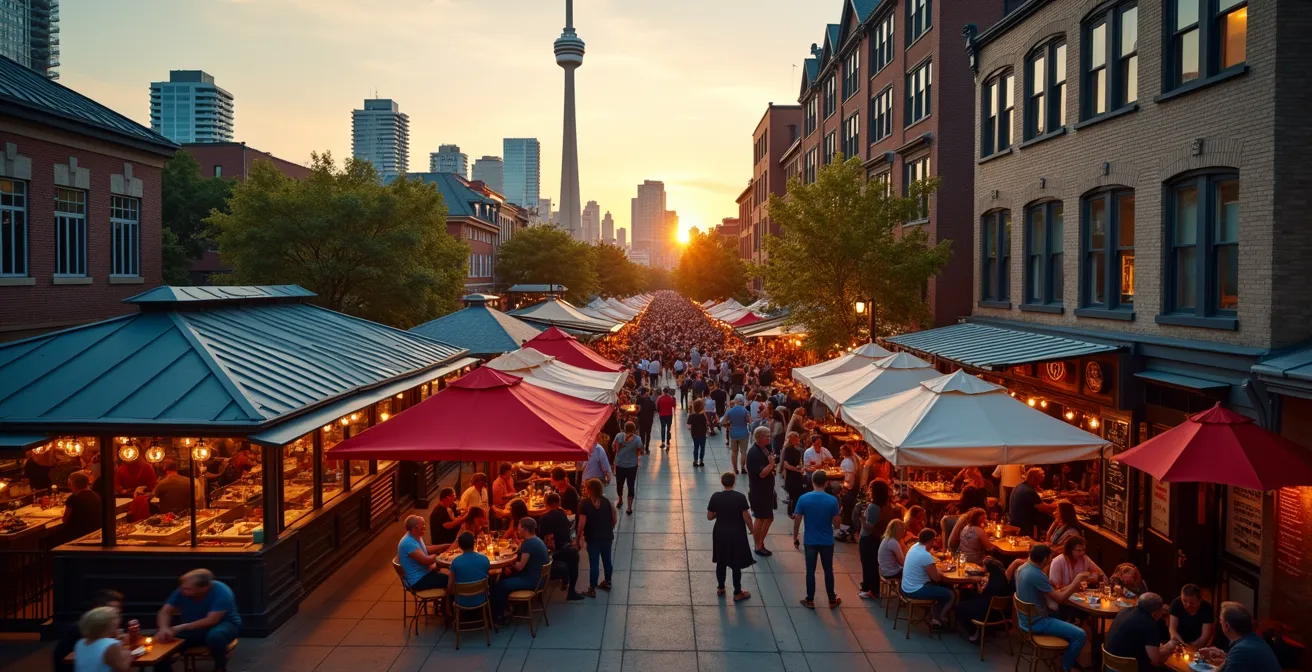
Conquering Toronto’s dining scene isn’t about knowing the ‘best’ restaurants, but mastering the hidden systems of access, timing, and value.
- The recent arrival of the Michelin Guide has intensified competition, making a strategic approach to reservations non-negotiable.
- True value lies in matching your goal—whether trend-seeking or authentic experiences—to the right city quadrant, primarily the West End versus the East End.
Recommendation: Stop chasing endless lists. Start thinking like a concierge by targeting specific times, locations, and platforms to unlock the city’s most rewarding culinary experiences.
Navigating Toronto’s culinary landscape can feel like an impossible task. For visitors and new residents, the sheer scale is daunting; with over 7,500 restaurants across 158 neighborhoods, decision paralysis is a real phenomenon. The city is celebrated for its incredible diversity, offering everything from authentic Thai and Greek classics to cutting-edge Filipino fusion. Faced with this abundance, the default approach is often to consult generic “best of” lists or simply wander into a trendy-looking spot.
While these methods can yield pleasant surprises, they are fundamentally games of chance. They fail to address the underlying systems that govern the city’s dining scene. The common advice to “book ahead” is no longer sufficient in a post-Michelin environment where demand for top tables has skyrocketed. The real challenge isn’t a lack of options, but a lack of strategy for navigating them effectively.
This guide offers a different perspective. Instead of providing another exhaustive list, we will equip you with the decisive framework of a dining concierge. The key to unlocking Toronto’s best isn’t just knowing *what* to eat, but understanding *how* to access it. This involves mastering the hidden dynamics of reservation platforms, recognizing the distinct value propositions of different city sectors, and knowing where to look for authenticity beyond the downtown core.
By adopting this strategic mindset, you can move from being a passive diner to an active participant, capable of curating exceptional experiences tailored to your specific tastes, budget, and desired atmosphere. This article breaks down the essential strategies you need to conquer the city’s vibrant and complex food scene.
Summary: A Strategic Guide to Toronto Dining
- Why Has the Michelin Guide Changed Reservation Availability in Toronto?
- How to Get a Table at Bar Raval Without Waiting 2 Hours?
- West End Dining vs. East End Dining: Which Side Has Better Value?
- The “Hidden Dairy” Mistake Vegans Make at Fusion Restaurants
- When Do Top Restaurants Release Their Tables on Resy?
- How to Get a Reservation at Yorkville’s Most Exclusive Patios?
- Broadview Hotel vs. Humber Bay: Which Skyline View Is More Dramatic?
- How to Find Authentic Global Eats in Toronto’s Strip Malls?
Why Has the Michelin Guide Changed Reservation Availability in Toronto?
The 2022 arrival of the Michelin Guide in Toronto fundamentally altered the city’s dining equilibrium. While it celebrated culinary excellence, it also created what can be called the “Michelin Ripple Effect.” Restaurants receiving stars or even a Bib Gourmand recognition experienced an immediate and sustained surge in demand. This isn’t just about the top-tier establishments; the increased visibility has made securing tables at a much wider range of quality restaurants significantly more competitive.
For diners, this means the old rules no longer apply. Spontaneity is a luxury few can afford at recognized venues. As seen with establishments like BB’s (Filipino) and Kiin (Thai), earning a Bib Gourmand can transform a popular spot into an almost unattainable one overnight. The key is to understand this new landscape and adapt your strategy. Instead of fruitlessly refreshing booking apps, a more tactical approach is required. This new reality demands a proactive, not reactive, mindset to dining.
To navigate this, consider these strategies:
- Book during shoulder hours: Target slots between 4:00-5:30 PM or after 10:30 PM for better availability.
- Monitor social media: Follow restaurant Instagram accounts closely, as they often announce last-minute table releases or cancellations.
- Utilize concierge services: If staying at a luxury hotel like the Four Seasons, their concierge may have insider access or reserved tables.
- Target late lunches: Weekday lunches, especially between 2:00-4:00 PM, are often easier to book, particularly for coveted patio spots.
- Set multi-platform notifications: Use Resy, Tock, and OpenTable simultaneously with notifications enabled to get an edge.
How to Get a Table at Bar Raval Without Waiting 2 Hours?
Bar Raval, with its stunning Gaudí-inspired interior and impeccable Spanish pintxos, is notoriously difficult to get into. Its no-reservations policy means long lines are the norm, especially on weekends. However, waiting for hours is an amateur’s game. A strategic diner can bypass the queue by understanding the flow of the restaurant and the city’s dining habits. The goal is not to force your way in during peak hours, but to align your visit with the natural lulls in traffic.
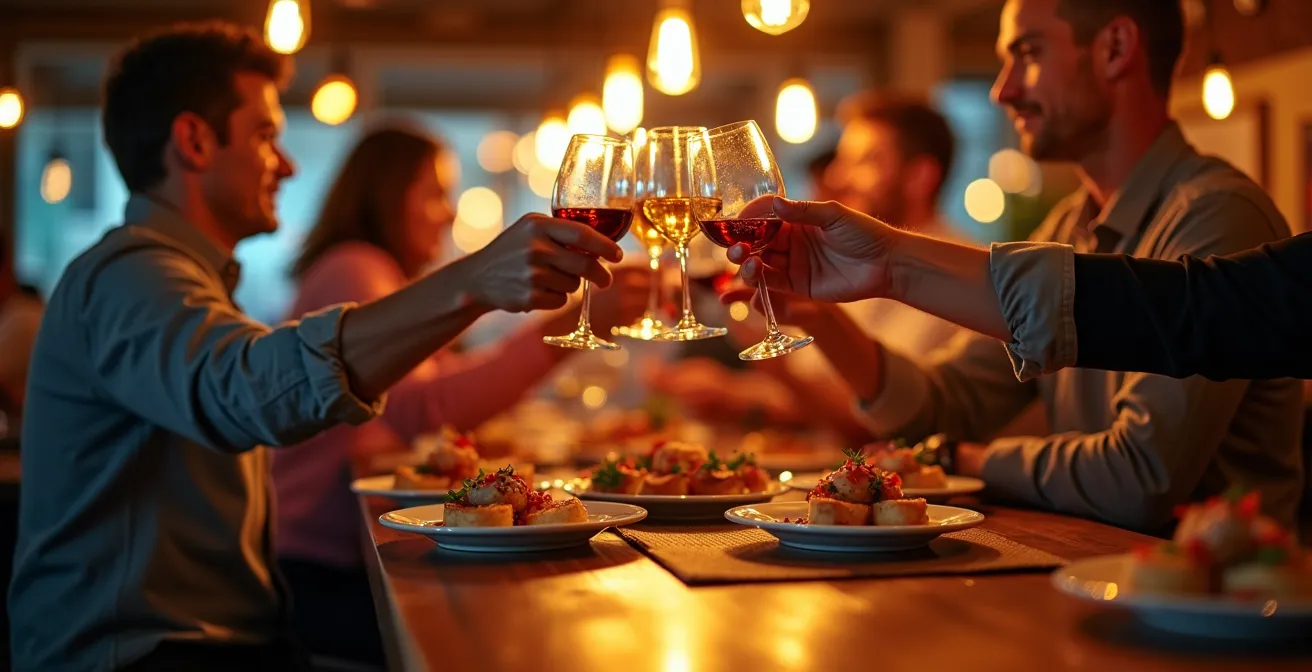
Your best strategy is to embrace the Spanish tapas culture itself. Think of Bar Raval not as a full dinner destination, but as the perfect starting point for an evening. Arriving early is paramount. By showing up around 4:00 PM, you position yourself perfectly for the pre-dinner slot, enjoying cocktails and small bites as the Spanish do before heading elsewhere for a main course. This approach transforms a frustrating wait into a sophisticated and enjoyable part of a larger culinary tour of the Ossington strip.
Follow this concise plan:
- Arrive at 4:00 PM: Target this pre-dinner sweet spot to enjoy the bar before the evening rush begins.
- Go mid-week: Tuesday and Wednesday afternoons see significantly less tourist and local traffic.
- Dine solo or as a pair: Smaller groups are much more likely to be seated quickly at the bar.
- Watch the weather: A little rain can be your best friend, deterring the crowds and opening up space.
- Adopt the “pintxo crawl” mindset: Plan for a 30-45 minute standing visit as one stop on a larger food tour, rather than a long, seated meal.
West End Dining vs. East End Dining: Which Side Has Better Value?
A common mistake visitors make is treating Toronto’s food scene as a monolith. The city is bisected by Yonge Street, creating a distinct cultural and culinary divide between the West End and the East End. Understanding this division is crucial for finding the best value-density—not just the cheapest meal, but the best experience for your money. The “better” side depends entirely on your definition of value: are you seeking trend-setting concepts or authentic, neighbourhood-centric experiences?
The West End, encompassing areas like Queen West, Ossington, and Little Italy, is the epicentre of Toronto’s high-concept, chef-driven dining. Here you’ll find innovative fusion menus, trendy cocktail bars, and restaurants that are destinations in themselves. This comes at a price, both in dollars and in reservation difficulty. In contrast, the East End, including Leslieville and the Danforth (Greektown), offers a more relaxed, community-focused experience. It’s dominated by family-run institutions serving authentic ethnic cuisines, where a fantastic meal can be had without booking weeks in advance. For example, while Little Italy on College Street offers excellent wood-fired pizzas, Greektown on the Danforth provides a wealth of authentic Hellenic dining at spots like Messini or Pantheon.
The following table, based on insights from guides like Destination Toronto’s culinary itineraries, breaks down the core differences.
| Criteria | West End (Queen West, Ossington) | East End (Leslieville, Danforth) |
|---|---|---|
| Price Range | $$$ – $$$$ | $$ – $$$ |
| Restaurant Style | High-concept, chef-driven tasting menus | Family-run institutions, neighborhood-centric |
| Reservation Difficulty | High – trendy spots book weeks ahead | Moderate – more walk-in friendly |
| Best For | Trendy cocktail bars, innovative fusion | Authentic ethnic cuisines, relaxed brunch |
| TTC Accessibility | Excellent – multiple streetcar lines | Good – subway access via Line 2 |
The “Hidden Dairy” Mistake Vegans Make at Fusion Restaurants
Toronto’s vegan dining scene is among the best in the world, moving far beyond simple plant-based options. High-end restaurants like PLANTA Queen and comfort food spots like Hogtown Vegan attract diners of all persuasions with sheer quality and innovation. However, this culinary sophistication, especially in fusion cuisine, creates a specific pitfall for strict vegans: hidden dairy. Ingredients that are traditionally dairy-free in one cuisine can be altered in a fusion context.
Relying on assumptions is a common mistake. For example, naan bread is often vegan, but in an Indian-fusion restaurant, it might be brushed with butter or ghee for extra richness. Korean-style fried cauliflower seems safe, but the breading could contain milk powder for a crispier texture. Even kimchi, a staple of Korean food, can sometimes contain shrimp paste or fish sauce, making it unsuitable for vegans. As guides to the city’s multicultural food scene highlight, the key is direct and specific communication with the kitchen staff.
To dine with confidence, you must move from passive inquiry (“Is this vegan?”) to active verification (“Can you confirm the ingredients in…”). For a truly safe and delicious experience, especially with South Indian food, heading to specialists like Udupi Palace, known for naturally dairy-free dosas and uttapams, is a foolproof strategy.
Your Action Plan: Vetting Fusion Menus for Hidden Ingredients
- Ask specifically: ‘Is the naan brushed with butter or ghee?’ at Indian-fusion spots.
- Inquire about milk powder in the breading for Korean-style fried cauliflower dishes.
- Verify if kimchi contains shrimp paste or fish sauce, even if you’re just vegetarian.
- Request a list of ingredients for curry bases, as they can often contain hidden butter or cream.
- When in doubt, head to authentic South Indian restaurants that specialize in naturally dairy-free cuisine like dosas.
When Do Top Restaurants Release Their Tables on Resy?
In Toronto’s competitive dining scene, the most coveted tables are won not by luck, but by understanding the digital access systems. For many top-tier restaurants, Resy is the primary booking platform, and it operates on a predictable schedule. Knowing when tables are released is the single most important factor in securing a reservation at hotspots like Alo or Edulis. Most diners try to book randomly; the strategic diner knows the exact time to be online.

The majority of premium restaurants release their new tables daily at a specific time, typically 10:00 AM EST. Being logged in and ready at 9:59 AM is essential. However, the strategy doesn’t end there. Many reservations are cancelled 24-48 hours before the seating date, creating a second window of opportunity. Setting a “Notify” alert on Resy for your desired date and time is a powerful tactic. Some restaurants, like the highly acclaimed Edulis, bypass the daily system and release tables in multi-week blocks, an event they usually announce on their Instagram account.
For those with access, the American Express Global Dining Collection can also provide exclusive tables at partner restaurants, circumventing the public rush entirely. The key is a multi-pronged digital approach.
- Target 10:00 AM EST: Be ready for the daily drop of new tables at most premium restaurants.
- Set Resy Notifications: This is your best chance to grab tables that open up due to cancellations 24-48 hours prior.
- Follow on Instagram: Monitor accounts for restaurants like Edulis that announce block releases outside the daily schedule.
- Consider the Bar: For ultra-exclusive spots like Alo, the barroom often accepts walk-ins, offering a taste of the experience without a reservation.
- Leverage Credit Card Perks: Use services like the Amex Global Dining Collection for reserved access.
How to Get a Reservation at Yorkville’s Most Exclusive Patios?
Yorkville is synonymous with luxury, and its patios are some of the most sought-after slivers of real estate in the city. Spots like The One Eighty, perched atop the Manulife Centre, or the famed Canoe on the 54th floor of the TD Bank Tower, offer breathtaking views and an air of exclusivity. Securing a table here, especially during prime summer evenings, requires more than a simple online booking. It demands a blend of savvy timing, direct communication, and a bit of social engineering.
The first rule is to think beyond peak hours. The most competitive time for a patio is from 6:00 PM to 9:00 PM on a sunny day. A strategic diner avoids this battlefield entirely. Instead, target a late lunch on a weekday (2:00 PM – 4:00 PM), when the crowds have thinned but the sun is still high. This is the golden hour for patio availability. Furthermore, don’t underestimate the power of a direct phone call. Calling a restaurant at 3:00 PM on a Tuesday, one of the quietest times in the service week, allows you to build a rapport with the staff, which can sometimes yield better results than an anonymous online request.
Another counter-intuitive strategy is to monitor the weather. Many exclusive patios are covered. Booking a table on a day with a high chance of rain can dramatically increase your odds, as fair-weather diners will cancel their reservations. Finally, for solo diners or pairs, the bar area of a patio is often first-come, first-served, offering a backdoor to the same million-dollar view and atmosphere.
Broadview Hotel vs. Humber Bay: Which Skyline View Is More Dramatic?
For many, a memorable meal is intrinsically linked to the view. In Toronto, two locations offer the most iconic, yet dramatically different, skyline vistas: the Broadview Hotel in the East End and the shores of Humber Bay in the west. Choosing between them isn’t about which is “better,” but which captures the specific mood you’re after. Your decision should be based on time of day, desired atmosphere, and photographic intent.
As the concierge of your own dining experience, it’s worth noting what other experts recommend. For the ultimate view, Destination Toronto’s guide points to a different contender entirely. As they note in their guide to Toronto restaurants with a view:
If you’re looking for an amazing view, it doesn’t get any better than 360 Restaurant located atop Toronto’s most famous landmark, the CN Tower. The restaurant revolves as you eat so you get to see every angle of the city from more than 351 metres above the ground.
– Destination Toronto, Toronto Restaurants With a View Guide
While the CN Tower offers the highest perspective, the choice between Broadview and Humber Bay provides a more nuanced experience. The Broadview Hotel’s rooftop bar provides a gritty, layered, urban panorama looking west. It’s the definitive place to watch the sunset behind the downtown core, capturing the energy of the Don Valley Parkway’s flowing traffic and the Don River. In contrast, Humber Bay Shores Park offers a clean, water-centric, panoramic view looking east. It’s ideal at sunrise, with the skyline reflected perfectly on Lake Ontario. The former is a full-service, reservation-required experience; the latter is a free, public park experience perfect for a picnic.
| Aspect | Broadview Hotel (East End) | Humber Bay |
|---|---|---|
| Best Time | Sunset – sun sets behind downtown | Sunrise – sun rises over lake |
| View Type | Gritty urban layers with Don River & DVP | Clean panoramic water-centric view |
| Experience | Full-service rooftop bar & restaurant | Public park experience (Humber Bay Shores Park) |
| Photography | Best for long-exposure traffic shots | Ideal for reflective skyline shots |
| Accessibility | Reservation required | Free public access |
Key Takeaways
- Master the System: Success lies in understanding reservation drop times, leveraging shoulder hours, and knowing when to call versus click.
- Divide and Conquer: Strategically choose between the trendy, high-concept West End and the authentic, value-driven East End based on your goals.
- Explore the Edges: The most authentic global flavours are often found in unassuming strip malls in Scarborough and Markham, rewarding those willing to venture beyond the core.
How to Find Authentic Global Eats in Toronto’s Strip Malls?
While downtown Toronto gets most of the culinary attention, the city’s true gastronomic soul often resides in its unassuming suburban strip malls. In a city profoundly shaped by immigration, as noted by sources like National Geographic’s coverage of Toronto’s food scene, many first-generation immigrant restaurateurs set up shop where rent was affordable and their communities were close. This created incredible pockets of authenticity in areas like Scarborough and Markham. A “Strip Mall Safari” is the ultimate strategic move for a diner seeking genuine global flavours over downtown hype.
This requires a different set of skills. Forget sleek branding and online booking systems. The signs of an authentic gem are often hand-written menu additions, dated decor, and a clientele speaking the restaurant’s native language. Following local Toronto food influencers on Instagram, like @toreats or @tastetoronto, can provide invaluable leads to these hidden spots. For example, a trip down Gerrard Street East in Little India will lead you to the legendary kebabs at Lahore Tikka House or the perfect South Indian dosas at Udupi Palace, experiences that feel worlds away from the downtown core.
This type of exploration requires preparation. Many of these establishments are cash-only, a detail that can trip up an unprepared diner. The most effective approach is to map out plaza clusters, such as those around the intersection of Kennedy and Steeles, and plan a multi-stop food tour. This allows you to sample several different cuisines in one trip, maximizing the reward for your journey outside the city center. It’s a culinary adventure that gets to the heart of what makes Toronto’s food scene truly special.
Apply this strategic framework on your next culinary outing to transform your Toronto dining experience from overwhelming to unforgettable. By moving beyond simple lists and embracing the role of a dining concierge, you unlock the city’s true potential, one perfectly chosen meal at a time.