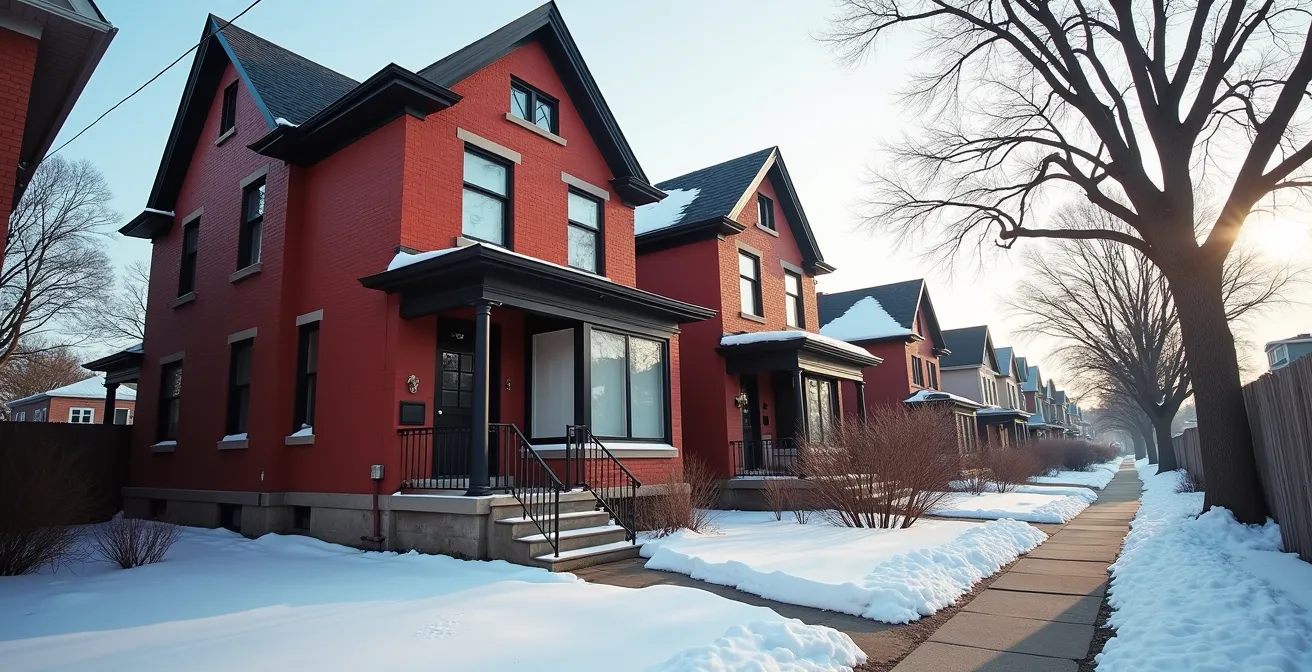
The key to affording a Toronto Victorian isn’t a bigger budget; it’s mastering the art of strategic triage—knowing which historic ‘features’ are money pits and which are just charming quirks.
- Your biggest financial drains are unseen: crumbling foundations, knob-and-tube wiring, and zero insulation.
- Significant government rebates exist for energy efficiency upgrades, but navigating the process is a job in itself.
Recommendation: Start with a specialized heritage inspection to identify non-negotiable infrastructure costs before you even think about cosmetic updates.
The dream is potent: a classic “Bay-and-Gable” Victorian in Cabbagetown or The Annex, filled with character, history, and that irreplaceable Toronto charm. You envision morning coffee looking through wavy, original glass and evenings by a fireplace with an ornate mantel. But as a heritage contractor, I see the other side of that dream: the crippling heating bills, the insurers who won’t touch your property, and the crumbling brick that whispers of five-figure repair costs. Many homeowners fall in love with the aesthetics and assume maintenance is just about preserving original features.
The common advice is to “hire a good contractor” and “respect the home’s history.” That’s true, but it’s dangerously incomplete. It ignores the brutal financial reality that not all “character” is worth saving. The single-pane windows that look so authentic are also a primary source of heat loss, and the beautiful plaster mouldings might be hiding ancient, uninsurable wiring that poses a genuine fire risk. Falling for the romance without a clear-eyed financial strategy is the fastest way to turn your dream home into a money pit.
But what if the key to affordability wasn’t a limitless bank account, but a ruthless sense of priority? This guide is built on that principle: strategic triage. It’s about learning to distinguish between the non-negotiable structural and safety upgrades that protect your investment, and the cosmetic elements where compromise is possible. It’s about understanding the hidden infrastructure that truly governs your budget, not the gingerbread trim on the porch.
We’ll dissect the real costs, from foundations to rooflines, and navigate the specific challenges of Toronto’s housing stock. You’ll learn how to tackle approvals, identify the biggest financial risks, and make informed trade-offs between character and comfort. This is the conversation you need to have before you buy, or before you start your next big renovation project.
text
To help you navigate this complex landscape, this article is structured to tackle the most pressing financial and logistical questions. We will move from the immediate pain of high utility bills to the long-term considerations of preserving your home’s unique character and value.
Summary: A Contractor’s Guide to Managing Your Toronto Heritage Home
- Why Do Heating Bills for Victorian Homes Spike So High in February?
- How to Get Your Renovation Approved by the Heritage Board?
- Cabbagetown vs. The Annex: Which Heritage District Holds Value Better?
- The Foundation Mistake That Ruins Basements in Sandy Soil Areas
- How to Soundproof a Semi-Detached Victorian Wall Effectively?
- Why Do Insurers Hate Knob-and-Tube Wiring in Edwardian Houses?
- How to Heat a 14-Foot Ceiling Loft Without Bankrupting Yourself?
- How to Renovate an Edwardian Home Without Losing Its Character?
Why Do Heating Bills for Victorian Homes Spike So High in February?
That shocking Enbridge bill that arrives in February isn’t a mistake. It’s the inevitable result of 19th-century construction meeting a 21st-century Toronto winter. Victorian homes, especially the iconic Bay-and-Gable style, were often built with a technique called “balloon framing.” This means the exterior wall cavities are hollow and run uninterrupted from the stone foundation right up to the attic. In essence, you’re living inside a chimney. Cold air gets in at the bottom, and any heat you generate rises straight up and out through the roof.
These homes were built when energy was cheap and insulation was an afterthought, often consisting of nothing more than old newspapers. Add in single-pane glass windows, uninsulated attics, and countless tiny gaps that have opened over a century, and you are actively heating the outdoors. Your furnace isn’t just fighting the cold; it’s fighting the very structure of your house. This isn’t a minor inefficiency; it’s a fundamental design flaw for modern energy costs.
The single most effective act of strategic triage is tackling this heat loss. Upgrading your insulation isn’t just a “nice-to-have”; it’s a financial necessity. Modern spray foam or dense-pack cellulose can be blown into wall cavities, and attics can be brought up to modern standards. The upfront cost is significant, but the return is immediate. In fact, depending on the state of your home, GTA homeowners typically save $600–$1,000 per year on heating costs after proper insulation upgrades. This is one of the few renovations that pays for itself. Fortunately, the government recognizes this and offers substantial help.
Action Plan: Accessing Ontario’s Home Efficiency Rebates
- Book a pre-retrofit energy assessment with a Natural Resources Canada (NRCan)-licensed service organization to get your baseline.
- Complete eligible retrofits, such as attic insulation (up to $1,800 in rebates), wall insulation (up to $5,000), and draft proofing (up to $325).
- Schedule a post-retrofit assessment within 180 days of the first one to measure the improvements.
- Receive your combined rebates, which can be up to $10,000 from Enbridge Gas and the Canada Greener Homes Grant.
- This process turns a major expense into a manageable, high-ROI investment, directly tackling your highest operating cost.
Understanding the physics of heat loss in your Victorian home is the first step. Prioritizing insulation and leveraging rebates is how you stop hemorrhaging money every winter.
How to Get Your Renovation Approved by the Heritage Board?
If your property is in a designated Heritage Conservation District (HCD) in Toronto, you don’t just have a house; you have a custodial responsibility. This is where many owners encounter the “heritage premium”—the added layer of cost, time, and complexity that comes with any exterior or structural renovation. You can’t just call a contractor and replace your windows. Any change visible from the street typically requires a permit from Toronto’s Heritage Preservation Services.
This process is not a mere formality. It’s a detailed review to ensure your proposed changes are sympathetic to the historical character of the building and the neighbourhood. This involves submitting detailed plans, material samples, and a clear rationale for the renovation. The board’s mandate is preservation, which can sometimes conflict with a homeowner’s desire for modernization, energy efficiency, or cost savings. Expect a process that takes months, not weeks, and be prepared for feedback that requires you to alter your plans.
The key to a smooth process is preparation and collaboration. Before you even hire an architect, study the HCD plan for your specific neighbourhood. These documents outline what is and isn’t acceptable. Engaging a contractor or architect with a proven track record of successful heritage permits in Toronto is a non-negotiable investment. They speak the board’s language and can anticipate objections, saving you costly and time-consuming revisions. Trying to navigate this bureaucracy alone to save a few dollars is a classic false economy.

As the image suggests, a successful application is a professional endeavour. It requires meticulous documentation, an understanding of historical materials, and a respectful approach. Don’t view the heritage board as an adversary. View them as a stakeholder in your property. Present a well-researched case that balances your needs as a homeowner with the city’s preservation goals. This collaborative mindset can be the difference between a swift approval and a frustrating, expensive stalemate.
Cabbagetown vs. The Annex: Which Heritage District Holds Value Better?
When investing in a heritage property, the neighbourhood is just as important as the house itself. In Toronto, Cabbagetown and The Annex are two of the most sought-after districts, but they offer very different living experiences and investment profiles. Your choice between them is a strategic decision that affects lifestyle, property type, and potentially, long-term value appreciation. Both are protected by Heritage Conservation District plans, meaning your renovation headaches will be similar, but the underlying assets are distinct.
Cabbagetown is renowned for having the largest continuous area of preserved Victorian housing in North America. It has a distinct “village feel,” with smaller Victorian cottages and semi-detached homes lining leafy streets. Its proximity to the Don Valley offers a touch of nature, while its vibrant local shops create a strong sense of community. Transportation is heavily reliant on streetcar lines. It appeals to those seeking a quieter, more residential character within the city.
The Annex, by contrast, has a more urban, academic character, heavily influenced by its proximity to the University of Toronto. The architecture is often grander, featuring large Richardsonian Romanesque and Queen Anne Revival townhouses. It offers direct subway access, making it a prime location for commuters. The properties are generally larger, and the atmosphere is more bustling and dynamic. It attracts buyers who prioritize space, architectural grandeur, and seamless urban connectivity.
Deciding which “holds value better” is complex. Both are blue-chip neighbourhoods with strong historical demand. The Annex’s larger properties and direct subway access may give it an edge in raw price growth, but Cabbagetown’s unique charm and cohesive community offer a resilient form of value. The following comparison breaks down the key differences to help you align your investment with your personal priorities.
| Aspect | Cabbagetown | The Annex |
|---|---|---|
| Architectural Style | Victorian cottages | Queen Anne Revival architecture |
| Character | Village feel, proximity to Don Valley | Urban academic character, near University of Toronto |
| Transportation | Streetcar access | Direct subway line access |
| Heritage Restrictions | Heritage Conservation District plan | Heritage Conservation District plan |
| Typical Property | Semi-detached Victorian | Large Victorian townhouses |
Ultimately, as this comparative analysis of Toronto neighbourhoods shows, the “better” investment is the one that fits your life. A smaller, well-maintained cottage in Cabbagetown can be just as sound an investment as a grander townhouse in The Annex, provided you understand the character and constraints of the district you’re buying into.
The Foundation Mistake That Ruins Basements in Sandy Soil Areas
The most expensive problems in a Victorian home are the ones you can’t see. While you’re admiring the stained-glass windows, the real financial risk is hiding in the basement. Many of Toronto’s heritage homes were built on rubble or fieldstone foundations. Essentially, builders in the 1880s dug a trench and filled it with stones and a weak lime-based mortar. This was adequate for the time, but over 140 years, these foundations can settle, shift, and allow significant water ingress.
This problem is often exacerbated by Toronto’s soil composition in certain areas, which can be sandy or have a high water table. This puts constant hydrostatic pressure on those aging mortar joints. The classic mistake homeowners make is treating basement leaks as a simple waterproofing issue. They might pay for an interior drainage system or have cracks injected with epoxy. These are temporary fixes that don’t address the root cause: a failing foundation that is no longer structurally sound. This is like putting a bandage on a broken arm.
Ignoring early signs like persistent dampness, stair-step cracks in the brickwork above, or uneven floors is a recipe for disaster. A proper diagnosis from a structural engineer is non-negotiable. Often, the only permanent solution is underpinning or reinforcing the foundation, a complex and costly process that involves excavating sections of the foundation and pouring new concrete footings. This is a “financial sinkhole” project—it costs tens of thousands of dollars and adds zero cosmetic value, but it is absolutely essential to protect the entire structure from catastrophic failure.
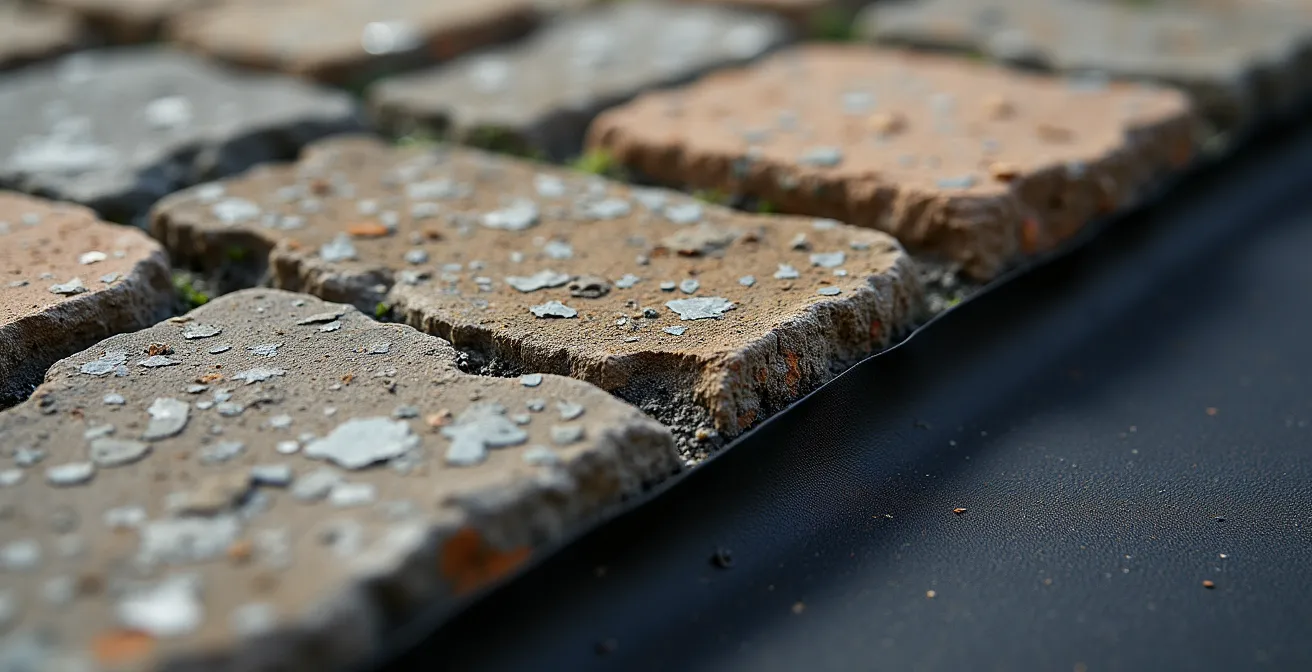
The cross-section above illustrates the meeting point of old and new. The original, irregular stone foundation must be properly integrated with modern waterproofing membranes and, if necessary, new concrete supports. Attempting to save money here by opting for cheap, superficial solutions will inevitably lead to greater expense and damage down the line. When buying a Victorian, the foundation inspection is the single most important part of your due diligence.
How to Soundproof a Semi-Detached Victorian Wall Effectively?
Living in a semi-detached Victorian home in Toronto means sharing more than just a property line; you’re often sharing a single layer of brick and plaster with your neighbours. The lack of effective sound insulation is a common complaint. Sounds from conversations, televisions, and footsteps can travel with surprising clarity through shared walls, floors, and ceiling joists. Simply adding a layer of drywall is a common but largely ineffective solution. It might muffle the sound slightly, but it won’t solve the core problem of sound transmission.
Effective soundproofing is about two things: mass and decoupling. You need to add heavy, dense materials (mass) to block airborne sound waves, and you need to create a physical separation (decoupling) to stop vibrations from travelling through the structure. Because budgets vary, the best approach is to think in terms of “Good, Better, Best,” a perfect example of strategic triage where you choose the level of intervention you can afford.
This framework allows you to make a significant improvement even with a limited budget, while understanding what a more comprehensive—and expensive—solution entails. Here is a practical breakdown:
- Good: The most basic improvement involves sealing all air gaps. Sound travels through air, so use acoustic sealant to fill every crack and gap around outlets, baseboards, and windows. Then, add mass by installing one or two layers of 5/8″ fire-rated drywall over the existing plaster.
- Better: To introduce decoupling, install resilient channels on the existing wall. These metal channels create a small air gap, so the new layers of drywall don’t directly touch the studs, significantly reducing vibration transfer.
- Best: The ultimate solution is to build a fully decoupled stud wall. This involves constructing a new, independent wall frame an inch or two away from the party wall. The cavity is filled with acoustic insulation, and the frame is covered with mass-loaded vinyl and multiple layers of drywall. This is the most effective but also the most expensive and space-consuming option.
A critical, often-overlooked element is flanking transmission. Sound can bypass your newly soundproofed wall by travelling through shared floor joists or attic spaces. Any serious soundproofing effort must also include measures to block these flanking paths, often by adding insulation between joists or extending a firewall in the attic. Ignoring this is like soundproofing a door but leaving a window wide open.
Why Do Insurers Hate Knob-and-Tube Wiring in Edwardian Houses?
If you tell a potential home insurer that your beautiful Edwardian or Victorian house has knob-and-tube wiring, you’ll hear a sharp intake of breath on the other end of the line. Many will refuse to insure you outright, while others will charge an exorbitant premium until it’s replaced. From a contractor’s perspective, this isn’t just an inconvenience; it’s the market telling you that your house contains a major, unmanaged risk. This is a non-negotiable financial sinkhole that must be addressed.
Knob-and-tube wiring, common from the 1880s to the 1940s, isn’t inherently dangerous if it’s undisturbed and in pristine condition. The system uses ceramic knobs to hold wires in place and ceramic tubes to pass them through wooden joists, keeping the hot and neutral wires separated. The problem is that after 100 years, it’s never in pristine condition. The rubber insulation becomes brittle and flakes off, exposing live wires. Past renovations may have dangerously spliced new wiring into the old system. And crucially, it was designed to be suspended in open air to dissipate heat; burying it in modern insulation creates a serious fire hazard.
Furthermore, knob-and-tube systems lack a ground wire, which is a critical safety feature for modern appliances. This means your expensive electronics and, more importantly, you, are not protected from electrical faults. As heritage expert David Reno notes, this is not a feature to be preserved. In his guide, “Everything You Need To Know About Renovating Victorian Homes in Toronto,” he is unequivocal:
Rewiring with Care: Historic homes may have outdated knob-and-tube wiring, which should be replaced with modern electrical systems
– David Reno, Everything You Need To Know About Renovating Victorian Homes in Toronto
Replacing it is a major undertaking. It requires opening up walls and ceilings, which is why the cost is so high. For a typical Toronto property, a complete rewiring of a 2,000 sq. ft. Edwardian home costs between $15,000 and $30,000. It’s a brutal, hidden expense, but it’s not optional. Budgeting for this from day one is the only responsible way to approach a home with this kind of electrical system.
How to Heat a 14-Foot Ceiling Loft Without Bankrupting Yourself?
Those soaring 14-foot ceilings are a hallmark of converted lofts and grand Victorian rooms. They create a stunning sense of space and light, but they are also notoriously difficult—and expensive—to heat. Hot air rises, which means in a room with high ceilings, all the warmth produced by your forced-air furnace accumulates uselessly near the ceiling, leaving the living space ten feet below feeling chilly. Your thermostat, located at eye level, keeps calling for more heat, and your furnace runs constantly, trying to heat a massive volume of air that you don’t even occupy.
The traditional solution is simply to crank the heat and pay the price, but that’s not a sustainable strategy. A more strategic approach involves rethinking how you deliver heat and manage airflow. Ceiling fans, run in reverse (clockwise) during the winter, are a simple but effective first step. They gently push the trapped warm air from the ceiling back down into the living space without creating a draft. This simple action can make a room feel several degrees warmer, allowing you to lower your thermostat.
For a more fundamental solution, it’s time to look at modern heating technology that is better suited for these spaces. Ductless mini-split heat pumps are an excellent option. They can be mounted high on a wall and deliver heated air directly into the space. More importantly, modern heat pumps are incredibly efficient. For example, some ENERGY STAR certified hot water heat pumps use up to 70% less energy than standard electric models. The Ontario government encourages this switch, offering rebates of up to $6,500 for qualifying heat pump installations, a program that can significantly offset the initial investment.
Another part of the solution is ensuring the building envelope is as tight as possible. For these large, open spaces, a combination of solutions is often best. This could include using blown-in cellulose insulation in any accessible cavities, a method whose blown-in cellulose insulation costs around $2–$3 per square foot, making it a cost-effective way to add thermal resistance. By combining better insulation, smarter air circulation, and more efficient heating technology, you can enjoy the grandeur of high ceilings without the punishing energy bills.
Key Takeaways
- Your biggest financial risks are unseen: prioritize foundation, wiring, and insulation over cosmetic updates.
- The “Heritage Premium” is real. Factor in extra time and cost for Heritage Board approvals in your renovation budget.
- Leverage all available government grants and rebates for energy efficiency. This is the single best way to get a return on your investment.
How to Renovate an Edwardian Home Without Losing Its Character?
After you’ve addressed the non-negotiable money pits—the foundation, the wiring, the insulation—you can finally turn your attention to the rewarding work of restoration. This is where you can make choices that enhance the home’s soul. The key to success is not a limitless budget, but a thoughtful, often slow, approach. It’s about respecting the original materials and craftsmanship, and knowing where to spend money for maximum impact. The goal is to create a home that feels authentic, not a museum piece or a soulless modern box.
Focus on what gives these homes their unique identity. As noted by contractor David Reno, the original moldings and millwork are true hallmarks of Victorian and Edwardian homes in Toronto. This includes baseboards, window and door casings, and crown mouldings. If they are intact but covered in a century of paint, the painstaking work of stripping and refinishing them will do more for your home’s character than almost any other project. If pieces are missing, invest in having them replicated by a skilled carpenter rather than replacing them with generic modern trim from a big-box store.
The story of Heather Shaw’s Toronto Victorian, featured on Remodelista, serves as a masterclass in this philosophy. Her beautiful home is the result of a slow, considered renovation over two decades. This approach allowed her to make smart, personal choices without breaking the bank. For example, she tackled the “ubiquitous orangey” floors herself, sanding and refinishing them to bring out their natural beauty. This embodies the principle of strategic triage: she identified a core feature that defined the space and invested her own time and effort to restore it authentically.
Case Study: The 20-Year Strategic Renovation
As detailed in a feature by Remodelista on Heather Shaw’s home, the renovation was a long-term project, not a gut job. The first priority was replacing the windows for efficiency. Later, she personally sanded and refinished the original floors, which were in rough shape, transforming them with a custom oil paint wash. This “slow and soulful” method allowed the house’s character to guide the renovation, resulting in a space that feels both historic and deeply personal, proving that time can be a more valuable asset than money.
Renovating with character is about making deliberate choices. It means repairing original plaster rather than tearing it out for drywall, choosing period-appropriate light fixtures, and restoring original hardwood floors. It requires patience and an appreciation for the patina of age, but this thoughtful approach is what transforms a simple house into a true heritage home.
Before you sign any papers or swing a single hammer, your next step is clear: invest in a heritage-specific structural and systems assessment. It’s the only way to know if you’re buying a dream home or a financial nightmare. This expert analysis will form the basis of your strategic triage, allowing you to budget with confidence and preserve a piece of Toronto’s history without going broke.