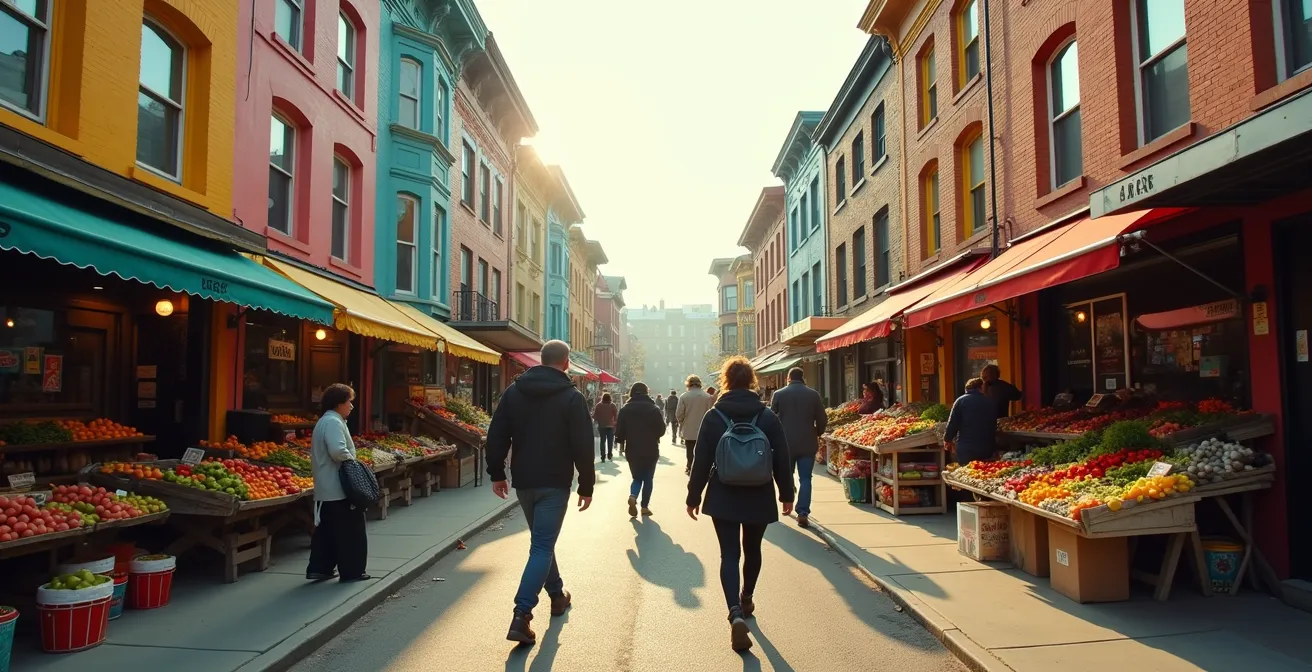
To truly experience Kensington Market, you must shift from being a consumer to a participant in its fragile ecosystem.
- The real value isn’t in what you buy, but in understanding the “why” behind each cash-only transaction and handmade sign.
- Your choices directly impact the market’s survival against corporate encroachment and gentrification.
Recommendation: Use this guide’s authenticity markers to spend your money where it counts—with the independent vendors who are the lifeblood of the neighbourhood.
People come to Kensington Market expecting a postcard. They’ve heard it’s a “vibrant, multicultural hub,” a place for “eclectic finds” and “diverse food.” So they wander down Augusta, snap a picture of the graffiti, buy a mass-produced t-shirt from a shop with a slick digital sign, and think they’ve seen the market. They haven’t. They’ve just consumed a sanitized, tourist-friendly version of it.
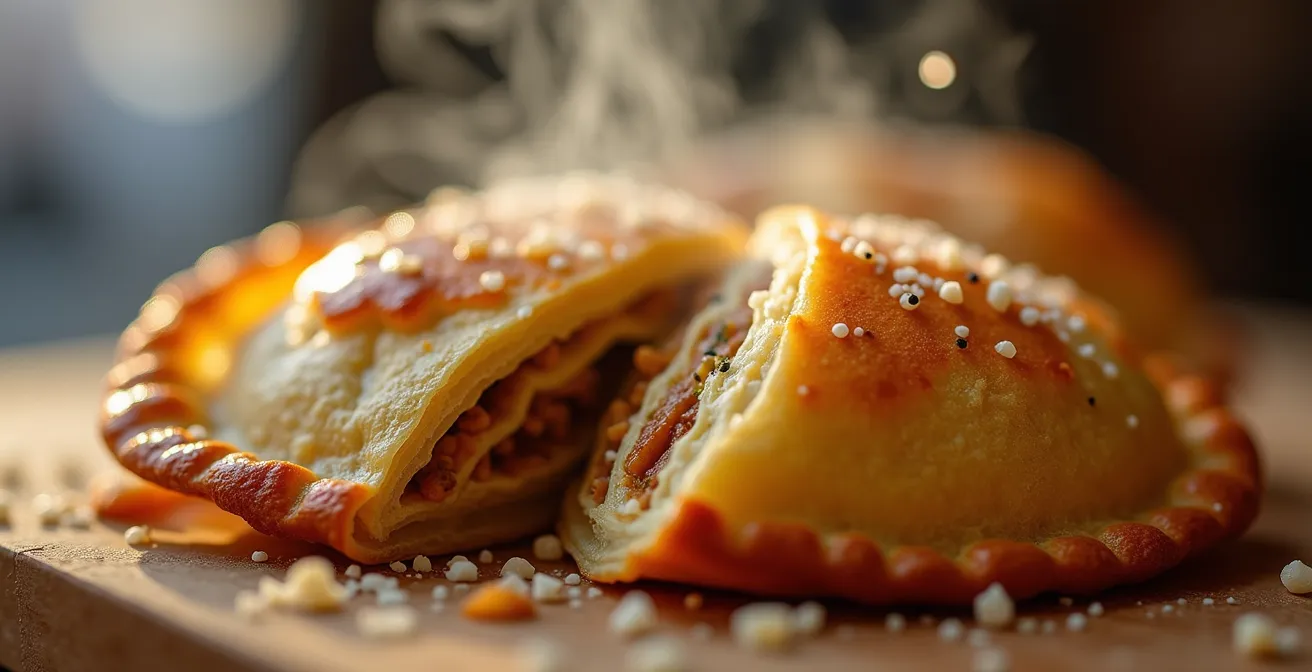
The real Kensington isn’t a shopping destination; it’s a living, breathing, chaotic community fighting for its life. It’s in the steam rising from a fresh empanada, the heated debates in a back-alley cafe, and the defiant “Cash Only” signs that are a middle finger to corporate banking. Most guides will tell you what to see. This one tells you how to see it, how to engage with it, and how to leave it a little stronger than you found it. It’s about understanding your economic footprint and using it to protect the soul of this place.
Forget the surface-level tour. We’re going to deconstruct the market’s DNA. We’ll look at why car-free days are more than a convenience, how to tell a real independent from a corporate wolf in sheep’s clothing, and how your choice of handheld food is a vote for a certain piece of the market’s history. This is about becoming part of the neighbourhood, not just passing through it.
Summary: How to Explore Kensington Market Like a Local, Not a Tourist
- Why Are “Pedestrian Sundays” Critical for the Market’s Survival?
- How to Spot a “Fake” Independent Shop Owned by a Corporation?
- Tacos vs. Empanadas: Which Is the Ultimate Kensington Handheld Food?
- The “Cash Only” Mistake That Leaves You Hungry in Kensington
- When to Buy Produce in Kensington for the Best Quality?
- Parkdale vs. Kensington: Which District Has Better Deals on Denim?
- Sushi Pizza vs. Butter Chicken Poutine: Which Fusion Dish Actually Works?
- How to Build a Vintage Wardrobe in Toronto Without Overspending?
Why Are “Pedestrian Sundays” Critical for the Market’s Survival?
Tourists see Pedestrian Sundays as a novelty, a chance to wander freely without dodging cars. Locals see them for what they are: a vital act of defiance. Closing the streets to traffic isn’t about convenience; it’s about reclaiming public space and reinforcing the market’s identity as a community, not a thoroughfare. On these days, the asphalt becomes a stage, a dining room, a gallery. The air fills with music and conversation instead of exhaust fumes. It’s the one day the market truly breathes.
This is about more than just atmosphere. It’s a direct economic lifeline. When the streets belong to people, the “linger time” increases. Visitors are no longer on a mission from A to B; they slow down, they discover the smaller shops tucked away, and they spend more time (and money) within the community. This environment fosters the serendipitous discovery that is core to the Kensington experience—stumbling upon a new artist, a hidden food stall, or a vintage piece you weren’t looking for.
The survival of the market depends on this human-scale interaction. It supports a delicate ecosystem of over 240 unique businesses, many of which are micro-operations that can’t compete with the high-traffic, car-centric models of chain retail. Pedestrian Sundays are a powerful statement that this space prioritizes people over cars, community over convenience, and experience over efficiency. Supporting them, and showing up for them, is your first act as a participant, not a tourist.
How to Spot a “Fake” Independent Shop Owned by a Corporation?
The biggest threat to Kensington isn’t decay; it’s a specific kind of “improvement.” It’s the slow creep of corporate chains disguised as quirky boutiques. They mimic the aesthetic—the exposed brick, the “indie” font—but their soul is pure spreadsheet. Spending your money at one of these places is like watering a plastic plant. It does nothing to nourish the local ecosystem. Your most important skill in the market is learning to see the difference.
Real independent shops have what I call authenticity markers. These are the subtle, often imperfect, signs of a business run by a person, not a committee. It’s the hand-painted sign with a slight wobble versus the perfectly backlit corporate logo. It’s the owner who lives upstairs and knows their suppliers by name, not a rotating cast of part-time employees who can’t tell you where the coffee beans are from. These aren’t just aesthetic quirks; they are indicators of where your money is actually going: to a family, an artist, a local entrepreneur.
Learning to spot these fakes is your gentrification guardrail. It’s an active choice to support the slightly chaotic, deeply personal businesses that make Kensington what it is. Before you buy, pause and become a detective. Look for the signs of human touch and small-scale operation. It’s the most powerful vote you can cast for the market’s future.
Your Kensington Authenticity Checklist
- Check the signage: Look for handmade or painted signs versus slick, corporate digital displays or vinyl lettering.
- Ask about the owner: Casually ask staff “Is the owner in today?” If they live above the shop or are always there, it’s a good sign.
- Question the origins: Ask where a specific product comes from. Real independents have a deep knowledge of their suppliers and can tell you the story behind an item.
- Notice the pricing: Many small independents include tax in the price for round numbers ($5, $10, $20) to simplify cash transactions.
- Observe the payment method: If they only accept cash or e-transfer, it’s often a sign of a small-margin operation trying to avoid high processing fees.
Tacos vs. Empanadas: Which Is the Ultimate Kensington Handheld Food?
In Kensington, what you eat on the go is more than just a snack; it’s a declaration of your priorities. The two reigning champions of handheld food, tacos and empanadas, represent two different philosophies of market eating and two distinct waves of Latin American cultural influence in Toronto. The taco, particularly from a legendary spot like Seven Lives, is an event. It demands your immediate, two-handed attention. It’s messy, glorious, and meant to be eaten right there, in the moment, surrounded by the chaos.
The empanada, on the other hand, is the master of portability. Hailing from established Chilean institutions like Jumbo Empanadas, it’s a self-contained meal. You can grab one, tuck it in a bag, and eat it an hour later in Bellevue Square Park without losing much of its integrity. It’s efficient, clean, and respects your schedule. The line is usually shorter, the transaction quicker. It’s the choice for the pragmatist.
So, which is the ultimate? It’s a trick question. The answer depends on what you came to the market for. Do you want an immersive, sensory experience that forces you to be present? The taco wins. Do you want a delicious, high-quality piece of the market you can take with you on your own terms? The empanada is your champion. To choose is to understand your own approach to the market’s rhythm.
This table breaks down the core differences, helping you make a more informed, and therefore more local, decision. As a recent comparative analysis of the neighbourhood shows, both are integral to the market’s culinary landscape.
| Factor | Tacos | Empanadas |
|---|---|---|
| Best Known Spot | Seven Lives Tacos y Mariscos | Jumbo Empanadas |
| Eating Style | Immediate consumption required | Highly portable for park eating |
| Wait Time | Often long lines | Usually quicker service |
| Messiness Factor | High – needs both hands | Low – one-handed eating |
| Cultural Wave | Recent Latin American influence | Established Chilean/South American |
The “Cash Only” Mistake That Leaves You Hungry in Kensington
Showing up to Kensington with only a credit card is the rookie mistake of all rookie mistakes. It’s not just an inconvenience; it’s a fundamental misunderstanding of the market’s economy. Those “Cash Only” signs aren’t just for show. They are a crucial business strategy for the small, independent vendors that form the backbone of this neighbourhood. When you tap your card, you’re asking a small business owner to eat a fee that they simply can’t afford.
For a large corporation, a 2-3% processing fee is a rounding error. For a food stall or a tiny vintage shop with razor-thin margins, that’s the difference between breaking even and losing money. Insisting on using a card is asking them to subsidize your convenience. A report on local business realities highlights that avoiding the typical 3% credit card processing fee is a primary reason for cash-only policies. Using cash is a small act of solidarity. It’s a direct, unfiltered transfer of value from you to the person who made your food or curated your clothes.
This is a core part of your economic footprint. By planning ahead, you’re not just ensuring you can eat at the best spots; you’re actively participating in an alternative economic model. Before you even enter the labyrinth of the market, hit one of the bank ATMs on Spadina or College. Aim to bring around $40-60 in small bills for a decent afternoon of grazing and browsing. This simple preparation transforms you from a clueless tourist into a savvy patron who understands how the market actually works.
When to Buy Produce in Kensington for the Best Quality?
Buying produce in Kensington isn’t like going to a sterile big-box grocery store. You don’t just grab what looks good under the fluorescent lights. It’s a dynamic, relationship-based process. The quality and selection change drastically depending on the day and even the time of day you shop. Going at the wrong time means you’re getting the leftovers. Going at the right time means you’re getting produce fresher than almost anywhere else in the city.
The golden rule is to align your visit with the delivery schedules from the Ontario Food Terminal. Most vendors get their main stock on Thursday and Friday mornings. This is when you’ll find the absolute freshest, highest-quality items. If you’re looking for deals, however, the calculus changes. Tuesday afternoons are often when vendors try to offload any surplus from the weekend, offering better prices.
But the real pro move goes beyond timing. It’s about building a relationship, however brief, with the vendors. Don’t just look; ask. “What came in today?” is a much more powerful question than “Is this fresh?” It shows you respect their expertise. This is how you discover the specialty items, the fleeting seasonal gems that never even make it to the main display. As one guide notes, it’s a completely different level of quality. The experts at Local Food Tours Toronto put it best in their guide:
What these local specialty grocers sell is way beyond what you’ll get at the supermarket
– Local Food Tours Toronto, Kensington Market Food Tour Guide
Find a vendor you like, whether it’s at a well-known spot like Castlefruit Produce or a smaller stand, and become a familiar face. This is the path from being a mere customer to becoming part of the market’s daily life.
Parkdale vs. Kensington: Which District Has Better Deals on Denim?
For the serious vintage hunter in Toronto, the city offers two main battlegrounds for denim: Kensington Market and Parkdale. They are not interchangeable. Each has its own distinct culture, price point, and shopping experience. Choosing between them depends entirely on your goal. Are you looking for a cheap, foundational piece, or a specific, curated style?
Kensington is all about “the dig.” It’s a bohemian, eclectic free-for-all. Here, you’ll find mountains of denim in bins at places like Courage My Love or stalls where you might even pay by the pound. The deals can be incredible—a perfect pair of vintage Levi’s for $15 isn’t unheard of—but you have to work for it. It requires patience, a good eye, and a willingness to get your hands dirty. The style is broad: 70s flare, 90s dad jeans, and everything in between.
Parkdale, on the other hand, is curated. Shops like Public Butter offer a more boutique experience. The denim is pre-selected, cleaned, and organized by size and style, with a heavy focus on 80s and 90s streetwear aesthetics. You’ll pay more, with average prices sitting higher than in Kensington, but your time investment is significantly lower. You go to Parkdale when you know what you want; you go to Kensington to discover what you want.
Neither is “better.” They serve different needs. As a recent guide to Toronto’s vintage scene illustrates, the choice is strategic.
| Factor | Kensington Market | Parkdale |
|---|---|---|
| Style Focus | Bohemian, eclectic mix | 80s/90s streetwear, designer-adjacent |
| Shopping Format | Dig through bins, pay-by-pound | Curated racks, pre-selected |
| Price Range | $5-30 per item average | $20-60 per item average |
| Key Shops | Courage My Love, King of Kensington | Public Butter, boutique selections |
| Time Investment | High – requires digging | Low – pre-curated selection |
Sushi Pizza vs. Butter Chicken Poutine: Which Fusion Dish Actually Works?
Kensington Market is a laboratory for Toronto’s culinary identity, and nowhere is this more evident than in its fusion food. Two dishes often stand as symbols of the city’s multicultural palate: Sushi Pizza and Butter Chicken Poutine. But they represent two fundamentally different types of innovation, and understanding that difference is key to appreciating the market’s role in Toronto’s food scene. One works as a clever invention, the other as a true cultural blend.
Sushi Pizza is a top-down creation. It’s a clever, chef-driven concept born in a formal restaurant setting in the 90s that became a quirky city-wide signature. It’s inventive and fun, but it feels more like a deliberate culinary experiment than an organic evolution. It’s fusion as an intellectual exercise.
Case Study: The Origins of Toronto Fusion
Sushi Pizza was invented by chef Kaoru Ohsada at Nami restaurant in the 1990s, representing a form of top-down culinary innovation that became a signature Toronto dish. In contrast, Butter Chicken Poutine emerged organically from the grassroots, a natural collision of the city’s vast South Asian diaspora with the quintessential Canadian classic. The former is an invention; the latter is an evolution. This reflects how the market allows you to tap into the many different cultures that now make Toronto home.
Butter Chicken Poutine, however, is a grassroots masterpiece. It’s what happens when cultures don’t just coexist but collide on the street level. It emerged from the daily life of the city, a logical and delicious conclusion born from the kitchens of the South Asian diaspora. It’s not just a dish; it’s a story about immigration, adaptation, and the creation of a new identity. This is fusion as a cultural conversation. You see this same organic spirit at places like Pow Wow Cafe, with its tacos served on Ojibwa-style fry bread—a dish that could only be born from lived experience, not a marketing meeting.
So which one “works”? While both are Toronto icons, Butter Chicken Poutine works on a deeper level. It represents the authentic, bottom-up creativity that Kensington Market champions. It’s not just food; it’s a taste of how the city’s culture is actively being created, one delicious, messy plate at a time.
Key Takeaways
- Your primary tool for supporting the market is cash; it bypasses corporate fees and directly supports vendors.
- Authenticity has markers: look for handmade signs, owner presence, and staff who know their products’ stories.
- The best experiences, from food to shopping, require patience and participation—be prepared to wait in line or dig through a bin.
How to Build a Vintage Wardrobe in Toronto Without Overspending?
Building a quality vintage wardrobe in a city like Toronto isn’t about having a lot of money; it’s about having a strategy. Simply wandering into Kensington and buying whatever catches your eye is a surefire way to overspend on a disjointed collection of clothes. A local thinks like a portfolio manager, building a wardrobe in tiers, from high-volume basics to unique investment pieces. The key is knowing where to hunt for each category.
This is the Vintage Shopping Pyramid. The base of your wardrobe—basics like t-shirts, simple blouses, and secondary denim—should come from the suburbs. Hit the Value Village locations outside the downtown core for high-volume, low-cost items. This is your foundation. The middle layer is where Kensington and Parkdale shine. This is where you hunt for your curated style pieces: the perfect leather jacket, a unique 80s band t-shirt, or those statement jeans. These are items that define your look, and you should expect to pay $20-$50.
The peak of the pyramid is for your investment pieces. This means leaving the market and heading to the consignment shops in Yorkville or Rosedale for a timeless designer bag or a classic trench coat. Finally, the smartest shoppers play the long game. They follow the Toronto Vintage Show and Leslieville Flea on social media for pop-up events and, most importantly, they shop off-season. Buying a wool coat in July or a pair of shorts in January can net you savings of 50% or more. This strategic approach is how you build a lasting wardrobe, not just a full closet.

This mindset reflects the very culture of the neighborhood itself. It’s a place built on thoughtful, human-scale living, not rampant consumerism. It’s a philosophy that shows up in surprising ways; for instance, data shows 34.59% of residents walk to work, a testament to a community-focused lifestyle. Building your wardrobe with the same intentionality is the ultimate tribute to the market’s spirit.
Now that you have the tools, the next step is to put them into practice. Go to the market not with a shopping list, but with a mission to see it differently, to engage with its economy, and to leave your mark as a supporter, not just a customer.