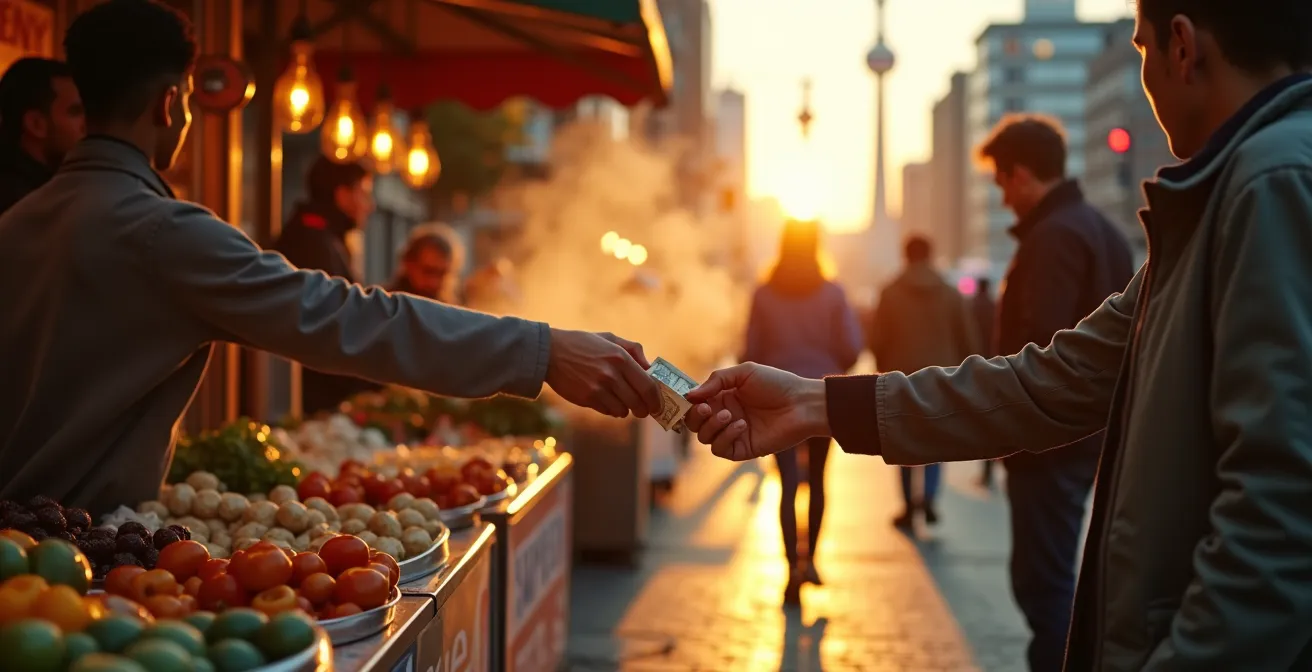
The secret to Toronto’s best cheap eats isn’t a map of restaurants, but a strategy for decoding the city’s hidden food systems.
- Regulatory hurdles push the most authentic food out of downtown and into unexpected places like strip malls and industrial parks.
- The best value and flavour often come from temporary pop-ups and specialized stalls that operate with low overhead and high passion.
Recommendation: Stop chasing trending lists and start thinking like a local by learning the patterns of when and where to find authentic food, from post-church rushes in Scarborough to brewery pop-ups in the Junction.
You’re in Toronto, a city buzzing with global flavours, and your stomach is rumbling. You crave something real, something with a story, something that doesn’t require a reservation or a second mortgage. You’ve heard the usual advice: “Just wander through Kensington Market” or “Check out the food trucks downtown.” While that’s a start, it’s a surface-level approach that often leads to tourist traps and overpriced, mediocre meals. It misses the vibrant, pulsating heart of Toronto’s true culinary scene, which is rarely found in plain sight.
This city’s food landscape is a complex ecosystem shaped by immigration, economics, and a notoriously tricky web of city bylaws. The most incredible flavours aren’t always in the trendiest neighbourhoods; they’re tucked away in Scarborough strip malls, operating out of GO Station parking lots, or popping up for one weekend only in a west-end brewery. To truly eat your way around the world here for under $20, you need more than a list of spots—you need a strategy. You need to understand the system.
What if the key wasn’t knowing *what* to eat, but *how* the city’s food scene actually works? This guide goes beyond the obvious. We’ll explore why the best food is often the hardest to find legally, decode the unwritten rules of suburban strip mall hunting, and give you the tactical advantage to find incredible fusion stalls before they blow up on social media. It’s time to learn the patterns, hack the peak times, and unlock a universe of authentic, affordable eats that most people miss.
This article provides a complete playbook for navigating Toronto’s underground and overlooked food scenes. Below, you will find a detailed breakdown covering everything from the city’s complex vending permits to the best times to hit a night market, giving you the insider knowledge to eat like a king on a student’s budget.
Summary: Your Strategic Guide to Toronto’s Under-$20 Food Scene
- Why Are Street Food Vending Permits So Hard to Get in Toronto?
- How to Find the Best Caribbean Street Food in Scarborough Strip Malls?
- Hot Dog Cart vs. Shawarma Stand: Which Is the Better Late-Night Fuel?
- The Hygiene Red Flag to Watch For at Summer Food Festivals
- When to Visit the Night Market to Avoid 2-Hour Lineups?
- Why Do Pop-Up Stalls Often Have Better Food Than Restaurants?
- When to Visit Strip Mall Joints for the Best Lunch Combos?
- How to Find the Best Fusion Food Stalls Before They Go Viral?
Why Are Street Food Vending Permits So Hard to Get in Toronto?
Ever wonder why Toronto, a city celebrated for its diversity, doesn’t have the same sprawling, vibrant street food culture as cities like Portland or Bangkok? The answer isn’t a lack of talent or demand. It’s a complex, expensive, and often confusing web of municipal bureaucracy. For a chef with a dream of selling jerk chicken or fresh samosas from a cart, the barrier to entry is incredibly high, pushing authentic food into less-regulated grey areas. This is a core part of “Food System Navigation”; understanding the rules explains where the food *isn’t*, which helps you find where it *is*.
The financial hurdles are the first major roadblock. Beyond the equipment, vendors face a steep $481.81 permit cost plus a staggering $2,000,000 in liability insurance. But the money is just the beginning. The real challenge lies in the labyrinth of regulations that govern where and how a vendor can operate. According to City of Toronto bylaw reviews, the system is fragmented and restrictive, creating a significant challenge for small entrepreneurs.
A vendor’s journey involves navigating at least three separate bylaws and multiple city departments. The hurdles include:
- Location Restrictions: Only certain city wards even allow sidewalk vending, and many have highly restricted zones.
- BIA Approval: If the desired spot is within a Business Improvement Area (BIA), the vendor needs a separate letter of approval from them.
- Pedestrian Clearance: Vendors must prove their setup maintains a 2.50-metre pedestrian clearance, requiring detailed site sketches with precise measurements.
- Multiple Permits: A single operation requires a general licence, a permit for the street or sidewalk, and potentially other specific approvals.
There are glimmers of hope, however. A pilot program was adopted to run in 2025 in Ward 11, allowing non-motorized trailers to vend in designated mobile zones. This small step acknowledges the problem, but for now, the restrictive system is the reason why many of the best chefs operate through pop-ups or from fixed, less-visible locations rather than mobile carts downtown.
How to Find the Best Caribbean Street Food in Scarborough Strip Malls?
Because of the permit challenges downtown, Toronto’s most soulful and authentic food scenes have flourished elsewhere. For a world-class Caribbean food experience, you need to head east. Scarborough is the undisputed champion, but the best spots aren’t advertised on big signs. They follow the “Strip Mall Code”: a set of unwritten rules for finding incredible food in the most unassuming places. It’s about looking for community hubs, not just restaurants.
Forget Yelp; your best tools are your eyes and an understanding of local patterns. The strategy is to target areas where the community already gathers. This means looking beyond main roads and into the heart of neighbourhood commerce. Key tactics include scouting locations near major Caribbean grocery stores, which act as anchor points, or even checking the parking lots of transit hubs like the Scarborough GO station, where vendors often set up shop directly from their vehicles, especially on weekends.

As the image above suggests, the vibe is often low-key and community-focused. The real magic happens when you nail the timing. Many of the best home-style cooks cater to the after-church crowd, making Sunday afternoons between 1 PM and 3 PM a prime window for the freshest oxtail and curry goat. Look for the small, handwritten daily special boards advertising lunch combos for $10-12—these are powerful “Authenticity Signals” that you’re in the right place. Some of the most legendary spots, serving incredible jerk chicken from oil-drum smokers, operate as pop-ups in industrial areas, sometimes right behind meat-processing plants, completely forgoing a traditional storefront.
Hot Dog Cart vs. Shawarma Stand: Which Is the Better Late-Night Fuel?
As the bars close and the city’s late-night hunger sets in, two iconic Toronto staples enter the ring: the humble street-meat hot dog cart and the glowing, meat-filled shawarma stand. While both can save you from a late-night-TTC-ride-of-regret, they serve very different needs. The choice comes down to a classic battle of speed and cost versus substance and flavour complexity. The hot dog cart is the undisputed champion of speed, while the shawarma stand offers a more complete, satisfying meal.
The Toronto hot dog is a city icon, found clustered around the Entertainment District, Union Station, and Yonge-Dundas Square. It’s cheap, fast, and infinitely customizable with a buffet of toppings. A local reviewer, initially wary of “street meat,” was completely won over by the experience:
I’m not the biggest fan of hot dogs and I’m wary of street meat, but this hot dog totally blew me away. The sausage was spicy and cooked to perfection with crispy skin and a juicy inside, while the bun was soft, warm and cushioned every bite.
– Local Reviewer, Narcity Toronto
Shawarma, on the other hand, is a different beast. Found in fixed locations primarily along Queen West and Bloor Street, these spots are often open 24 hours and offer a full, hearty meal. The wait is longer, but the payoff is a flavour-packed wrap or plate with rice, potatoes, and salad. The following table breaks down the core differences to help you make that crucial late-night decision.
| Factor | Hot Dog Cart | Shawarma Stand |
|---|---|---|
| Price | $5-6 | $10-12 |
| Service Speed | Under 60 seconds | 10-15 minutes |
| Location | Entertainment District, Union Station, Yonge-Dundas | Queen West, Bloor St fixed locations |
| Operating Hours | Until last subway | Often 24 hours |
| Meal Completeness | Quick snack with toppings | Full meal with sides |
Ultimately, the “better” option depends on your mission. If you need fuel in under a minute before catching the last train, the hot dog cart is your hero. If you have 15 minutes and a hunger that demands a full, flavourful meal, the shawarma stand is the clear winner.
The Hygiene Red Flag to Watch For at Summer Food Festivals
Summer in Toronto means a packed calendar of food festivals, from the Taste of the Danforth to the Waterfront Night Market. With hundreds of vendors serving thousands of people, how can you be sure the food is safe? While most vendors are diligent, a little bit of knowledge can help you spot potential issues and choose the best, safest stalls. The most important thing to look for is the official green Toronto Public Health ‘DineSafe’ pass, which should be clearly displayed. This indicates the vendor has been inspected and meets the city’s health standards.
Beyond the official pass, you can conduct your own quick visual audit. Is the condiment station clean and well-stocked, or is it a mess of spilled sauces? A clean condiment area is often a good indicator of the vendor’s overall standards. The biggest red flag, however, involves how money and food are handled. You should always watch to see if the same person handles cash and prepares food without changing gloves or washing their hands. This is a major cross-contamination risk. A well-run stall will have one person dedicated to payments and another to food preparation.

Another great “Authenticity Signal” that doubles as a safety check is the line. Don’t be afraid of a long line, as long as it’s moving quickly. This is a sign that the food is popular and, more importantly, has a high turnover rate, meaning it’s being cooked fresh rather than sitting under a heat lamp for hours. To ensure you’re always making a smart choice, keep this checklist in mind.
Your Food Festival Hygiene Checklist
- Spot the Pass: Look for the green ‘DineSafe’ pass from Toronto Public Health displayed at the stall.
- Observe the Flow: Check if the vendor uses separate staff for handling cash and preparing food.
- Inspect the Station: Glance at the cleanliness of the condiment and napkin station as a proxy for overall hygiene.
- Follow the Crowd: Favour stalls with long but fast-moving lines, which indicates high demand and fresh food turnover.
- Check for Cleanliness: Ensure food handlers are wearing gloves and that surfaces and utensils appear clean.
When to Visit the Night Market to Avoid 2-Hour Lineups?
Toronto’s night markets are a spectacular celebration of street food, but their popularity can be their downfall. It’s not uncommon to face two-hour lineups just to get in, followed by more lines at every popular stall. This is where “Peak-Time Hacking” becomes an essential skill. Paying for a ticket and then spending your whole night in a queue is a foodie tragedy. The key is to be strategic about *when* you go.
The most common advice is to arrive right at opening, but this often creates a massive initial rush. A smarter approach is to either arrive a few minutes before the gates open or, counter-intuitively, wait about 90 minutes after opening. By then, the first wave of eager attendees has started to disperse, and the lines often become more manageable. For major events like the Waterfront Night Market, where tickets range from $17-25 for general admission, optimizing your time is critical to getting your money’s worth. Another pro-tip is to monitor the weather; a forecast of light drizzle can be your best friend, scaring away the casual crowds and leaving the market wide open for dedicated foodies.
The day you choose also matters. Fridays and Saturdays are often designated as 19+ events, leading to a more party-like, crowded atmosphere. If you’re purely focused on the food, Sunday is often the best choice, with a more relaxed, all-ages vibe and generally smaller crowds. Also, look for alternative markets with different models. For instance, the Underground Night Market at Harbourfront Centre has a unique pricing model where all food items are capped at $10 or under, which helps spread demand across more vendors and reduces bottlenecks at a single “must-try” stall.
Why Do Pop-Up Stalls Often Have Better Food Than Restaurants?
It seems counter-intuitive: how can a temporary stall with a portable kitchen produce food that’s more exciting and delicious than a full-fledged restaurant with a professional setup? The answer lies in the “Pop-Up Advantage,” a powerful combination of low overhead, high specialization, and creative freedom. Without the crushing costs of rent, staff, and utilities, pop-up chefs can invest all their resources and energy into one thing: perfecting a small, focused menu.
This model allows for extreme specialization. Instead of a large menu designed to please everyone, a pop-up can focus on making the absolute best version of a single dish, whether it’s tacos, pizza, or dumplings. Toronto Life magazine notes this trend even with established chefs, pointing out how “Chef Matty Matheson made his name as a burger specialist, but his contributions to the world of pizza are just as impressive with walk-up window service.” This laser focus is a recipe for excellence.
A perfect example of this incubator model is found in Toronto’s Ale Yards. Breweries like Shacklands and Rainhard in the Junction don’t have their own kitchens. This created a perfect opportunity for food entrepreneurs to fill the void. What started as simple weekend hot dog and panini pop-ups has evolved into top-tier culinary operations. We’re talking about chefs running full-scale restaurants out of camper vans equipped with wood-fired ovens, making everything from scratch, including arancini and house-cured meats. These pop-ups have a built-in, hungry audience from the brewery and a low-risk environment to test and perfect their concepts before considering a brick-and-mortar location.
When to Visit Strip Mall Joints for the Best Lunch Combos?
The humble strip mall is one of Toronto’s most underrated culinary destinations. These unassuming plazas, especially those near industrial parks where food trucks can’t easily operate, are goldmines for authentic, affordable lunch combos. But just showing up isn’t enough; timing is everything. Applying the “Strip Mall Code” to your lunch break can mean the difference between a fresh, hot meal and scraping the bottom of the pot.
The optimal window for the best experience is to arrive around 11:30 AM. This puts you just ahead of the noon-hour rush, ensuring you get the very first, freshest batch of the day’s specials. If you can’t make it that early, your next best bet is to go after 1:30 PM. By then, the lines have disappeared, but be warned: the most popular specials might be sold out. Another insider tip is to target these spots on a Thursday. Kitchens are often fully stocked and prepping for the weekend, meaning the selection and quality are at their peak.
These small, family-run businesses are the backbone of Toronto’s neighbourhood food scene. While a successful food truck can generate significant revenue, the high overhead and permit issues mean that a fixed location in a low-rent strip mall can be a more stable business model. This is why you’ll find such incredible, consistent quality in these spots. And don’t forget to look for the ultimate “Authenticity Signal”: faded, sun-bleached photos of food taped to the windows. It’s an unglamorous but reliable sign that the focus is on the food, not the marketing.
Key Takeaways
- Toronto’s strict and expensive street vending permits push the most innovative food entrepreneurs into less regulated spaces like pop-ups and strip malls.
- The best way to find authentic food is to understand community patterns, like post-church rushes in Scarborough or brewery event schedules.
- Strategic timing (“Peak-Time Hacking”) is essential to avoid huge lines at popular venues like night markets and to get the freshest food during lunch rushes.
How to Find the Best Fusion Food Stalls Before They Go Viral?
Toronto’s culinary identity is defined by fusion. As TasteToronto aptly puts it, the city features “unique, modern twists on traditional ethnic cuisines. From Japanese fried chicken to Trinidadian doubles.” The most exciting creations often start at small, unknown stalls and can become city-wide phenomena overnight. The thrill is in finding them before everyone else does. This requires moving beyond traditional food media and tapping into the city’s real-time food conversation.
Your first stop should be dedicated food hubs designed for discovery. The World Food Market, located at Yonge & Gould, is a perfect example, with over 18 different kiosks in an open-air setting that encourages wandering and sampling. Similarly, Kensington Market remains a fusion epicenter. You can find incredible creations like the “exploding chicken” from ChiChop, a Taiwanese-inspired dish featuring fried chicken stuffed with four kinds of melted cheese, a perfect example of the night-market-style food taking over downtown. Another must-try is the cochinita pibil at El Trompo in Kensington Market.
To get ahead of the curve, you need to go where the chefs go. Follow the social media accounts of local breweries and small event spaces, as they often post the schedules of their visiting kitchen pop-ups. More importantly, follow the personal Instagram accounts of up-and-coming chefs. They often shout out their peers and recommend hidden gems that haven’t hit the mainstream yet. Searching for neighbourhood-specific hashtags like #leslievilleeats or #junctiontriangle can also reveal new spots that are just starting to generate local buzz. This proactive approach is the key to finding the next big thing while it’s still a delicious secret.
Now that you’re armed with the strategies to decode Toronto’s complex food systems, the entire city becomes your dining room. It’s not just about eating; it’s about the adventure of the hunt and the satisfaction of discovering something truly special. To begin your journey, the logical first step is to master the art of navigating the city’s vending laws, as this explains the ‘why’ behind where the best food is found.