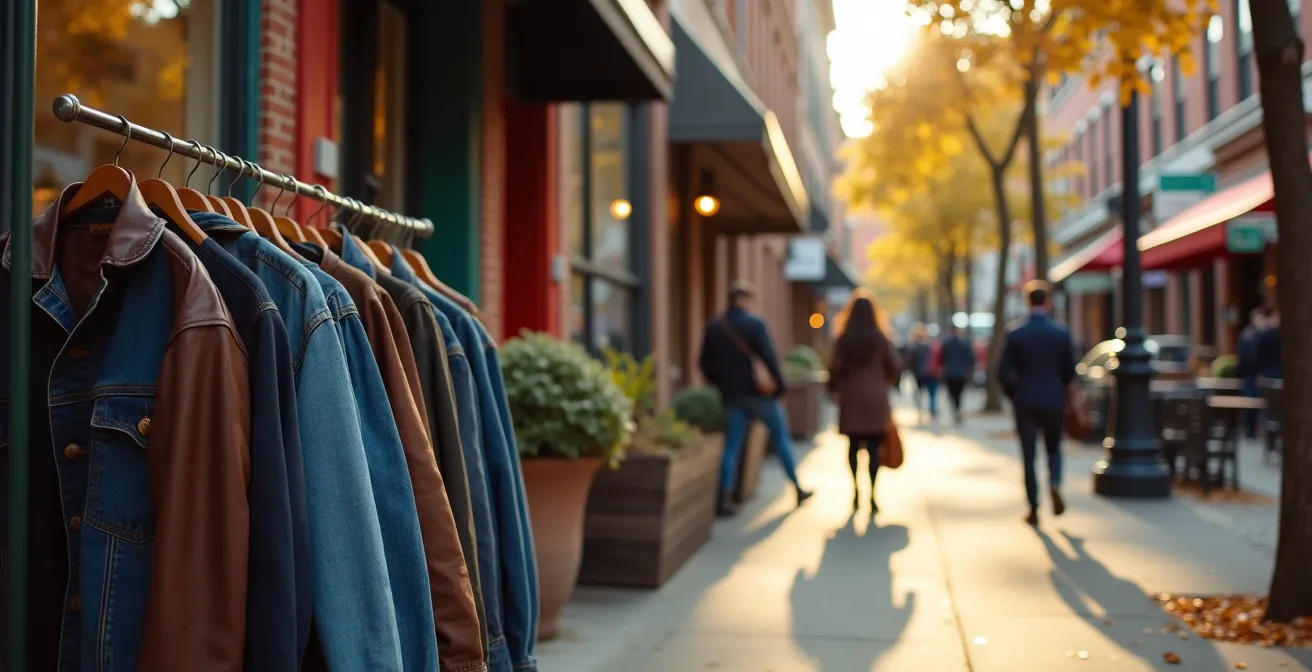
Contrary to popular belief, building a quality vintage wardrobe isn’t about finding the cheapest items; it’s about understanding the hidden economy that dictates value.
- The price of a vintage piece reflects curation, cleaning, and authentication costs—not just its age.
- Where you shop (Parkdale vs. Kensington) dramatically impacts price, especially for staples like denim.
Recommendation: Focus on “cost-per-wear” by investing in authenticated, quality pieces from trusted local shops rather than chasing the lowest price tag.
You’ve seen it on the streets of Queen West and all over your feed: that perfect, worn-in 90s band tee or a pair of Levi’s that fit just right. The allure of vintage clothing in Toronto is undeniable. It promises uniqueness, sustainability, and a stand against the endless cycle of fast fashion. The common advice is always the same: “Just go to Kensington Market,” or “You have to be patient and dig for hours.” While there’s some truth to that, it’s a surface-level approach that often leads to frustration, overspending, and a closet full of impulse buys rather than a cohesive wardrobe.
This isn’t just about sifting through racks at Value Village. Building a genuine, lasting vintage collection requires a strategic shift in mindset. You need to think less like a casual thrifter and more like an industry insider. It involves understanding the complex supply chain, from the professional “pickers” who source items across the GTA to the curation expertise that justifies a higher price tag in a boutique. It’s about learning the subtle markers of authenticity and recognizing that a $400 vintage Canadian-made sofa isn’t an expense, but an investment that outlasts its flat-pack counterparts tenfold.
But what if the real secret wasn’t just about *where* to look, but *how* to see? The key to building a vintage wardrobe without breaking the bank isn’t about finding the cheapest items; it’s about understanding the city’s hidden fashion economy. It’s about knowing why that t-shirt costs $45, how to tell a real 90s Champion tag from a fake, and when the best stores quietly restock their gems for the weekend rush. This is the insider knowledge that separates the tourists on Augusta Avenue from the locals who score the real treasures.
This guide will walk you through the real systems and strategies behind Toronto’s vintage scene. We’ll deconstruct pricing, compare neighbourhood deals, teach you how to authenticate pieces on the spot, and show you how to navigate the city’s most iconic market like a true local, ensuring every dollar you spend is an investment in style and sustainability.
To help you master this art, this guide breaks down the essential strategies and insider knowledge needed to navigate Toronto’s vibrant vintage landscape. Explore the sections below to transform your approach from a hopeful thrifter to a savvy collector.
Contents: Mastering the Toronto Vintage Scene
- Why Does That Thrifted T-Shirt Cost $45 CAD in a Boutique?
- How to Spot Fake 90s Streetwear Before Buying It?
- Parkdale vs. Kensington: Which District Has Better Deals on Denim?
- The Bedbug Risk You Ignore When Buying Unwashed Vintage Coats
- When Do Top Vintage Stores Restock Their Racks for the Weekend?
- How to Spot a ‘Fake’ Independent Shop Owned by a Corporation?
- Made in Toronto vs. IKEA: Which Sofa Survive a Move Better?
- How to Explore Kensington Market Like a Local, Not a Tourist?
Why Does That Thrifted T-Shirt Cost $45 CAD in a Boutique?
The first hurdle for any aspiring vintage collector is the price tag shock. How can a used t-shirt, once donated, end up costing $45 in a curated Kensington Market shop? The answer lies in the extensive, often invisible, vintage supply chain. That price isn’t for the shirt itself; it’s for the journey and the expertise that brought it to you. This is the fundamental difference between thrifting (buying as-is) and vintage shopping (buying a curated, authenticated product).
Consider the journey of a single 90s Toronto Raptors championship tee. It might start in a donation bin in Scarborough, get sorted and priced at $6.99 in a big-box thrift store, and then be found by a professional “picker.” This individual spends over 40 hours a week driving across the GTA, burning hundreds in gas, to source the few gems hidden among thousands of items. Their expertise is in identifying potential value that others miss. That tee is then sold to a boutique, which invests in professional cleaning—costing $8-15 for delicate items—and authentication to guarantee it’s not a modern reprint. The final $45 price reflects all these costs, plus the commercial rent in a prime location like Queen West and, most importantly, the curator’s years of experience.
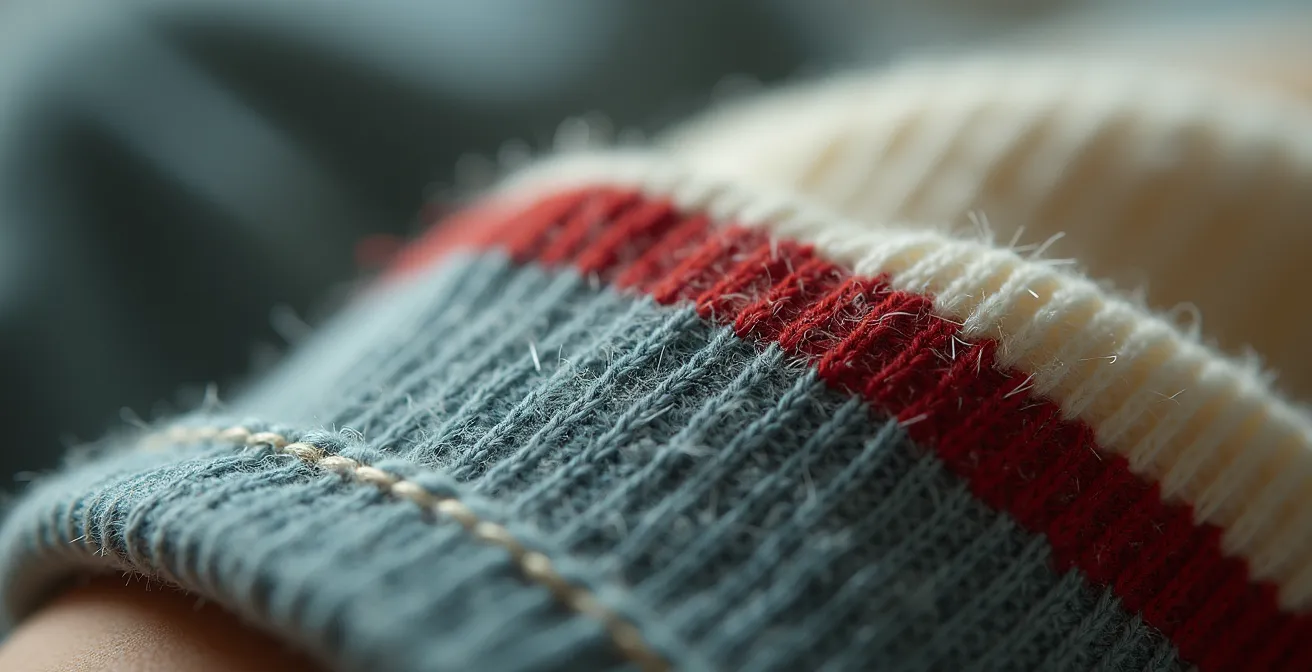
As the close-up of the fabric shows, true vintage quality is tactile. You’re paying for the durable, single-stitch construction and aged cotton patina that modern, fast-fashion shirts simply cannot replicate. This value—the time saved from you having to do the hunting, cleaning, and authenticating yourself—is what turns a simple second-hand item into a valuable, wardrobe-ready piece. Understanding this process is the first step to appreciating the true cost and making smarter purchasing decisions.
Action Plan: Deconstructing the $45 Vintage Tee
- Commercial Rent: Consider the store’s location. A shop on Queen West with rent at $65-85/sq ft will have higher prices than a Parkdale spot at $35-45/sq ft to cover overhead.
- Sourcing Costs: Factor in the picker’s investment: 40+ hours a week sourcing and $200-300 in weekly gas covering the entire GTA.
- Professional Cleaning: Account for the $8-15 cost per item for specialized cleaning that protects delicate vintage fabrics and removes decades of storage smells.
- Curation & Expertise: Value the owner’s 10+ years of experience, which saves you 20-30 hours of searching and protects you from buying a worthless reproduction.
- Authentication Services: Recognize the cost of preventing counterfeits. This service protects your investment and guarantees the item’s provenance.
How to Spot Fake 90s Streetwear Before Buying It?
As the demand for 90s nostalgia booms, so does the market for convincing reproductions. Nothing is more disappointing than spending $80 on what you thought was an authentic Champion crewneck, only to find it’s a modern knock-off. Developing an eye for authenticity markers is a non-negotiable skill for any serious vintage shopper in Toronto. The difference is often in the small details that cheap reproductions fail to replicate.
Authentic 90s sportswear, for instance, has a distinct feel. The cotton is heavier, usually a 6-7oz weave, giving it a substantial, durable quality compared to the flimsy 4-5oz blends of modern tees. The screen prints on real vintage items are soft, feel integrated into the fabric, and often show gentle, authentic cracking. Fakes, on the other hand, have thick, plasticky prints that sit on top of the fabric and feel like a sticker. Tags are another major giveaway. A 90s Champion tag is typically a single-layer woven piece of fabric, often stating “Made in USA” or “Mexico.” A modern reproduction will likely have a double-layer printed tag with “Made in Asia.”
Price can also be a red flag. If you see a piece of coveted 90s Raptors or Blue Jays gear for $15 at a pop-up market, be skeptical. Trusted vintage stores in Toronto like In Vintage We Trust or Chosen Vintage price these items between $35 and $85 because they’ve already done the work of authentication. Learning to recognize these details empowers you to shop confidently anywhere, ensuring you’re investing in a true piece of history, not a fleeting trend.
This table breaks down the key differences between a genuine article and a modern fake, giving you a quick reference guide for your next shopping trip.
| Feature | Authentic 90s Piece | Modern Reproduction |
|---|---|---|
| Champion Tags | Single-layer woven tag, ‘Made in USA/Mexico’ | Double-layer printed tag, ‘Made in Asia’ |
| Raptors/Jays Gear | Thick embroidered logos, heavy cotton blend | Thin screen print, lightweight polyester |
| Fabric Weight | Heavy 6-7oz cotton, substantial feel | Light 4-5oz blend, flimsy construction |
| Screen Print | Soft, integrated into fabric, slightly cracked | Thick, plasticky, sits on top of fabric |
| Price Point | $35-85 at trusted Toronto vintage stores | $15-25 at pop-up markets |
Parkdale vs. Kensington: Which District Has Better Deals on Denim?
Every Torontonian knows Kensington Market is a vintage hub, but its popularity comes with higher prices, especially for in-demand items like denim. To shop smarter, you need to practice neighborhood arbitrage—understanding which districts offer the best value for specific items. When it comes to denim, the data points to a clear winner for budget-conscious shoppers: Parkdale.
While Kensington boasts a high density of highly curated boutiques where a pristine pair of Levi’s 501s can cost you $85, Parkdale offers a different shopping experience. The stores are more spread out, and the inventory is less pre-sorted, meaning you’ll have to do more digging. However, the reward is significant. That same pair of Levi’s might be found for $40-60 in a Parkdale shop like Public Butter or House of Vintage. This represents a potential saving of nearly 40%. The trade-off is simple: time versus money. Kensington offers efficiency and pristine curation for those willing to pay a premium. Parkdale rewards those willing to invest their time in the hunt.
A strategic shopper leverages both. You might start your day in Parkdale, sifting through the bins at Public Butter for a $30 pair of jeans perfect for a DIY project, then head to House of Vintage for quality mid-range denim. Once you’ve secured your basics, you can then take the 501 streetcar to Kensington to hunt for a very specific, high-end 70s denim jacket at Courage My Love, knowing you’ve already saved money on the rest of your haul. This targeted approach is the key to maximizing your budget across the city’s diverse vintage landscape.
The price differences are not just a feeling; they are quantifiable. A direct comparison reveals the clear economic advantage of heading west for your denim needs.
| Item | Kensington Market Avg | Parkdale Avg | Price Difference |
|---|---|---|---|
| Levi’s 501s (Good Condition) | $65-85 | $40-60 | 38% cheaper in Parkdale |
| Denim Jackets (70s era) | $90-120 | $55-80 | 35% cheaper in Parkdale |
| Designer Denim | $100-150 | $60-90 | 40% cheaper in Parkdale |
| Curation Level | Highly curated, pristine | More digging required | Time vs Money tradeoff |
| Store Density | 15+ stores in 4 blocks | 8-10 stores spread out | Efficiency favors Kensington |
The Bedbug Risk You Ignore When Buying Unwashed Vintage Coats
In the excitement of finding a perfect 70s wool coat, it’s easy to overlook a critical, and frankly, creepy, risk: bedbugs. It’s an uncomfortable truth of second-hand shopping, but one that every savvy collector must take seriously. The risk is real; in 2023 alone, there were 1,300 bedbug treatments reported in Toronto’s multi-residential buildings, and textiles are their favorite mode of transportation. Ignoring this could turn your dream find into an expensive and stressful nightmare.
Reputable vintage stores in Toronto have a strict intake process. Shops like Penny Arcade pre-clean all their items before they ever hit the sales floor. However, when you’re digging in less-curated bins or at flea markets, the responsibility falls on you. Before you even bring an item into your home, you need a decontamination protocol. The most effective weapon is heat. Immediately seal your new finds in a plastic bag. Once home, placing items in a dryer on high heat (at least 60°C) for a minimum of 30 minutes will kill any live bugs and their eggs. For delicate items that can’t handle the heat, like certain wools or furs, the freezer is your best friend. Seal the item in a bag and freeze it at -18°C for at least four days.
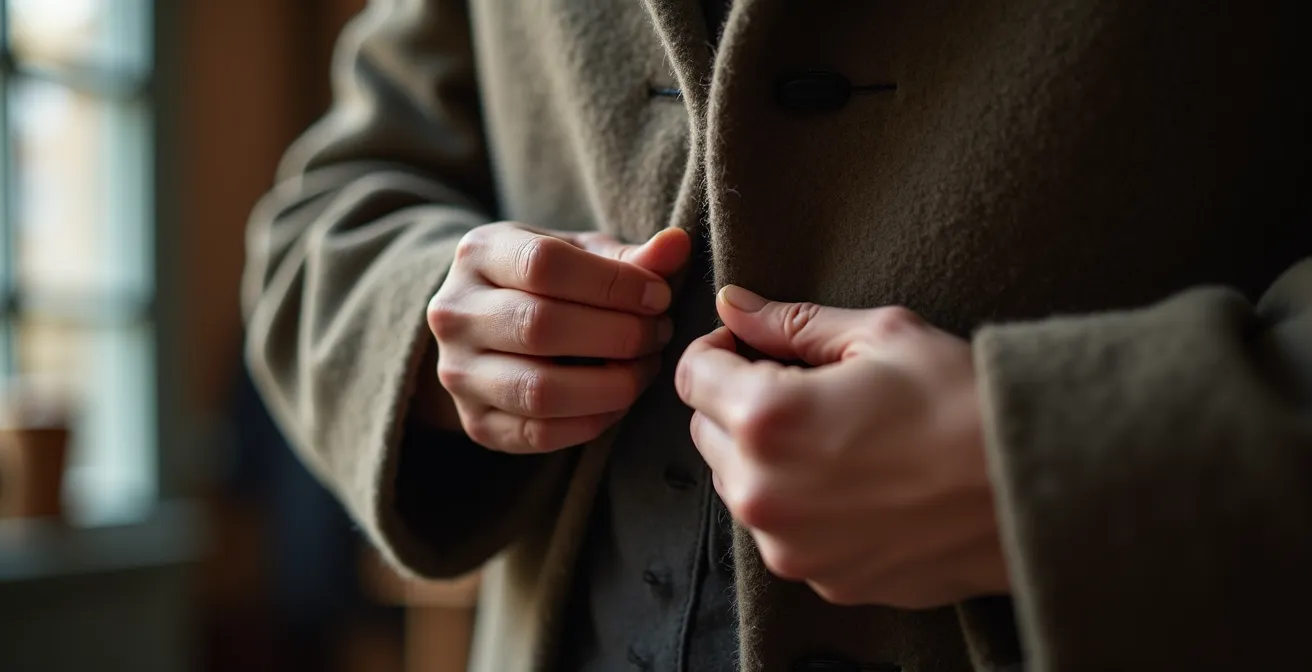
Always perform a careful inspection before you buy. Check the seams, linings, and under the collar for small dark spots or live insects. For high-value items like fur or delicate wool coats, it’s worth investing in professional help. Specialized cleaners in the city, such as Dove Cleaners on Dundas or Parkers on Queen, have experience with vintage textiles and can provide a thorough, safe cleaning. A little bit of caution on the front end can save you a world of trouble later.
- Seal items in plastic bags immediately after purchase and keep them sealed for at least 24 hours.
- Use your condo or a laundromat dryer on high heat (60°C) for a minimum of 30 minutes.
- For delicate pieces, freeze them in a sealed bag at -18°C for 4 full days in your apartment freezer.
- For precious wool or fur, trust professionals like Dove Cleaners or Parkers Cleaners, who specialize in vintage.
- Always ask the store about their intake and cleaning process. Transparency is a sign of a trustworthy seller.
When Do Top Vintage Stores Restock Their Racks for the Weekend?
Walking into a vintage store only to find the racks picked over is a common frustration. The best pieces—the rare band tees, the perfectly distressed denim—disappear fast. Gaining an edge requires more than just luck; it requires restock intelligence. The secret to consistently finding the good stuff is knowing *when* the stores get their new inventory.
Toronto’s vintage stores operate on a fairly predictable weekly rhythm dictated by foot traffic. Shops in high-traffic areas like Kensington Market typically do their major restocking on Thursday afternoons and Friday mornings. They are preparing for the flood of weekend shoppers and want their best items on full display. In contrast, stores in slightly quieter neighborhoods like Parkdale often use the slower early weekdays to their advantage, processing new inventory on Tuesdays and Wednesdays. This means a savvy shopper might hit Parkdale mid-week and Kensington on a Thursday for the best selection.
However, the most powerful tool in the modern vintage hunter’s arsenal is social media. As Penny Arcade owner Rachel Sheehan explained in an interview with Gem, the timing has become much more immediate. Many stores now use Instagram Stories for “real-time drops,” posting their most coveted finds as soon as they’re ready. These items are often claimed via DM within hours, never even making it to the physical rack. Following your favorite shops and turning on post notifications is no longer optional; it’s essential. Signing up for email lists can also grant you early access to online collections, giving you a 24-hour head start before the general public.
The real secret isn’t the day, it’s the notification system – we post our best pieces on Instagram stories first, and they’re often claimed within hours.
– Rachel Sheehan, Penny Arcade owner, Gem Toronto Vintage Guide Interview
- Kensington Market: Aim for Thursday afternoon and Friday morning for fresh racks before the weekend rush.
- Parkdale: Visit on Tuesday or Wednesday when owners are processing new stock from their weekend sourcing trips.
- Digital Drops: Follow stores like @chosenvintagetoronto and @mamalovesyouvintage on Instagram and turn on story notifications for first dibs.
- Late-Day Deals: Visit bulk stores like Public Butter and Black Market 30 minutes before closing on a Sunday for potential last-minute markdowns.
- Early Access: Sign up for the email lists at shops like Penny Arcade for exclusive access to new arrivals.
How to Spot a ‘Fake’ Independent Shop Owned by a Corporation?
Part of the joy of vintage shopping is supporting small, local businesses run by passionate owner-operators. However, as vintage has become more mainstream, a new phenomenon has emerged: the “fake” indie shop that is actually part of a larger corporate structure. While these stores can offer consistent pricing and inventory, it’s important to know who you’re supporting if your goal is to invest in true independent curation.
The signs are often subtle. A key indicator is the presence of multiple, identical locations. A store like Black Market Vintage, with its several storefronts and standardized $10 pricing model, clearly operates on a larger, more corporate scale. This isn’t inherently bad—it provides accessibility and low prices—but it’s a different business model from a family-owned shop like Mama Loves You, where the mother-daughter team personally curates every single piece. Another clue is whether the owner is physically present. At true indies like 96 Tears Vintage or Siberia Vintage, you’ll often find the owner working the floor, ready to tell you the story behind each item.
The inventory itself tells a story. True independents often hand-pick their items one by one, resulting in a more eclectic and unique collection. Larger chains tend to buy in bulk from “rag houses” (wholesale textile recycling facilities), leading to more repetition in their stock. If you’re unsure, a quick search on the Ontario Business Registry online can reveal the corporate ownership structure behind a storefront. Supporting verified independents ensures your money is going directly to a local entrepreneur whose passion and expertise define their business.
- Check for multiple locations: A chain of stores with identical branding and pricing suggests a larger operation.
- Look for the owner: In a true indie shop, the owner is often behind the counter or on the floor.
- Examine the inventory: Is it a unique, hand-picked collection or a large volume of similar items?
- Do a quick online search: The Ontario Business Registry can reveal a store’s corporate structure.
- Support verified independents: Shops like Mama Loves You (family-owned), Chosen Vintage (single owner-operator), and Siberia Vintage are pillars of Toronto’s indie scene.
Made in Toronto vs. IKEA: Which Sofa Survive a Move Better?
The philosophy of sustainable fashion extends beyond your closet and into your living room. The “buy quality once” ethos is the ultimate way to shop sustainably and save money in the long run. When furnishing your space, the choice between a new piece from a big-box store like IKEA and a vintage, Canadian-made piece is a stark illustration of this principle. The question isn’t just about style; it’s about longevity and durability.
Vintage Canadian-made furniture from the mid-century, by brands like Kroehler or R. Huber, was built to last for generations. These pieces feature solid hardwood frames (oak, maple, or teak) and robust joinery techniques like dovetail joints or mortise and tenon. They were designed to be moved, used, and lived with. In contrast, modern flat-pack furniture is largely made from particleboard or MDF held together by cam-lock screws. It’s designed for easy shipping and one-time assembly, not for disassembly and reassembly. The survival rate says it all: a vintage solid-wood sofa has a 95% chance of surviving multiple moves intact, while a particleboard equivalent often requires significant repairs after just one.
While the initial cost of a vintage sofa from a Toronto market ($400-$800) might seem higher than a new IKEA one ($299-$599), the long-term value is incomparable. When you factor in the need to replace the cheaper sofa within a few years, the cost-per-year of the vintage piece is drastically lower. This is the core of sustainable economics. As Andrea Lalonde of Nouveau Riche Vintage put it in an interview, “This ‘buy quality once’ philosophy is the core of sustainable fashion – a 1970s Canadian wool coat is the Kroehler sofa of your closet.”
A direct comparison of materials and long-term costs makes the superior value of vintage furniture clear, as this durability comparison highlights.
| Factor | Vintage Canadian-Made (Kroehler, R. Huber) | IKEA Modern |
|---|---|---|
| Frame Material | Solid hardwood (oak, maple) | Particleboard, MDF |
| Joinery | Dovetail joints, mortise & tenon | Cam-lock screws, dowels |
| Move Survival Rate | 95% intact after 5+ moves | 60% require repairs after 1 move |
| Initial Cost | $400-800 at Toronto vintage markets | $299-599 new |
| Cost per Year (10 years) | $40-80/year | $150-300/year (replacement needed) |
This ‘buy quality once’ philosophy is the core of sustainable fashion – a 1970s Canadian wool coat is the Kroehler sofa of your closet.
– Andrea Lalonde, Nouveau Riche Vintage, The Vintage Seeker Interview
Key Takeaways
- A high price tag on a vintage item reflects a journey of curation, cleaning, and authentication—a service you’re paying for.
- Your shopping strategy should adapt to the neighborhood: Parkdale for budget-friendly digging, Kensington for curated statement pieces.
- Authenticity is in the details: learn to feel for heavy fabric, inspect woven tags, and check for soft, integrated screen prints to avoid fakes.
How to Explore Kensington Market Like a Local, Not a Tourist?
Kensington Market is the heart of Toronto’s vintage scene, but its fame is a double-edged sword. On a Saturday afternoon, the sidewalks of Augusta Avenue are packed with tourists, and the shopping experience can feel overwhelming and transactional. To truly tap into the magic of the market, you need to shed the tourist mindset and adopt the habits of a local. This means changing not just where you look, but when you go and how you interact with the space.
First, timing is everything. A local knows to avoid the weekend crowds. The best time to explore Kensington is on a Tuesday or Wednesday morning. The streets are quiet, the shop owners are more relaxed and willing to chat, and you can browse without feeling rushed. Start your trip with a coffee from a local spot like Jimmy’s on Baldwin Street before the shops even open at 11 a.m. to get into the neighborhood’s rhythm. Second, get off the main drag. While Augusta has some great stores, many of the best finds are on the quieter side streets like Kensington Avenue and Baldwin Street. Don’t be afraid to wander.
A true local experience in the market mixes shopping with daily life. Grab a wedge of cheese from Global Cheese, a fresh loaf from Blackbird Baking Co., or chat with the butchers at Sanagan’s Meat Locker. This isn’t just a shopping mall; it’s a living neighborhood. Most importantly, dig deeper—literally. As one owner at Exile Vintage notes, many tourists never venture into the basements or back rooms, where some of the best collections are often hidden. Courage My Love, for example, has a legendary basement bin where treasures can be found for as little as $10. Always ask the owners about the story behind a piece; it’s the best way to connect with the community and uncover the history in your hands.
- Visit on a weekday morning: Go on a Tuesday or Wednesday to avoid the tourist crush and have a more relaxed experience.
- Explore the side streets: Venture off Augusta onto Kensington Ave and Baldwin St to find hidden gems.
- Look in basements and back rooms: The best and most affordable collections are often tucked away out of sight.
- Mix shopping with local food: Embrace the neighborhood vibe by visiting iconic food shops like Global Cheese and Blackbird Baking.
- Talk to the owners: Ask for the story behind an item. Locals know that every piece has a history worth hearing.
By shifting your perspective from a passive consumer to an active, knowledgeable collector, you unlock the true potential of Toronto’s vintage scene. You’re no longer just buying old clothes; you are becoming a custodian of history, a supporter of local business, and a champion of a more sustainable future for fashion. The next step is to take this knowledge out onto the streets and start building a wardrobe that is uniquely yours.