Experiencing Toronto on a daily basis
Living in Toronto means navigating a complex urban ecosystem where transit schedules, cultural offerings, and seasonal weather patterns shape daily experiences. Canada’s largest city presents both opportunities and challenges for residents and long-term visitors who seek to move beyond tourist attractions and understand the practical realities of everyday life. From mastering the TTC streetcar network to timing gallery visits and enduring winter markets, the city demands a learning curve that rewards those who invest time in understanding its rhythms.
This comprehensive resource connects the essential aspects of Toronto’s daily experience: reliable commuting strategies, cultural enrichment without breaking the budget, seasonal adaptation techniques, and capturing the city’s visual character. Whether you’re planning your first week in the city or refining years of local knowledge, understanding these interconnected elements transforms Toronto from an overwhelming metropolis into a navigable, enriching place to live.
Mastering Toronto’s Public Transit System
The Toronto Transit Commission operates the most extensive streetcar network in North America, with over 80 kilometers of track serving major corridors throughout the downtown core and inner suburbs. For daily commuters, understanding this system isn’t optional—it’s the foundation of efficient urban living in a city where car ownership brings significant parking costs and traffic congestion.
Understanding the TTC Streetcar Network
The streetcar system functions differently from subway or bus routes, with unique challenges that catch newcomers off guard. Streetcars share roadways with automobiles, making them vulnerable to traffic incidents, construction, and weather-related delays. The 509 Harbourfront and 504 King routes consistently experience the highest passenger volumes, particularly during morning and evening rush periods between 7:30-9:30 AM and 4:30-6:30 PM.
Understanding delay patterns requires recognizing their root causes. Construction projects frequently reduce track availability, forcing service diversions that add 10-15 minutes to regular routes. During winter months, track switches freeze despite heating systems, causing bunching where multiple streetcars arrive simultaneously followed by extended gaps. Accidents involving vehicles turning across streetcar tracks represent another common disruption, particularly at major intersections along Queen Street and Spadina Avenue.
Navigating Fares and Payment Systems
The TTC’s PRESTO card system replaced traditional tokens and tickets, creating a reloadable fare payment method that prevents the costly mistakes of paper-based systems. Riders without a registered PRESTO card face challenges disputing overcharges or recovering lost funds. Setting up autoload prevents the common scenario of discovering insufficient balance during boarding, which can result in fines during random fare inspections.
Fare enforcement officers board streetcars without warning, checking for proof of payment. The fine for fare evasion currently stands at $425, making even accidental violations expensive. Transfer rules confuse many riders: transfers remain valid for two hours from initial tap, allowing stopovers, but only for continuous one-way travel toward your destination. Backtracking or side trips invalidate the transfer, requiring a new fare payment.
Optimizing Your Daily Commute
Strategic route selection dramatically impacts commute reliability. The 510 Spadina streetcar, operating on a dedicated right-of-way for much of its length, consistently outperforms mixed-traffic routes like the 501 Queen in terms of schedule adherence. Riders comparing east-west options should consider the 504 King for speed versus the 505 Dundas for fewer crowds, depending on their specific origin and destination points.
Peak congestion times extend beyond traditional rush hours in Toronto’s core. The period from 8:00-9:00 AM sees maximum crowding, while evening peaks actually begin around 4:15 PM as office workers attempt to depart early. Flexible schedules benefit enormously from shifting commute times by just 30 minutes—traveling at 7:15 AM or 9:30 AM provides significantly more comfortable conditions and reduces average travel time by 15-20%.
Engaging with Toronto’s Cultural Landscape
Toronto’s arts scene offers depth beyond the major institutions, with neighborhood galleries, artist-run centers, and public art installations creating opportunities for cultural engagement at every budget level. Understanding how to navigate these spaces efficiently—and knowing which experiences justify their cost—separates tourists from residents who’ve integrated cultural exploration into regular life.
Accessing Art Galleries and Museums
Many of Toronto’s premier cultural institutions offer free or reduced admission during specific time windows. The Art Gallery of Ontario provides free entry on Wednesday evenings, though crowds during these periods can diminish the viewing experience. The Royal Ontario Museum’s free third Monday program was discontinued, but discounted evening rates still apply after 4:30 PM on Fridays, offering a compromise between cost savings and manageable visitor density.
Smaller institutions often provide superior visitor experiences for those seeking contemplative engagement rather than checking items off a bucket list. The Museum of Contemporary Art (MOCA) in the Junction typically sees lighter traffic than downtown counterparts, while the Aga Khan Museum offers architecturally stunning spaces with rarely overcrowded galleries. Strategic visit timing—weekday mornings or late Friday afternoons—transforms even popular institutions into peaceful environments.
Understanding Local Art Investment
Toronto’s print market and emerging artist scene attract both genuine collectors and speculative buyers, creating a complex landscape where value propositions aren’t always clear. Gallery districts in Yorkville, Distillery District, and West Queen West cater to different price points and aesthetic preferences, but understanding an artist’s trajectory requires research beyond gallery presentations.
The Toronto Outdoor Art Fair, Artist Project, and Papier art fair represent key industry events where direct artist interaction provides insights unavailable in commercial gallery settings. Attending these exhibitions early in the run, before popular works sell, offers the widest selection. However, avoiding poor investments requires understanding edition sizes for prints—unlimited reproductions hold minimal resale value compared to limited editions with proper documentation and certificates of authenticity.
Embracing Toronto’s Seasonal Rhythms
Toronto’s climate demands seasonal adaptation strategies, particularly during winter months when temperatures regularly drop below -10°C. Rather than hibernating indoors, experienced residents embrace cold-weather community events that transform potentially isolating months into opportunities for cultural connection and festive experiences.
Winter Markets and Festive Experiences
The Distillery Winter Village and Toronto Christmas Market at the same location attract different crowds despite their proximity. The Christmas Market charges admission fees ranging from $6-12 depending on timing, while the broader Winter Village maintains free access to many areas. This pricing structure creates questions about value—the ticketed market offers curated vendor selection and enhanced lighting installations, but the free areas provide similar mulled wine and craft vendors with less crowding.
Choosing between the Distillery market, Harbourfront Centre’s free skating and installations, or smaller neighborhood markets like the one at Nathan Phillips Square depends on desired atmosphere. The Distillery provides concentrated festive ambiance with heritage architecture as backdrop, ideal for photography. Harbourfront spreads activities across larger spaces, better for families with children. Nathan Phillips Square integrates skating with market vendors, though wind exposure on the open plaza creates harsher conditions during cold snaps.
Managing Cold Weather Outdoor Activities
Extended outdoor visits during Toronto winters require preparation beyond typical urban outfitting. Market visits averaging 2-3 hours expose visitors to cold that penetrates standard winter coats, particularly during stationary activities like browsing vendor stalls. Layering with moisture-wicking base layers, insulating mid-layers, and wind-blocking outer shells prevents the gradual heat loss that cuts visits short.
Extremities suffer first in cold conditions—insulated boots rated to at least -20°C make the difference between enjoying market experiences and abbreviating them due to numb toes. Hand warmers provide supplementary heat during particularly cold evenings, while face protection (balaclavas or thick scarves) becomes necessary when temperatures drop below -15°C with wind chill. Strategic timing around weather forecasts and visiting during the warmest part of winter days (typically 1:00-3:00 PM) extends comfortable outdoor duration.
Capturing Toronto’s Visual Identity
Toronto’s skyline, neighborhoods, and seasonal transformations create distinctive photographic opportunities that define the city’s visual character. Understanding where to position yourself and when to shoot separates snapshot tourism from intentional image-making that captures Toronto’s unique urban qualities.
Prime Photography Locations
The city’s geography creates natural viewpoint opportunities, though “hills” is generous terminology for Toronto’s gentle elevations. Riverdale Park East remains the most popular skyline vantage point, offering unobstructed downtown views across the Don Valley. Its popularity stems from accessibility—public transit reaches nearby stops, and the park remains open during all daylight hours without admission fees.
East versus west view corridors produce dramatically different imagery. Eastern viewpoints like Riverdale and Broadview Avenue capture the full skyline breadth with the CN Tower in left-third composition positions. Western approaches from Ontario Place or Humber Bay provide sunset backlighting opportunities but compress the skyline depth, reducing individual building definition. Each corridor serves different photographic intentions—eastern views for architectural documentation, western for atmospheric sunset silhouettes.
Mastering Urban Photography Techniques
Night photography in urban environments battles digital noise and motion blur without the controlled conditions of studio work. Toronto’s relatively bright downtown core allows faster shutter speeds than pure night landscapes, but achieving clean images still requires understanding the exposure triangle. Increasing ISO above 3200 introduces visible grain on most consumer cameras, while slower shutter speeds below 1/60 second risk blur without tripod stabilization.
Golden hour timing varies significantly across seasons—summer golden hour occurs around 8:00 PM, while winter’s arrives near 4:30 PM. This seasonal variation affects planning, particularly for photographers balancing work schedules with ideal lighting conditions. Winter photography offers the advantage of earlier golden hour but introduces cold-related challenges: battery life decreases in freezing temperatures, requiring spare batteries kept warm in interior pockets. Lens fogging when moving from cold exteriors to warm interiors can be prevented by placing cameras in sealed bags before temperature transitions, allowing gradual equalization.
Toronto’s daily rhythms—from streetcar timing to seasonal market calendars—reveal themselves gradually through sustained engagement rather than brief visits. Mastering these patterns transforms the city from a collection of isolated experiences into an interconnected environment where transit efficiency enables cultural exploration, seasonal preparation extends outdoor enjoyment, and photographic timing captures fleeting visual moments. Each element reinforces the others, building toward a comprehensive understanding that makes Toronto not just livable, but genuinely rewarding for those willing to learn its distinct urban language.
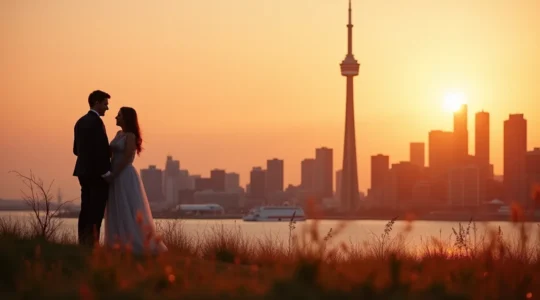
How to Plan a Romantic Date Around Toronto’s Best Views?
The secret to a truly romantic Toronto date isn’t spending a fortune, but mastering the art of ‘atmospheric planning’ to create a priceless moment. Focus on timing and light—like chasing the ‘golden hour’—over simply picking a popular location. Prepare for…
Read more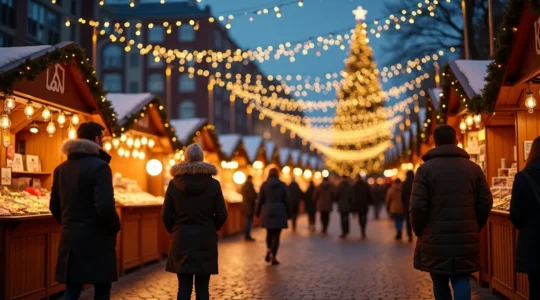
How to Enjoy Toronto’s Winter Markets Without Freezing?
In summary: Master a thermal layering system (base, mid, shell) to make the Canadian cold irrelevant. Visit the Distillery Winter Village for free before 4 PM on weekdays to avoid the biggest crowds and ticket fees. Choose Nathan Phillips Square…
Read more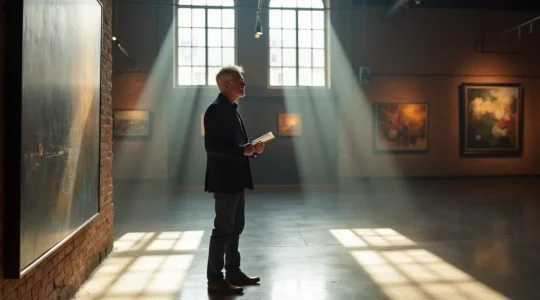
How to Start Collecting Art in Toronto on a Middle-Class Budget?
The secret to collecting art in Toronto on a budget isn’t finding discounts; it’s investing in the city’s creative culture directly. Understand the real costs Toronto artists face to appreciate the true value behind the price tag. Focus on artist-direct…
Read more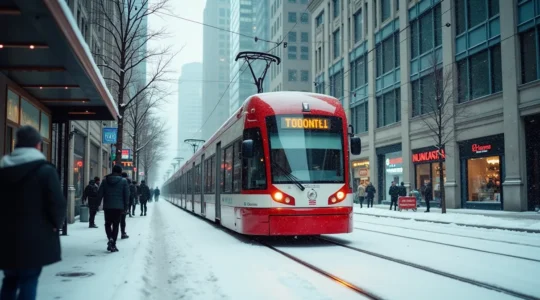
How to Commute on the 504 King Streetcar Without Losing Your Mind?
In summary: Stop being a victim of short turns and ghost buses by learning how to predict them using specific app-based clues. Transform your commute by strategically using the TTC’s two-hour Presto transfer to run essential errands for free. Understand…
Read more