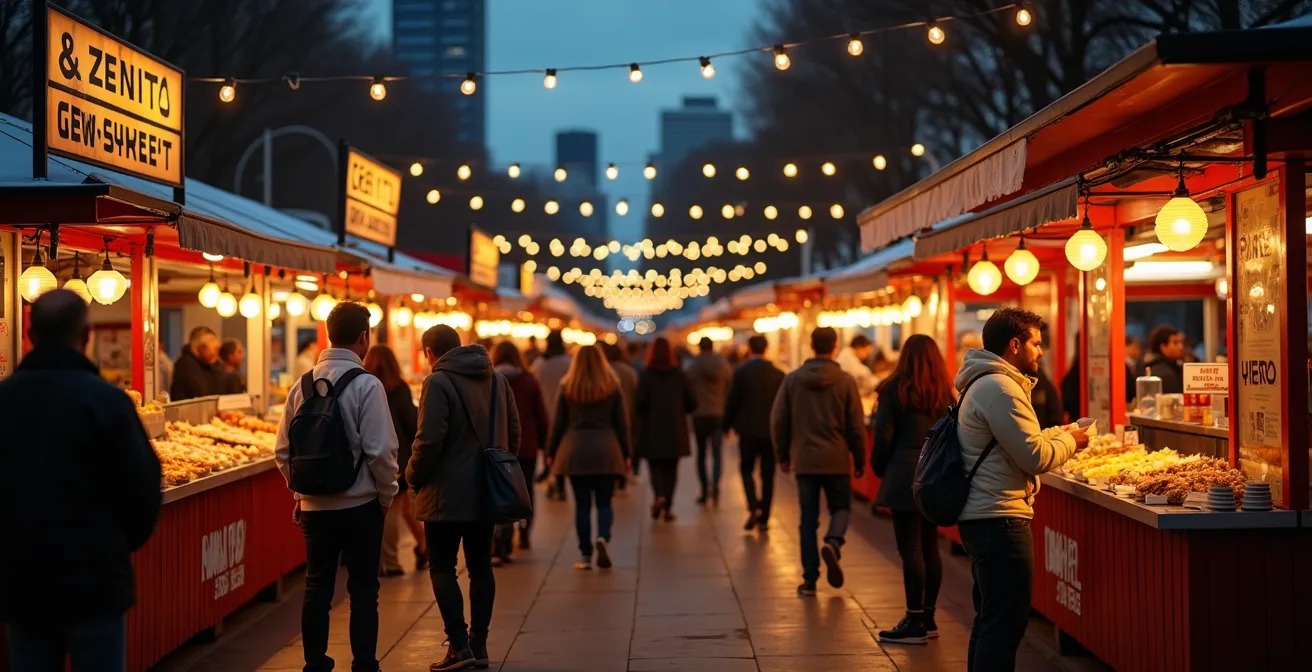
Finding Toronto’s next great food trend isn’t about luck; it’s about having the right culinary intelligence strategy.
- Leverage Instagram’s deeper features (tagged photos, location stories) to spot emerging chefs before the algorithm does.
- Judge fusion food by its integrity—does it blend cultures thoughtfully or just mash up gimmicks for a photo?
Recommendation: Shift your mindset from a passive follower to an active trend hunter to always eat ahead of the curve.
You’ve seen it happen. A friend sends you a TikTok of a glorious, genre-bending dish from a tiny stall in Toronto. By the time you get there on Saturday, the line snakes around the block, the “sold out” sign is up, and you’re left with a major case of food FOMO. The typical advice is to “follow food bloggers,” but by the time a dish hits the major accounts, you’re already behind the curve. You’re consuming a trend, not discovering it.
This endless cycle of hype is exhausting for any adventurous eater. The real thrill isn’t just eating viral food; it’s the chase. It’s about finding that next “Sushi Burrito” or “Cronut” when it’s still an inside secret, whispered about in niche online communities. It’s about understanding the difference between a lazy cash-grab and a truly innovative culinary creation that reflects Toronto’s incredible diversity.
But what if the key wasn’t to follow faster, but to hunt smarter? What if you could build a system to detect the signals of a future hit before it becomes mainstream noise? This guide is your new playbook. It’s not a list of what’s hot now; it’s a strategy for developing your own culinary intelligence. We’re moving beyond passive scrolling and into the world of active trend discovery.
Together, we’ll explore the unique economics that make pop-ups innovation hubs, decode the digital scent trails left on social media, and learn to analyze fusion food like a pro. Get ready to transform from a trend follower into a Toronto food trend hunter.
Summary: Your Playbook for Hunting Down Toronto’s Hidden Food Gems
- Why Do Pop-Up Stalls Often Have Better Food Than Restaurants?
- How to Use Instagram Stories to Locate Moving Food Stalls?
- Sushi Pizza vs. Butter Chicken Poutine: Which Fusion Dish Actually Works?
- The Refrigeration Risk to Watch For at Outdoor Food Markets
- When to Arrive at a Viral Stall to Guarantee You Get Served?
- Why Are Street Food Vending Permits So Hard to Get in Toronto?
- When Does a Viral Food Trend Stop Being Cool in Toronto?
- How to Distinguish Innovative Fusion from Lazy Mashups?
Why Do Pop-Up Stalls Often Have Better Food Than Restaurants?
It might seem counterintuitive, but the constraints of a pop-up are often its greatest strengths. Unlike a full-scale restaurant burdened with massive overhead, rent, and a large, static menu, a pop-up is agile. This lean model is built for one thing: culinary experimentation. Chefs can test-drive wild, innovative ideas without risking a fortune. If a dish doesn’t work, they pivot. If it’s a hit, they double down. This freedom from financial pressure often results in food that is more passionate, personal, and daring.
The market structure in Canada heavily favors this model. In fact, independent outlets dominate over 65% of the Canadian foodservice market, creating a fertile ground for small, creative ventures. In Toronto, this has led to a boom in chef-led pop-ups, ghost kitchens, and hybrid models. These approaches slash fixed costs, allowing chefs to focus their resources on what truly matters: high-quality ingredients and perfecting a small, specialized menu. They’re not trying to be everything to everyone; they’re trying to make the absolute best version of one or two signature items.
This specialization creates a level of quality and focus that many larger restaurants struggle to match. A pop-up chef making one dish a thousand times has honed that recipe to near-perfection. They live and breathe that single creation. So when you find a pop-up with a line, you’re not just queuing for food; you’re queuing for a masterclass in specialization. You’re tasting the result of immense focus and low-risk innovation, a combination that established restaurants often can’t afford.
How to Use Instagram Stories to Locate Moving Food Stalls?
The ephemeral nature of pop-ups means their locations can change weekly, or even daily. Your secret weapon for tracking them isn’t just following their account—it’s mastering the art of the “digital scent trail” on Instagram. The real alpha is hidden in user-generated content and the platform’s more obscure features, long before it hits the algorithm’s main feed. Forget the explore page; you need to think like a digital detective.
Start by going beyond the official account. The most valuable intel comes from the “tagged photos” section of popular food markets, parks, or breweries where pop-ups congregate (like Stackt Market or Trinity Bellwoods). This is where early adopters post their finds. Similarly, monitor the location tags and recent stories for these key venues. A chef might not post about their setup for another hour, but an excited customer who just arrived might have already tagged the location in a story.
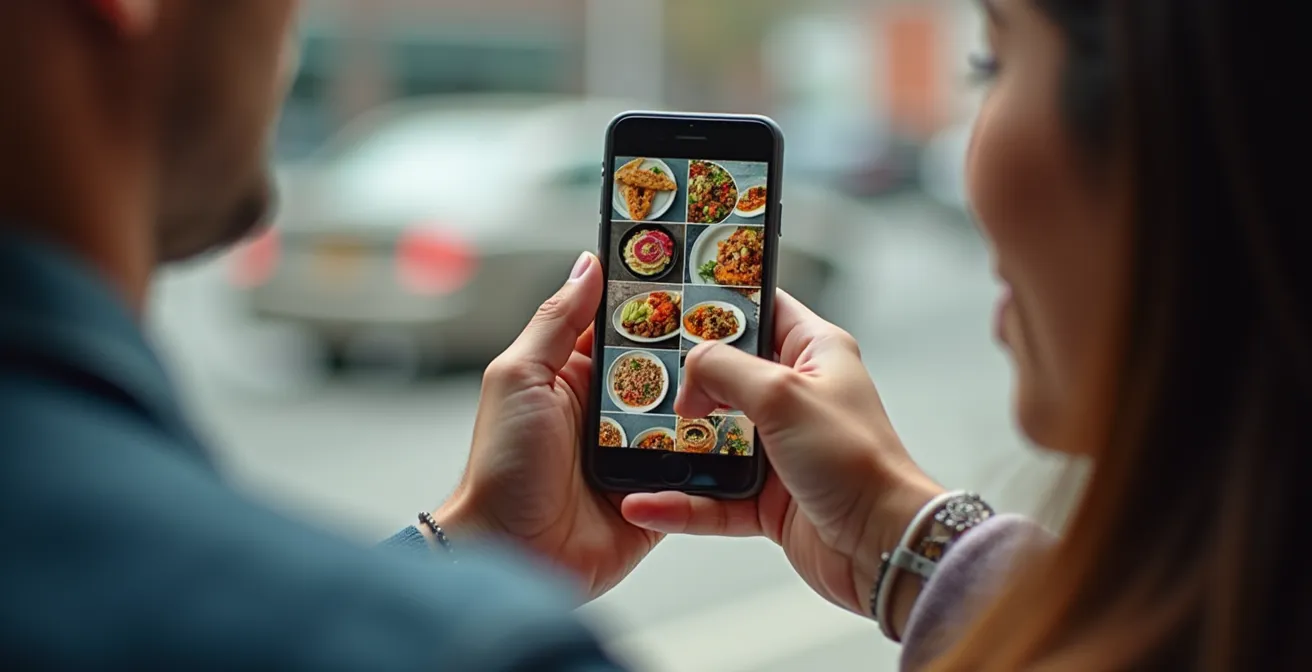
To systemize your hunt, build a “watch list” of key accounts. This shouldn’t just be the pop-ups themselves, but also Toronto-based micro-influencers and food bloggers who specialize in street-level finds, not just fine dining. Enable post and story notifications for your top 5-10 “signal” accounts. When they post, you see it instantly. Finally, track hyper-local hashtags like #torontopopups or niche tags related to the food itself, and sort by “Recent.” This is how you see what’s happening right now, not what was popular three days ago.
Sushi Pizza vs. Butter Chicken Poutine: Which Fusion Dish Actually Works?
These spots mix and match flavours and techniques from different cultures to create exciting and sometimes unexpected new dishes in a way that mirrors the diversity of our city.
– Andrew Gunadie (gunnarolla), Destination Toronto Food Guide
Toronto’s multicultural fabric is the ultimate playground for fusion cuisine. But for every brilliant creation, there are a dozen lazy mashups designed more for Instagram shock value than for the palate. The difference lies in what we can call “fusion integrity.” A successful fusion dish isn’t just two things thrown together; it’s a thoughtful conversation between cultures, where each element enhances the other, creating something new and harmonious.
Sushi Pizza, a Toronto invention, is a prime example of high fusion integrity. It takes the format of a pizza but replaces the dough with a crispy fried rice patty. This isn’t random; it creates a brilliant textural contrast—hot and crunchy on the bottom, cool and fresh on top—that respects the Japanese ingredients while innovating on the form. Butter Chicken Poutine works for a different reason: it combines two of the city’s ultimate comfort foods, reflecting the lived experience of many Torontonians. The rich, creamy curry gravy adheres perfectly to the fries and squeaky cheese curds, creating a dish that feels both familiar and new.
The key is identifying the ‘why’ behind the fusion. Is there a structural reason, a textural innovation, or a cultural narrative that makes sense? Or is it just two trending foods slammed together? A detailed analysis of Toronto’s most iconic fusion dishes reveals a clear pattern of thoughtful integration.
| Fusion Dish | Cultural Elements | Why It Works | Toronto Connection |
|---|---|---|---|
| Sushi Pizza | Japanese techniques + Italian format | Crispy fried rice base with cool, fresh toppings creates structural and textural innovation | Toronto invention, now global |
| Butter Chicken Poutine | Indian curry + Canadian classic | Combines comfort foods from two major Toronto demographics | Reflects city’s multicultural identity |
| Photine (Pho Poutine) | Vietnamese + Canadian | Rich pho broth, grilled spiced beef, basil and crispy shallots transform classic poutine with familiar Vietnamese flavours | Created at Dzo Viet Eatery |
The Refrigeration Risk to Watch For at Outdoor Food Markets
The thrill of discovering a hidden food stall can sometimes overshadow a crucial element: food safety. While Toronto has health standards, the pop-up environment, especially at outdoor markets, presents unique challenges. The single biggest risk factor to watch for is improper temperature control. A picnic cooler filled with ice is not a professional refrigeration unit, and it’s a major red flag, especially for vendors handling raw proteins like meat or seafood.
Your eyes are your best tool for a quick safety audit. Look for professional-grade equipment: stainless steel surfaces, commercial-grade portable fridges or freezers (you should hear a hum), and proper sneeze guards. A vendor who has invested in quality equipment is more likely to be serious about their operations. Also, observe their workflow. Are raw and cooked ingredients stored separately? Do they change gloves frequently, especially after handling money? A stall that cooks to order is almost always a safer bet than one where food sits under a heat lamp for an unknown amount of time.

Don’t be afraid to engage the vendor. Asking simple questions like “Where is your commissary kitchen?” (a licensed kitchen where they prep food) shows you’re an informed customer. A legitimate vendor will be proud to tell you. The most important thing is to trust your gut. If something feels off—the setup looks dirty, the staff seems careless, or the food just doesn’t look fresh—walk away. There will always be another food stall.
Your On-the-Go Checklist: Spotting Safe Street Food
- Check for visible permits: Look for the city-issued business license and DineSafe health permit displayed prominently.
- Assess the equipment: Are they using professional-grade cooling units or just picnic coolers?
- Observe storage practices: Ensure raw proteins are kept separate from ready-to-eat items like garnishes and sauces.
- Watch their hygiene: Note if they practice frequent hand washing and glove changes between tasks.
- Ask about sourcing: Inquire about their commissary kitchen and where they source their main ingredients.
When to Arrive at a Viral Stall to Guarantee You Get Served?
In the world of viral food, timing isn’t just everything—it’s the only thing. A single viral TikTok can create a demand that a small pop-up is fundamentally unequipped to handle. The secret to beating the horde isn’t just showing up early; it’s about strategic timing based on an understanding of both diner habits and the social media hype cycle. The goal is to arrive in the sweet spot: after they’re set up and ready to serve, but before the main rush hits.
First, abandon the idea of going at peak times. Friday night or Saturday at 1 p.m. is a recipe for disappointment. Your best bet is always a weekday, especially a Tuesday or Wednesday, for lunch or an early dinner. The crowds will be significantly smaller. If you must go on a weekend, your strategy is to be an “opening act” or a “closing act.” This means arriving a solid 30 minutes *before* their announced opening time to be one of the first in line. Alternatively, aim for the last hour of service, when the main crowd has dissipated, but be prepared for the risk of them selling out.
Monitor the social media hype in real-time. If a pop-up announces a special for the upcoming weekend on a Monday, the hype will build all week. The peak of that hype will be on the first day of the event. By the second or third day, the initial frenzy may have died down slightly. A good rule is to wait 24-48 hours after a major influencer posts about a spot. Let the most eager followers battle it out on day one, and swoop in on day two with a much more manageable wait.
Why Are Street Food Vending Permits So Hard to Get in Toronto?
If pop-ups are so innovative, why aren’t Toronto’s streets teeming with them? The answer lies in a web of complex, and often restrictive, municipal regulations. For years, the city has tried to balance the desires of a burgeoning street food scene with the interests of established brick-and-mortar restaurants. The result is a permitting system that can be incredibly challenging for aspiring food entrepreneurs to navigate, making each successful pop-up a minor miracle of perseverance.
One of the most significant hurdles is the infamous proximity rule. According to the City of Toronto’s official guidelines, a food truck or cart must maintain a minimum distance from any open restaurant. For a long time, this was 50 metres, but even the current rule, which stipulates that 30 metres is the minimum required distance, creates “no-go” zones across huge swaths of the city’s densest and most commercially viable areas. In downtown Toronto, finding a legal spot that also has foot traffic can feel like an impossible task.
Beyond location restrictions, vendors face a gauntlet of other requirements, including costly health and safety certifications, vehicle retrofitting standards, and commissary kitchen affiliations. These regulations, while designed to protect public health, add significant financial and administrative burdens that can stifle the very creativity and agility that make pop-ups so special. This regulatory friction is a key reason why many chefs opt for temporary pop-ups inside other venues (like breweries or markets) rather than operating a fully independent mobile cart. It’s a workaround that bypasses some of the most difficult street-vending rules.
Key Takeaways
- True trend hunting is an active skill (“culinary intelligence”), not just passively following big accounts.
- The best fusion food has “integrity”—a thoughtful reason for combining cultures, beyond just gimmickry.
- Use Instagram’s secondary features (tagged photos, location stories) to spot trends before the main algorithm does.
When Does a Viral Food Trend Stop Being Cool in Toronto?
Every food trend has a lifecycle, and for a true hunter, knowing when to get out is as important as knowing when to get in. A trend’s “coolness” is inversely proportional to its accessibility. The moment a dish moves from discovery to mainstream saturation, the thrill is gone. In Toronto, this lifecycle is accelerated by a powerful social media engine, where major accounts can have a massive influence; for example, some Toronto food accounts have over 300,000 followers, capable of turning a niche item into a city-wide phenomenon overnight.
The lifecycle of a Toronto food trend can be broken down into distinct stages. Recognizing them is key to staying ahead:
- Stage 1: The Underground. The dish exists only in chef’s circles, at private events, or unannounced, invitation-only pop-ups. This is the purest signal, accessible only to industry insiders.
- Stage 2: Early Adopter Buzz. It appears in niche Facebook groups, on the Instagram stories of micro-influencers, or gets a mention from someone with high “culinary street cred.” The hunt is on.
- Stage 3: Mainstream Crossover. A major publication like BlogTO or Narcity features it. This is the tipping point. The “discovery” phase is officially over.
- Stage 4: Suburban Saturation. Chain restaurants or eateries in Mississauga, Vaughan, or Scarborough start offering their own versions. The trend has been fully democratized and, therefore, is no longer a trend.
- Stage 5: The Gimmick Phase. The language used to describe the food shifts from “innovative” or “delicious” to “Instagrammable” or “TikTok-famous.” The focus is now on the photo, not the food. This is the definitive end of its coolness.
Your goal as a trend hunter is to operate in Stage 2. By the time Stage 3 hits, you should already be on the trail of the next big thing. The moment you see a dish being replicated in the suburbs, it’s time to move on.
How to Distinguish Innovative Fusion from Lazy Mashups?
You’re at a market, faced with two fusion creations. One is a work of genius, the other a bland gimmick. How do you tell the difference before spending your money? The answer lies in looking for a story and a sense of purpose. An innovative fusion dish is born from a chef’s personal history and deep respect for the ingredients, while a lazy mashup is often just a collision of buzzwords.
Authentic fusion feels personal. It tells the story of the chef’s background—a blend of their heritage, their classical training, and their lived experiences in a city like Toronto. As seen in the city’s best kitchens, successful chefs take flavours from their childhood—home-cooked meals, hawker-stall favourites—and refine them with modern techniques, all while keeping the comfort-food soul intact. The result is a dish that feels both surprising and inevitable. It’s not about being gimmicky; it’s about being personal.
Look for balance and intention. Does each component have a reason to be there? Does the acidity of one ingredient cut through the richness of another? Does a new technique elevate a traditional flavour? Great fusion creates harmony. In contrast, a lazy mashup often feels chaotic. The flavours compete instead of complementing each other, and the texture can be a mess. It’s often a sign that the creator was chasing a “viral moment” rather than a genuinely delicious experience. Ultimately, the most innovative fusion food isn’t just about combining cuisines; it’s about bridging cultures on a plate.
Now you have the playbook. You know how to read the market, decode the digital trails, and judge a dish by its integrity. It’s time to put your culinary intelligence to the test. Get out there, start hunting, and find Toronto’s next great dish before anyone else does.