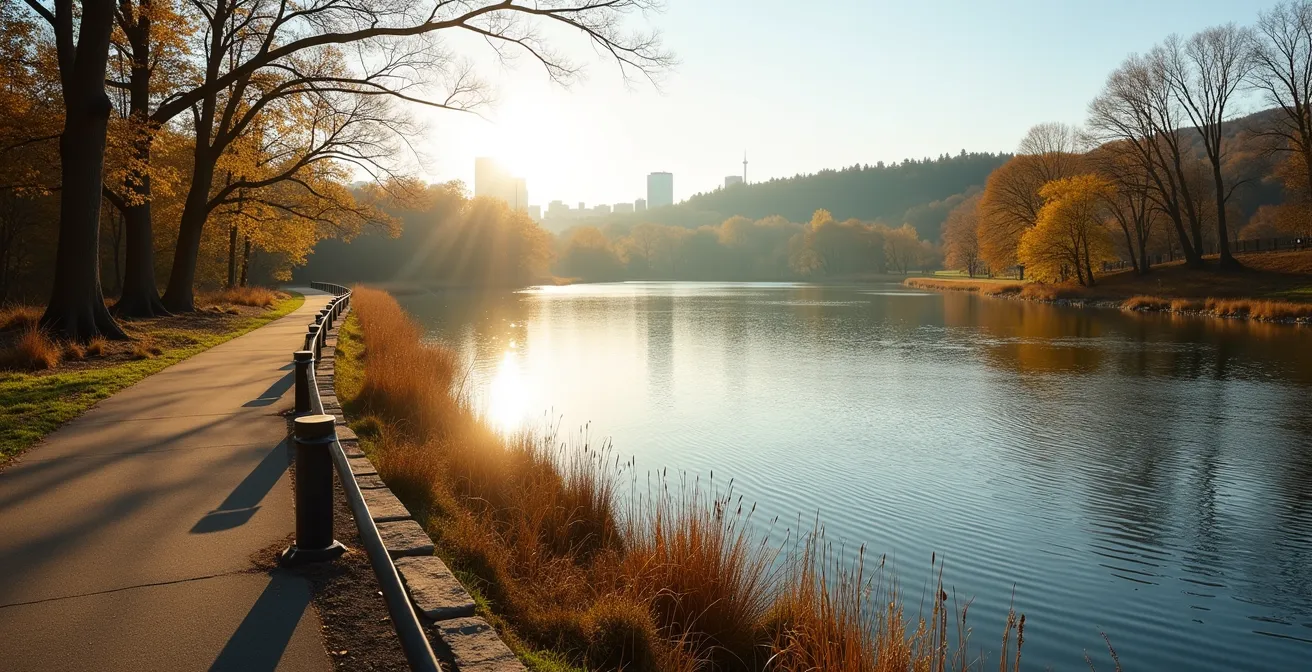
True safety at Grenadier Pond comes not just from following rules, but from understanding the fragile urban ecosystem you are a part of.
- Ice is officially monitored and rarely safe; hidden dangers like shelf ice exist even when it looks solid.
- Feeding wildlife, especially bread, causes direct harm to animals and degrades the pond’s water quality.
- Recreational activities like fishing are regulated by provincial and local rules that protect fish populations.
Recommendation: Approach every visit as a steward of the park by learning the ‘why’ behind each bylaw, ensuring the pond remains a healthy habitat for wildlife and a safe space for people.
As a conservation officer, I often see well-meaning visitors arrive at Grenadier Pond, ready for a day of skating, fishing, or simply enjoying the scenery, only to be met with a series of signs: “No Skating,” “Do Not Feed Wildlife,” “Fishing Regulations in Effect.” It’s easy to see these as simple restrictions. But what if each rule wasn’t just a command, but a chapter in the story of this unique urban ecosystem? Many guides will list the dos and don’ts, but they often miss the most important part: the ‘why’.
The common advice is to “be careful” or “follow the signs,” but this approach lacks depth. It doesn’t explain the specific thermal inconsistencies that make Grenadier Pond’s ice so treacherous, nor does it connect the simple act of tossing bread to a duck with the slow degradation of the entire aquatic environment. This guide is different. It’s built on the principle of urban ecosystem stewardship. My goal is not just to tell you what the rules are, but to pull back the curtain on the science, safety data, and conservation principles that inform them.
By understanding the ‘why’ behind each guideline—from the specific dangers of winter shorelines to the jurisdictional nuances of a Toronto fishing license—you transform from a passive visitor into an active, informed steward. This article will walk you through the key activities at the pond, explaining the hidden dangers and ecological impacts that every responsible nature lover should know. You’ll learn not only how to enjoy the park safely, but how to do so in a way that protects it for generations to come.
To help you navigate these important topics, this guide is structured around the most common questions and activities at the pond. Explore the sections below to gain a deeper understanding of how to interact with this cherished Toronto natural space responsibly.
Summary: A Conservation Officer’s Guide to Grenadier Pond
- Why Is Skating on Grenadier Pond Considered Unsafe Despite the Cold?
- How to Get a Fishing License for Urban Ponds in Toronto?
- Grenadier Pond vs. Humber Marshes: Which Is Better for Birdwatching?
- The Feeding Bread Mistake That Harms Pond Waterfowl
- When to Visit the Pond to See the Salmon Run?
- How to Visit the High Park Zoo for Free (and Where to Donate)?
- The Winter Shoreline Mistake That Endangers Walkers Every Year
- How to Enjoy Lake Ontario Activities Without Risking Your Health?
Why Is Skating on Grenadier Pond Considered Unsafe Despite the Cold?
Even on the coldest winter day, when Grenadier Pond looks like a perfect, glassy rink, skating is prohibited for critical safety reasons. This isn’t just a case of over-cautious policy; it’s based on the pond’s specific hydrology and a history of dangerous incidents. Unlike smaller, shallower ponds, Grenadier Pond has variable depths and is fed by underwater sources, which can create unpredictable thermal inconsistencies and thin patches, even in a deep freeze. The city’s official position is reinforced by the Toronto Municipal Code, which states, “No person shall access or skate on a natural ice surface in a park where it is posted to prohibit it.”
The cost and logistics of ensuring safety are significant. In 2017 alone, the city paid $163,843 for ice testing, yet the ice was only deemed safe for an average of 5 to 10 days per season. This highlights the fundamental instability of the ice. The risk is not hypothetical; it’s a recurring danger that has required emergency responses.
Case Study: The 2021 Grenadier Pond Ice Rescue
In February 2021, a skater fell through the ice at the south end of the pond, plunging into the frigid water. A second individual who attempted a rescue also became trapped, necessitating a full marine rescue operation by Toronto police and fire crews. The skater later described the incident as a warning, noting, “There is a hidden pocket of thin ice under a coating of shell ice that I had skated past before… Friendly warning: even for experienced adventurers — for now, stick to the shore in High Park.” This real-world example underscores that even for those who test the ice, its condition can be fatally deceptive.
Ultimately, the blanket prohibition on skating is a preventative measure rooted in the pond’s inherent unpredictability. The official, monitored rinks throughout the city are the only guaranteed safe option for this classic winter activity. The risk of a hidden thin patch or a sudden breakthrough at Grenadier Pond is simply too high.
How to Get a Fishing License for Urban Ponds in Toronto?
Casting a line in Grenadier Pond is a fantastic way to connect with urban nature, but it’s an activity managed by provincial regulations to ensure fish populations remain healthy. Before you fish, you must have a valid Ontario fishing license. This isn’t just a piece of paper; it’s your contribution to the conservation efforts that maintain fisheries across the province. The process is straightforward and ensures that anglers are aware of the rules that protect the sport for everyone.
Grenadier Pond is home to a surprising variety of species, including Brown Bullhead, Black Crappie, Bluegill, Pumpkinseed, Common Carp, Largemouth Bass, and even Northern Pike. The Toronto and Region Conservation Authority (TRCA) and the City have undertaken habitat restoration work, adding sunken wood and fallen trees to create thriving environments for these fish. This biodiversity is what makes the pond such a great spot, particularly for introducing young anglers to the sport. However, enjoying this resource requires adherence to the rules set out by the Ministry of Natural Resources and Forestry.
To fish legally in Grenadier Pond, follow these official steps:
- Purchase an Outdoors Card: This is a mandatory prerequisite for most anglers. You can obtain this plastic ID card online at Ontario.ca or from an authorized retailer.
- Obtain a Fishing License: You’ll need to buy a one-year or three-year fishing license, which is tied to your Outdoors Card. You can choose between a Sport License (allowing for higher catch limits) or a Conservation License (more affordable with lower catch limits).
- Check for Exemptions: If you are under 18 or 65 and over, you do not need to purchase a license, but you must carry a government-issued ID with your name and date of birth.
- Know Your Zone: Toronto falls within Fisheries Management Zone (FMZ) 20. You must be familiar with the specific seasons, catch limits, and size restrictions for this zone. These regulations are detailed in the official Ontario Fishing Regulations Summary.
Following these steps ensures that the pond’s ecosystem is not over-fished and that species can thrive. It is a fundamental part of sustainable recreation, balancing our enjoyment with the ecological health of the park.
Grenadier Pond vs. Humber Marshes: Which Is Better for Birdwatching?
For Toronto’s birdwatching community, both Grenadier Pond and the nearby Humber Marshes are premier destinations, but they offer distinctly different experiences. Choosing between them depends on the season, your target species, and your accessibility needs. Grenadier Pond, recently designated a Provincially Significant Wetland, is renowned for its accessibility and is a hotspot during spring and fall migrations. Its paved, flat loop trail makes it an excellent choice for visitors with mobility challenges.
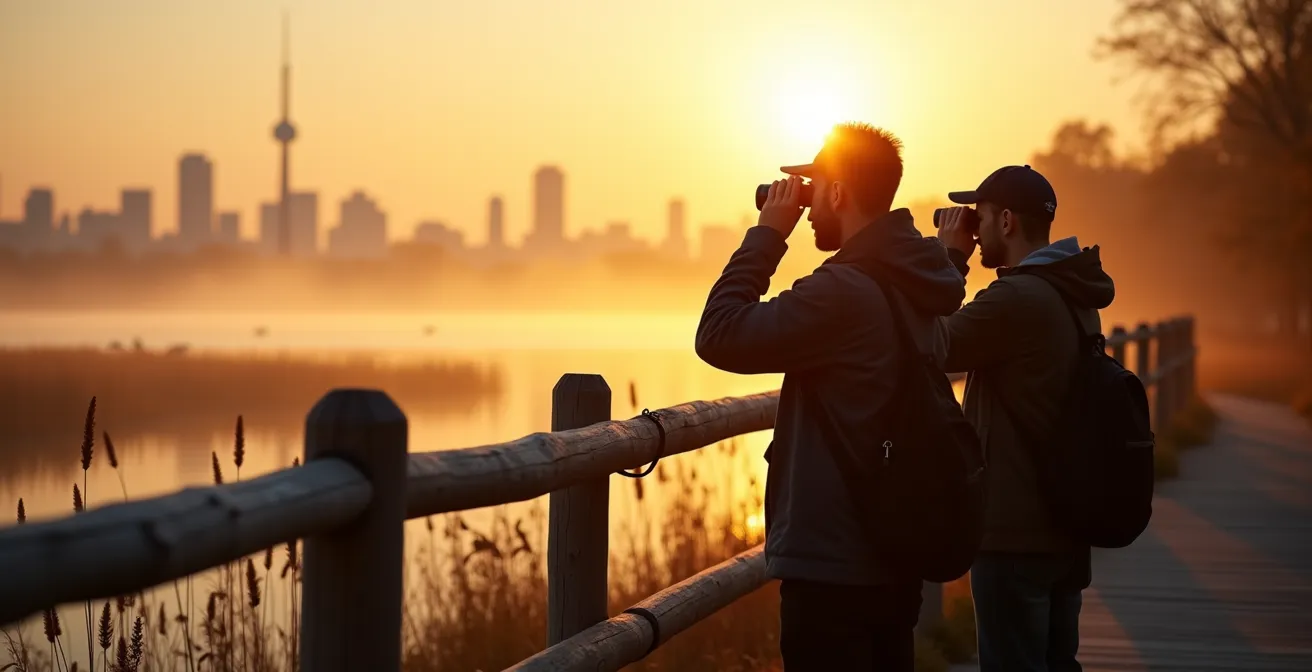
The observation deck near Hillside Gardens at Grenadier Pond is a prime location to spot Wood Ducks, warblers, and the elusive Black-crowned Night-Herons that roost in the area. The mix of open water, marshland, and surrounding forest creates a diverse habitat that attracts a wide array of species. The Humber Marshes, in contrast, offer a more rustic experience with unpaved trails that can be muddy. However, this area excels for viewing wintering waterfowl when other bodies of water have frozen over and for spotting open-country species along the river system.
The best choice truly depends on your goals for the day. This comparative table breaks down the key features of each location to help you decide:
| Feature | Grenadier Pond | Humber Marshes |
|---|---|---|
| Accessibility | Paved flat loop trail, wheelchair accessible | Rustic trails, potentially muddy |
| Best Season | Spring/Fall warbler migrations | Winter waterfowl viewing |
| Key Species | Wood ducks, warblers, Black-crowned Night-Herons | Wintering ducks, open-country species |
| Protected Status | Provincially Significant Wetland (2022) | Part of Humber River system |
| Viewing Infrastructure | Observation deck at Hillside Gardens | Multiple viewing platforms |
Both locations are jewels in Toronto’s ecological crown. For a comfortable, accessible walk with high chances of seeing migratory songbirds, Grenadier Pond is unparalleled. For a more rugged adventure focused on winter ducks and river species, the Humber Marshes are the superior choice.
The Feeding Bread Mistake That Harms Pond Waterfowl
The seemingly harmless act of tossing bread to ducks and geese at Grenadier Pond is one of the most detrimental things a visitor can do to the local wildlife and the pond’s ecosystem. While it may feel like a kind gesture, it has severe consequences. The City of Toronto’s Animals Bylaw is unequivocal: you are not allowed to feed wildlife or leave food out to attract animals on public property. This rule is in place not to be restrictive, but to protect the animals and their habitat from a cascade of negative effects.
From an ecological standpoint, uneaten food and increased animal waste introduce massive amounts of nutrients, particularly phosphorus, into the water. According to environmental management experts, this excess phosphorus is a leading cause of harmful algae blooms. These blooms choke the pond, deplete oxygen levels, and can kill fish and other aquatic life, fundamentally disrupting the pond’s ecological integrity.
The “Angel Wing” Deformity: A Direct Consequence of Poor Nutrition
Bread is the equivalent of junk food for waterfowl. It’s filling but lacks the essential nutrients they need to grow and thrive. According to the Toronto Wildlife Centre, young birds fed a diet heavy in bread can develop a crippling deformity known as ‘Angel Wing.’ This condition causes the last joint in one or both wings to twist outwards, rendering the bird unable to fly. It is a permanent and preventable tragedy caused directly by improper feeding.
Furthermore, feeding wildlife habituates them to humans, making them dependent and sometimes aggressive. It encourages large, unnatural congregations of birds in one area, which increases the spread of disease. The best way to show your love for the animals at Grenadier Pond is to observe them from a distance and allow them to forage for their natural diet of plants, insects, and aquatic invertebrates. This is the only way to ensure their long-term health and the stability of the pond’s ecosystem.
When to Visit the Pond to See the Salmon Run?
One of the most spectacular natural events in High Park is the annual salmon run, where powerful Chinook Salmon make their way from Lake Ontario up through the streams connected to Grenadier Pond to spawn. Witnessing this incredible journey is a memorable experience, but it requires proper timing and responsible viewing etiquette to avoid disturbing the fish during this critical life stage.
The peak of the salmon run typically occurs in early to mid-October. This is when you are most likely to see the large Chinook Salmon battling their way upstream. The best viewing spots are the footbridges that cross over Wendigo Creek and other tributaries at the north end of the pond. These elevated positions provide a clear view into the water without threatening the fish or trampling their delicate spawning grounds (known as redds).
Respectful observation is paramount. The fish are under immense stress, having completed a long journey and now focusing all their energy on reproduction. Disturbing them can jeopardize the success of the spawn. As a steward of the park, it is your responsibility to follow the viewing guidelines to ensure this natural cycle can continue unimpeded. These simple rules help protect the salmon and their habitat.
Your Salmon Run Viewing Checklist
- Confirm the timing: Plan your visit for early to mid-October for the best chance of seeing Chinook Salmon.
- Find the right spot: Head to the footbridges over the creeks at the north end of Grenadier Pond for the safest and most effective viewing.
- Stay on designated trails: Never walk on the creek banks or in the water, as this can damage eggs and disturb spawning fish.
- Keep dogs leashed and away: Ensure pets are kept on a leash and far from the water’s edge to prevent them from harassing the fish.
- Practice respectful photography: Take photos from a distance and avoid using flash, which can startle the salmon.
By following these simple points of etiquette, you can fully appreciate the wonder of the salmon run while playing an active role in the conservation of this magnificent species. It’s a perfect example of how we can enjoy urban nature without causing harm.
How to Visit the High Park Zoo for Free (and Where to Donate)?
Nestled within High Park is a cherished local attraction: the High Park Zoo. This facility offers visitors a chance to see a variety of animals, including bison, llamas, reindeer, peacocks, and highland cattle. One of the most common questions visitors have is about the cost of admission, and the answer is one of the zoo’s most appealing features: entry is always free.
The zoo has been a part of the park’s landscape for over a century. In fact, the High Park Animal Display, established in 1893, is considered Canada’s oldest animal attraction. It has maintained its tradition of free access for the public, operating seven days a week from 9 a.m. to 7 p.m. This open-door policy is made possible through a combination of funding from the City of Toronto and crucial financial support from the community.
While there is no charge to enter, the zoo relies heavily on public generosity to thrive. Donations are essential for funding animal care, veterinary services, and habitat improvements that go beyond the city’s operational budget. Visitors who wish to support the zoo can do so through the Friends of High Park Zoo, a non-profit organization dedicated to its preservation and enhancement. Donation boxes are located throughout the zoo grounds, and contributions can also be made online through their official website.
Visiting the zoo is a wonderful, family-friendly activity that complements a day at Grenadier Pond. It provides an educational opportunity to learn about different animal species while supporting a historic Toronto institution. Your donation, no matter the size, directly contributes to the well-being of the animals and ensures the zoo remains a vibrant, free resource for all Torontonians.
The Winter Shoreline Mistake That Endangers Walkers Every Year
While the open ice of Grenadier Pond is the most obvious winter hazard, a more subtle and equally dangerous threat lurks along its edges: shelf ice. Every year, walkers and curious visitors venture onto these frozen ledges, mistaking them for solid ground. This is a critical error. Shelf ice forms when water levels drop after the surface has frozen, or when waves and spray freeze along the shoreline, creating a crust of ice over a hidden cavity.
This type of ice has virtually no support from below. What appears to be a stable extension of the shoreline is often a fragile, hollow shell. Walking on it can lead to an instantaneous collapse, plunging a person into dangerously cold water right at the edge of the bank, where it can be difficult to climb out. The visual appearance of shelf ice is deceptive; it can look thick and be covered in snow, completely masking the empty space or turbulent water beneath.
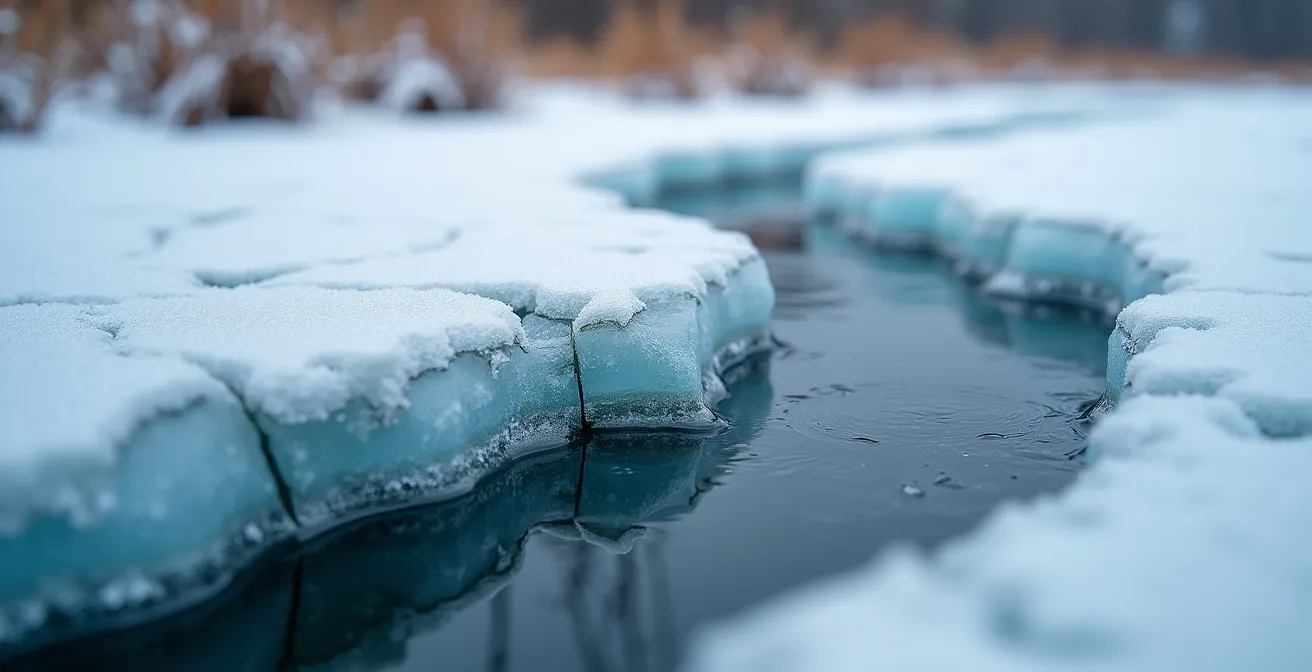
The danger is compounded by the fact that the water near the shore can be churned up by wind or currents, further weakening the ice from below in ways that are impossible to see from the surface. Unlike the uniform ice that might form on a calm, small pond, the shoreline ice of a large body of water like Grenadier Pond is a dynamic and unstable environment. As a conservation officer, I cannot stress this enough: no shoreline ice is ever safe to walk on.
The only safe way to enjoy the winter beauty of the pond’s shoreline is from the designated paved paths and trails. Stay several feet back from the water’s edge at all times. Resisting the temptation to step out onto that seemingly solid white expanse is not just a suggestion; it’s a crucial decision for your personal safety. This is one of the most common and preventable winter accidents in our parks.
Key Takeaways
- Grenadier Pond’s ice is never considered safe for public skating due to its unpredictable nature and the high risk of falling through.
- Feeding wildlife, especially bread, causes a nutritional disease called “Angel Wing” in birds and harms the pond’s water quality by promoting algae blooms.
- All recreational activities are governed by rules designed for safety and conservation; a valid provincial license is mandatory for fishing.
How to Enjoy Lake Ontario Activities Without Risking Your Health?
While Grenadier Pond is the heart of High Park, its water is intrinsically linked to the larger Lake Ontario watershed. Understanding the health risks associated with urban water bodies is crucial for anyone engaging in activities near or on the water, whether it’s fishing at the pond or visiting a nearby beach. The primary concern in Toronto’s waterways is water quality, which can fluctuate dramatically, especially after weather events.
The most significant risk comes from high levels of E. coli bacteria. In Toronto, a large portion of the older city infrastructure uses a combined sewer system, where sanitary sewage and stormwater travel in the same pipe. During heavy rainfall, this system can be overwhelmed, leading to a “Combined Sewer Overflow” (CSO) that discharges untreated waste directly into our rivers and Lake Ontario. For this reason, Toronto Public Health recommends avoiding all contact with the water for at least 48 hours after significant rainfall.
Beyond bacteria, other factors affect water safety. In late summer, warm, nutrient-rich water can lead to blue-green algae blooms, which can produce toxins harmful to people and pets. Additionally, spring runoff carries road salt into the water, and submerged debris is a constant hazard in urban shorelines. Being aware of these “hidden dangers” is the first step toward safe recreation. Your best tool is knowledge and preparedness.
Your Safe Water Recreation Checklist
- Check water quality first: Before heading to a beach, use the Swim Guide app or website for real-time E. coli data from Toronto Public Health.
- Wait after rain: Always avoid swimming, paddleboarding, or even letting pets drink from the lake for at least 48 hours after a heavy storm.
- Scan for algae: Learn to recognize blue-green algae (it can look like spilled paint or pea soup) and stay out of the water if you see it. Report sightings to Ontario’s Spills Action Centre.
- Be mindful of runoff: In the spring, be aware that near-shore water may have high concentrations of road salt, which can affect the local environment.
- Look before you leap: Always check for submerged rocks, rebar, or other debris near urban shorelines before entering the water.
By adopting these practices, you are taking an active role in your own health and safety. It allows you to continue enjoying the beautiful waterways Toronto has to offer while minimizing the inherent risks of recreating in a complex urban environment.
Frequently Asked Questions About High Park
Is there an admission fee for the High Park Zoo?
No, entry to the High Park Zoo is consistently free as it’s funded by the City of Toronto and community donations.
What animals can visitors see at the zoo?
The facility houses bison, llamas, peacocks, reindeer and highland cattle among other species.
How can I support the zoo financially?
Donations can be made through the Friends of High Park Zoo organization to fund improvements and veterinary care.